




Northern Vietnam semiconductor supply chain: Hanyang expands
Hanyang Digitech, which makes DRAM modules and SSDs for Samsung at Phu Ha Industrial...


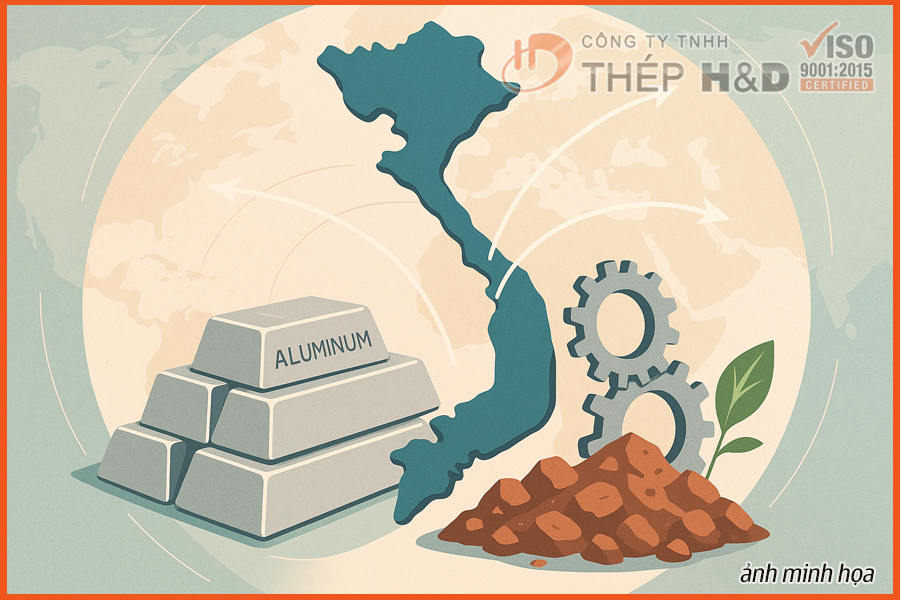
In a global metals market experiencing significant volatility, Vietnam is emerging as a key player in the aluminum supply chain. With abundant bauxite reserves and strategic industrial development policies, the nation is leveraging the wave of growing global aluminum demand to solidify its position. This article will provide an in-depth analysis of the drivers, challenges, and prospects of Vietnam's aluminum industry, offering a comprehensive overview for investors, managers, and technical experts.
The global aluminum market is heating up, with demand forecast to increase by approximately 40% by 2030, according to the International Aluminium Institute. This growth is driven by multiple factors, including the expansion of the electric vehicle, renewable energy, construction, and packaging industries. Aluminum, with its lightweight, durable, and highly recyclable properties, has become the ideal material for these applications, especially as the world moves towards a green and sustainable economy.
The benchmark aluminum price on the London Metal Exchange (LME) has risen sharply, surpassing $2,700/tonne, an increase of about 17% since April 2025. This price surge reflects a supply-demand imbalance and concerns about the global supply chain, particularly from major producers like China, where production and energy control policies could affect supply.
Vietnam possesses enormous bauxite reserves, estimated at around 5.8 billion tonnes, placing it among the countries with the greatest potential for alumina and primary aluminum. This is a superior competitive advantage, allowing Vietnam to develop its aluminum industry from raw material extraction to finished product manufacturing.
The Vietnamese government has set ambitious targets for the aluminum sector. By 2030, Vietnam aims to produce 114–118 million tonnes of bauxite, 11.6–18.6 million tonnes of alumina, and 120,000–150,000 tonnes of primary aluminum annually. The post-2030 plan is even more ambitious, with a goal to increase primary aluminum production to 225,000–245,000 tonnes per year. These targets demonstrate Vietnam's strong commitment to becoming a major aluminum production hub in the world.
The development of Vietnam's aluminum industry is not only driven by export potential but also by strong domestic demand. The country's rapid industrialization and urbanization are creating significant demand for aluminum in sectors such as construction, transportation, and manufacturing. Large-scale infrastructure projects, a booming real estate market, and the growth of the automotive and electronics manufacturing industries all contribute to this growth.
Furthermore, government support through industrial development policies and free trade agreements like the EVFTA (EU-Vietnam Free Trade Agreement) and CPTPP (Comprehensive and Progressive Agreement for Trans-Pacific Partnership) plays a crucial role. These agreements enhance the competitiveness of Vietnamese aluminum in the international market, expand market access, and attract foreign investment. Notably, the "China + 1" strategy adopted by many global enterprises is also boosting foreign direct investment (FDI) into Vietnam, providing additional momentum for the aluminum industry.
Despite its promising outlook, Vietnam's aluminum industry also faces significant challenges. The volatility of the global supply chain, including raw material and energy prices, can affect production costs and competitiveness. Additionally, environmental issues are a major concern. Although aluminum is considered an environmentally friendly metal due to its high recyclability and energy efficiency in use, the processes of bauxite mining and the production of alumina and primary aluminum still have potential significant environmental impacts. Vietnam must ensure that the development of its aluminum industry is coupled with strict environmental protection measures and sustainable manufacturing practices.
With its advantages in resources, market demand, and government support, Vietnam's aluminum industry is facing a golden opportunity for a breakthrough. For investors, this is an opportune time to consider investment opportunities in bauxite mining projects, alumina and primary aluminum production plants, as well as downstream aluminum processing industries. However, a thorough assessment of the risks related to market fluctuations, trade policies, and environmental requirements is essential.
Vietnam is positioning itself not just as a raw material supplier but as a center for high-value-added aluminum production. The sustainable development of the industry will depend on its ability to balance economic growth, environmental protection, and effective management of the global supply chain.
References:
Hanyang Digitech, which makes DRAM modules and SSDs for Samsung at Phu Ha Industrial...

A weight table for aluminum floor plate by thickness, a comparison with steel tread p...

The SMM A00 aluminium ingot price ended week 47/2026 at 22,340 CNY/t on 20 November,...

Registered FDI in Vietnam reached US$54.85 billion in the first ten months of 2026, u...

The aluminum jacket over pipe insulation decides whether the insulation stays dry and...

Vietnam's domestic car assembly rose 25.1% in the first ten months of 2026, yet impor...

10mm aluminum plate is true thick plate, used for machine bases, fixture tables, load...

The third Vietbuild Hanoi 2026 international exhibition runs from 11 to 14 November a...

5mm aluminum sheet is stiff enough for truck floors, machine bases, fixtures and load...

The SMM A00 aluminium ingot price ended week 44/2026 at 23,780 CNY/t on 30 October, 1...


