091 327 0770 - 090 326 2566
info@hdsteel.com.vn

Global Steel Outlook 2025: Opportunities and Challenges in Sustainable Transformation

Global Steel Industry Forecast Report 2025 and Strategic Outlook

Overview of the global steel industry and development trends

Hanoi, October 22, 2025 – The global steel industry stands at a critical juncture, with forecasts for 2025 and beyond indicating moderate but sustained growth, coupled with significant environmental and geopolitical challenges. Reports from the World Steel Association, McKinsey & Company, and other reputable market research organizations have outlined a comprehensive picture of the key drivers, opportunities, and risks that investors, managers, and technical experts need to grasp. This specialized bulletin will delve into the main trends, forecast figures, and their strategic implications.

1. Global Steel Demand Outlook: Driven by Infrastructure Development and Urbanization

Global steel demand is projected to grow moderately, reaching approximately 1.9 to 2 billion metric tons by 2025. This growth is primarily fueled by several key factors:

  • Infrastructure Development: Countries worldwide, especially emerging economies in Asia (such as India and Southeast Asia) and Africa, are accelerating investments in transportation, energy, and urban infrastructure. Steel is an indispensable material in projects like bridges, roads, ports, airports, and power systems.
  • Construction and Urbanization: Rapid urbanization in developing regions generates substantial demand for steel in residential construction, commercial buildings, and public works. Even in mature markets, steel demand remains stable due to reconstruction and urban upgrade projects.
  • Automotive and Manufacturing Sectors: The automotive industry, particularly the boom in electric vehicles (EVs), continues to be a significant driver for high-quality steel demand. Other manufacturing sectors such as machinery, home appliances, and renewable energy also contribute significantly to overall demand.

However, mature markets may see slower growth, while emerging economies will be the primary engine for demand expansion.

2. Steel Production Landscape: China Dominates, India Rises

Global steel production is expected to continue growing, but at a slower pace compared to the previous decade. China remains the world's largest steel producer, accounting for over 50% of total global crude steel output. However, China's growth rate is decelerating due to domestic economic policies and stringent environmental targets.

  • India: Projected to become the second-largest steel producer globally by the mid-2020s, with an estimated annual production growth rate of 8-10%. This growth is driven by strong domestic demand and supportive industrial policies.
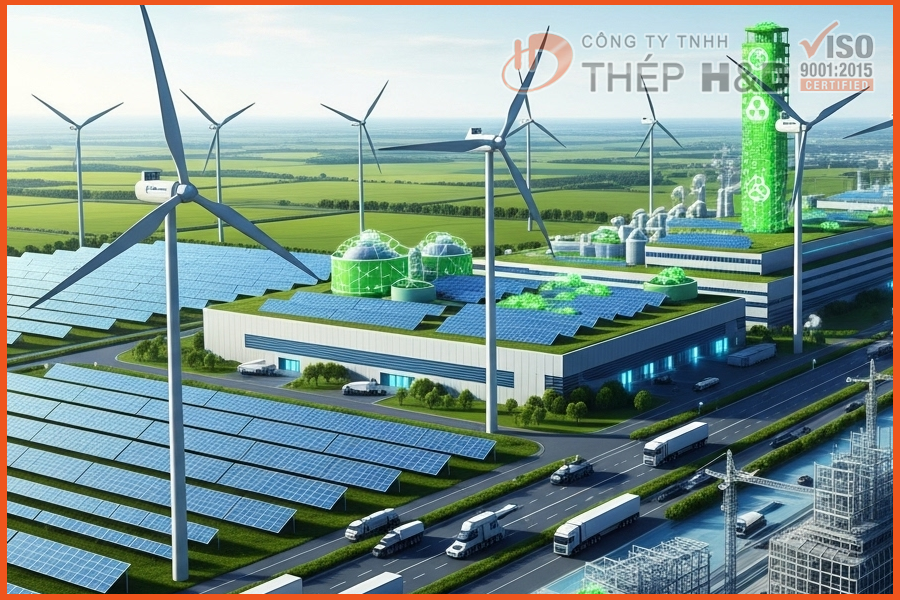
  • Investment in Green Technologies: Steelmakers are increasingly investing in green steel production technologies, such as electric arc furnaces (EAF) and hydrogen-based steelmaking, to reduce carbon emissions. This will reshape the steel production landscape in the long term.

3. Green and Sustainable Steel: The Decarbonization Imperative

The transition to sustainable steel production is an irreversible trend, driven by regulatory pressures, consumer demands, and carbon reduction commitments. Key highlights include:

  • Decarbonization: The steel industry is heavily investing in decarbonization technologies, including the use of green hydrogen as a reducing agent instead of coking coal, and enhanced steel recycling through EAFs. According to McKinsey & Company, green steel production will be a significant differentiator by 2030.
  • Regulatory Pressure: Developed markets like Europe and North America are implementing stricter carbon emission regulations, pushing steel producers to adopt cleaner production methods.
  • Investment: Aggressive climate scenarios project that investment in green steel technologies could account for 20-25% of new capacity additions by 2030. This creates significant opportunities for technology companies and sustainable solution providers.

4. Price and Market Dynamics: Volatility and Stabilization

Steel prices are expected to stabilize compared to the high volatility seen in the early 2020s, but will remain influenced by several factors:

  • Raw Material Costs: Prices of iron ore, coking coal, and steel scrap will continue to be key factors affecting production costs and steel prices. Any disruption in raw material supply chains could cause price fluctuations.
  • Trade Policies and Geopolitics: Tariffs, quotas, and geopolitical tensions can impact global steel trade flows and create price differentials between regions.
  • Energy Costs: Steel production is an energy-intensive process. Fluctuations in global energy prices will continue to affect producers' profitability.
  • Supply Chain Disruptions: Unexpected events such as natural disasters, pandemics, or conflicts can cause supply chain disruptions, affecting production and prices.

5. Strategic Opportunities and Challenges

The steel industry faces both opportunities and challenges:

  • Opportunities:
  • Emerging Markets: Growing demand from developing economies offers market expansion opportunities.
  • Technological Innovation: Investment in green steel and advanced production technologies can create competitive advantages and open new market segments.
  • Lightweight and Sustainable Materials: The increasing demand for lighter, more sustainable construction and manufacturing materials creates opportunities for the development of special steels and advanced alloys. In this context, the use of aluminum materials is also becoming increasingly important, especially in applications requiring a combination of strength and lightweight properties.
  • Challenges:
  • Environmental Pressure: Carbon emission reduction requirements demand significant investment and changes in production processes.
  • Raw Material Price Volatility: Uncertainty in raw material prices can impact profitability.
  • Global Competition: Intense competition from major producers and low-cost countries.
  • R&D Investment: Continuous investment in research and development is needed to maintain competitiveness and meet new standards.

Conclusion

The global steel industry forecast for 2025 and beyond reveals an industry in transition. While demand remains supported by traditional drivers like construction and manufacturing, the focus is shifting strongly towards sustainable production methods and decarbonization. Investors and technical experts need to closely monitor environmental policies, technological advancements, and regional market dynamics to make strategic decisions. Adapting to the green steel trend and ensuring resilient supply chains will be key to future success. In particular, the development of aluminum sheets 1050, 3003, 5052, 6061, 7075 and other alloys will continue to play a crucial role in complementing the steel industry in applications requiring high performance and lightweight properties.

References:

  • World Steel Association (WSA)
  • International Energy Agency (IEA)
  • McKinsey & Company Analysis
  • Market Research Reports (e.g., Statista, ResearchandMarkets)
  • Yahoo Finance (general report on steel industry forecast)

Related Post

Northern Vietnam semiconductor supply chain: Hanyang expands

Northern Vietnam semiconductor supply chain: Hanyang expands

Hanyang Digitech, which makes DRAM modules and SSDs for Samsung at Phu Ha Industrial...

Aluminum floor plate for truck beds: weight, fitting, mistakes

Aluminum floor plate for truck beds: weight, fitting, mistakes

A weight table for aluminum floor plate by thickness, a comparison with steel tread p...

Aluminium sheet price, week 47/2026: SMM A00 falls to 22,340

Aluminium sheet price, week 47/2026: SMM A00 falls to 22,340

The SMM A00 aluminium ingot price ended week 47/2026 at 22,340 CNY/t on 20 November,...

FDI up 74%, but mechanical supporting industry still lags

FDI up 74%, but mechanical supporting industry still lags

Registered FDI in Vietnam reached US$54.85 billion in the first ten months of 2026, u...

Aluminum insulation jacketing: thickness by pipe size and sizing

Aluminum insulation jacketing: thickness by pipe size and sizing

The aluminum jacket over pipe insulation decides whether the insulation stays dry and...

Vietnam auto supporting industry: assembly up 25%, parts imported

Vietnam auto supporting industry: assembly up 25%, parts imported

Vietnam's domestic car assembly rose 25.1% in the first ten months of 2026, yet impor...

10mm Aluminum Plate: Weight, Tolerance, Alloy Choice, Machining

10mm Aluminum Plate: Weight, Tolerance, Alloy Choice, Machining

10mm aluminum plate is true thick plate, used for machine bases, fixture tables, load...

Vietbuild Hanoi Exhibition 11–14 Nov: A Guide for Aluminum Shops

Vietbuild Hanoi Exhibition 11–14 Nov: A Guide for Aluminum Shops

The third Vietbuild Hanoi 2026 international exhibition runs from 11 to 14 November a...

5mm Aluminum Sheet: Weight, Tolerance, Alloy Choice, Fabrication

5mm Aluminum Sheet: Weight, Tolerance, Alloy Choice, Fabrication

5mm aluminum sheet is stiff enough for truck floors, machine bases, fixtures and load...

Aluminium sheet price, week 44/2026: SMM A00 edges up to 23,780

Aluminium sheet price, week 44/2026: SMM A00 edges up to 23,780

The SMM A00 aluminium ingot price ended week 44/2026 at 23,780 CNY/t on 30 October, 1...

Call H&D
Send H&D an SMS
Directions to H&D
Contact H&D on Zalo
Message H&D on Messenger