




Northern Vietnam semiconductor supply chain: Hanyang expands
Hanyang Digitech, which makes DRAM modules and SSDs for Samsung at Phu Ha Industrial...


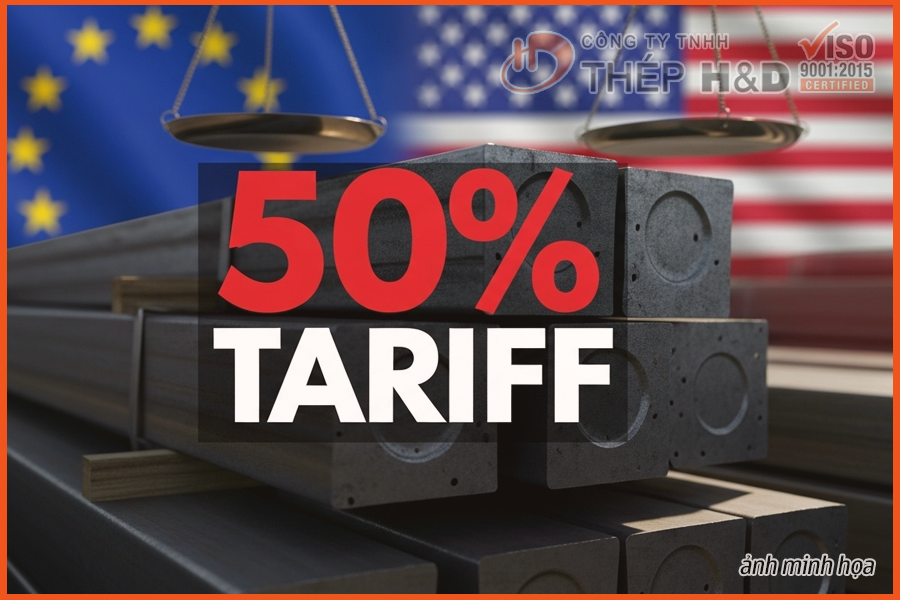
Brussels, October 9, 2025 – The European Union (EU) is poised to make a robust trade move, proposing a 50% tariff on steel imports exceeding a significantly reduced duty-free quota. This action is seen as an effort to protect the EU's struggling domestic steel industry and serves as an ""opening bid"" amidst ongoing trade tensions with the United States.
The EU steel industry is grappling with alarmingly low capacity utilization, hovering around 67%, primarily due to an increase in imported steel and tariff barriers imposed by the United States. To address this, the EU plans to cut duty-free steel import quotas to 18.3 million metric tons per year, a 47% decrease from 2024 levels. Any steel imports exceeding this threshold would face a 50% tariff. The European Commission's primary goal is to push capacity utilization towards 80%, thereby safeguarding jobs, supporting decarbonization efforts, and strengthening the EU steel sector's position in the global market.
This move is not merely a reaction to market conditions but also a clear message to Washington. Trade relations between the EU and the US have been strained since February 2025, when the US imposed a 25% tariff on steel and aluminum imports from the EU, affecting approximately €26 billion in EU exports. In response, the EU implemented equivalent countermeasures, including tariffs and restrictions on US imports, also valued at around €26 billion, which began to take effect in April 2025. European Commission President Ursula von der Leyen publicly criticized the US tariffs as detrimental to trade, businesses, consumers, and jobs, describing them as ""taxes"" that disrupt supply chains and raise prices.
For the EU steel industry, these new tariffs are expected to boost capacity utilization and protect the sector from foreign competition, thereby preserving domestic employment and encouraging industry modernization. However, this move also presents significant challenges. The UK's steel sector, with the EU being its largest export market (accounting for 78% of total British steel exports, valued at nearly £3 billion), is particularly concerned. The reduction in quotas and imposition of tariffs could severely harm UK steel exports.
For consumers and businesses on both sides of the Atlantic, the tariffs are expected to increase prices and create uncertainty in supply chains. Despite the tensions, the EU has expressed its willingness to negotiate with the US to find a mutually agreeable solution, with the possibility of rescinding countermeasures upon agreement. This indicates that a door remains open for dialogue, even if the EU's initial stance is quite firm.
The EU's proposed 50% tariff is not just a simple protectionist measure but a complex negotiation strategy. By presenting a strong proposal, the EU may be seeking to exert significant pressure on the US to achieve a more favorable trade agreement. This could indeed be an ""opening bid,"" as mentioned, aimed at establishing a strong negotiating position before formal discussions commence.
However, the risk of an escalating trade war is evident. If the US responds with additional retaliatory measures, both economies could suffer significant damage. Investors and managers in the metals and construction industries need to closely monitor these developments, as they could directly impact raw material costs, supply chains, and international market competitiveness.
In this context, diversifying supply sources and seeking alternative solutions become more urgent than ever. Businesses may need to re-evaluate their procurement strategies, especially for products such as aluminum sheets 1050, 3003, 5052, 6061, 7075 or aluminum coils, to mitigate risks from trade policy fluctuations.
The EU's 50% steel tariff proposal is a bold move, reflecting its determination to protect domestic industry and create leverage in trade negotiations with the US. While it may cause short-term disruptions in the global market, it also opens an opportunity for a long-term solution if both sides can reach a fair agreement. Stakeholders should prepare for potential volatility and closely follow upcoming negotiations.
References:
Hanyang Digitech, which makes DRAM modules and SSDs for Samsung at Phu Ha Industrial...

A weight table for aluminum floor plate by thickness, a comparison with steel tread p...

The SMM A00 aluminium ingot price ended week 47/2026 at 22,340 CNY/t on 20 November,...

Registered FDI in Vietnam reached US$54.85 billion in the first ten months of 2026, u...

The aluminum jacket over pipe insulation decides whether the insulation stays dry and...

Vietnam's domestic car assembly rose 25.1% in the first ten months of 2026, yet impor...

10mm aluminum plate is true thick plate, used for machine bases, fixture tables, load...

The third Vietbuild Hanoi 2026 international exhibition runs from 11 to 14 November a...

5mm aluminum sheet is stiff enough for truck floors, machine bases, fixtures and load...

The SMM A00 aluminium ingot price ended week 44/2026 at 23,780 CNY/t on 30 October, 1...


