




Northern Vietnam semiconductor supply chain: Hanyang expands
Hanyang Digitech, which makes DRAM modules and SSDs for Samsung at Phu Ha Industrial...


September 23, 2025 – The global stainless steel industry is facing significant headwinds due to U.S. tariff policies. According to Outokumpu, a leading global stainless steel producer, approximately one-third of companies have either stopped or delayed their stainless steel orders as a direct consequence of new import duties. This situation is causing substantial disruptions in supply chains and forcing businesses to re-evaluate their sourcing strategies.
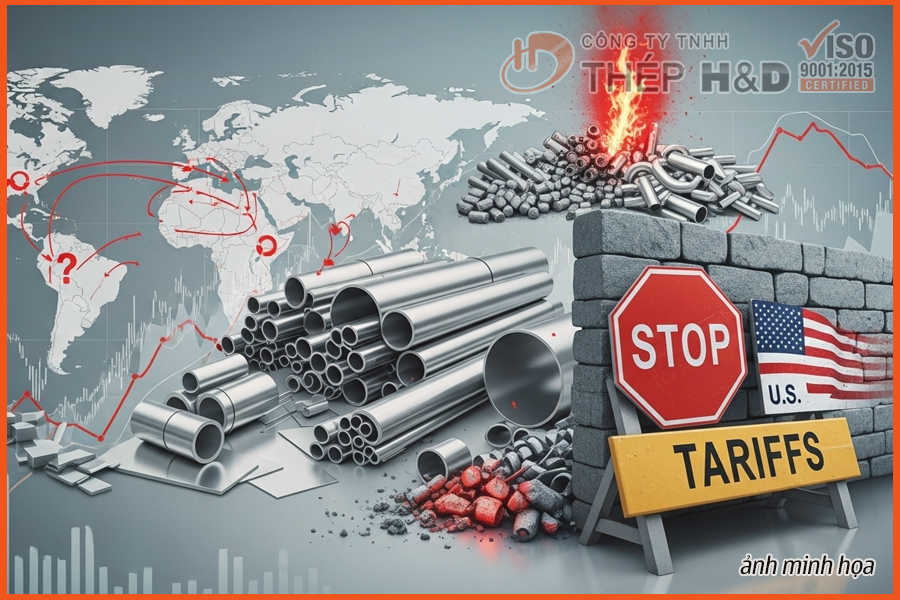
In 2025, the United States doubled its Section 232 duties on steel imports from 25% to 50%, notably without country exemptions, including for the European Union. This decision sent shockwaves through the global stainless steel market. Outokumpu's research indicates that more than half of companies are now reassessing their sourcing strategies, and roughly 30% have switched suppliers to cope with increased costs and trade uncertainties.
The abrupt increase in tariffs has significantly raised the cost of importing stainless steel into the U.S., leading to delays in numerous infrastructure and industrial projects or prompting a search for alternative solutions. This not only impacts U.S. importers and end-users but also puts pressure on stainless steel producers worldwide, compelling them to adjust their production and distribution plans.
Outokumpu, with operations in both Europe and the U.S., has highlighted the extent of market disruption caused by these tariffs. The company is navigating challenges from uncertain trade policies, alongside broader macroeconomic factors such as inflation and supply chain disruptions.
In this context, Outokumpu has advocated for more effective trade measures in Europe to replace expiring safeguards. The company expresses concern about unfair competition from low-priced stainless steel imports from Asia, which are exacerbating competitive pressures in the European market. Outokumpu also emphasizes its strategic position with sustainable production and access to critical minerals (such as its own chrome mine in Finland), viewing these as competitive advantages in a volatile market landscape.
U.S. tariffs are not only affecting transatlantic transactions but are also reshaping global stainless steel trade flows. Many suppliers and buyers are redirecting their sourcing away from U.S. or European markets towards regions with lower tariffs. This could lead to market fragmentation and create new challenges for maintaining stable and efficient supply chains.
In the long term, the stainless steel industry will need to adapt to an increasingly complex and regulated trade environment. Producers will have to focus on operational efficiency, technological innovation, and the development of high-value-added products to remain competitive. Simultaneously, governments need to reconsider the comprehensive impact of tariff policies to ensure they do not undermine global market stability and the sustainable development of the industry. For more information on various metal products and their applications, you can explore resources on nhôm tấm 1050, 3003, 5052, 6061, 7075.
References:
Hanyang Digitech, which makes DRAM modules and SSDs for Samsung at Phu Ha Industrial...

A weight table for aluminum floor plate by thickness, a comparison with steel tread p...

The SMM A00 aluminium ingot price ended week 47/2026 at 22,340 CNY/t on 20 November,...

Registered FDI in Vietnam reached US$54.85 billion in the first ten months of 2026, u...

The aluminum jacket over pipe insulation decides whether the insulation stays dry and...

Vietnam's domestic car assembly rose 25.1% in the first ten months of 2026, yet impor...

10mm aluminum plate is true thick plate, used for machine bases, fixture tables, load...

The third Vietbuild Hanoi 2026 international exhibition runs from 11 to 14 November a...

5mm aluminum sheet is stiff enough for truck floors, machine bases, fixtures and load...

The SMM A00 aluminium ingot price ended week 44/2026 at 23,780 CNY/t on 30 October, 1...


