




Northern Vietnam semiconductor supply chain: Hanyang expands
Hanyang Digitech, which makes DRAM modules and SSDs for Samsung at Phu Ha Industrial...


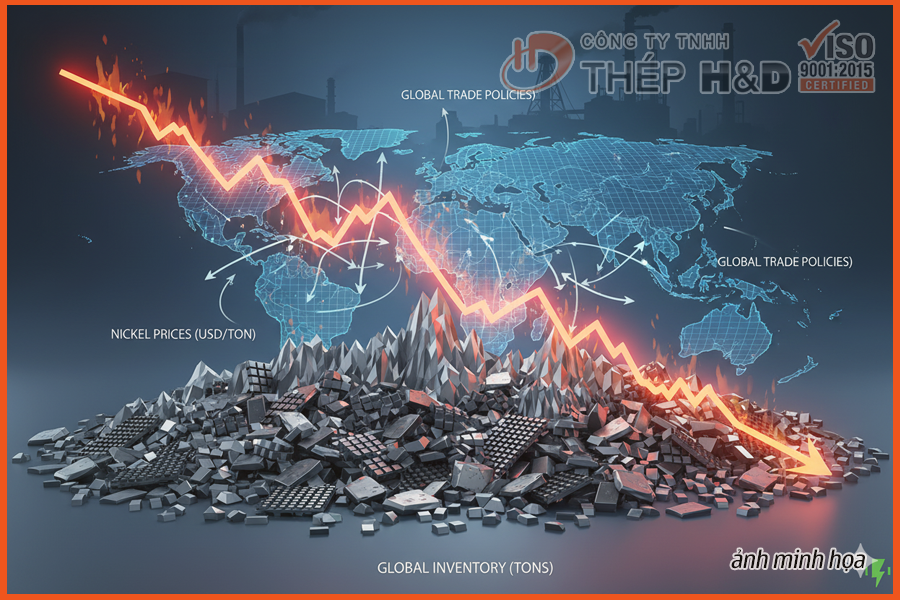
London, October 16, 2025 – The global nickel market is entering Q4 2025 with a complex outlook, marked by persistent oversupply in nickel metal and a tightening supply of crucial intermediate products. Volatility in trade policies, particularly from major producers like Indonesia and the Democratic Republic of Congo (DRC), is creating a challenging and uncertain environment for investors, managers, and technical experts in the industry.
The nickel market has been experiencing a continuous period of oversupply, which is projected to extend into Q4 2025. Robust nickel output, especially from Indonesia, is the primary driver. Indonesia is forecast to account for 63.4% of global nickel production in 2025, up from 61.6% in 2024. Despite official production quotas announced by Indonesia, smelters operate near full capacity, weakening the credibility of policy-led supply discipline and contributing to persistent oversupply risk.
Key figures:
The surge in inventories and suppressed prices indicate weak demand in the finished nickel metal market, despite the growth in the electric vehicle (EV) sector, which is a key driver for Class 1 nickel demand.
Trade policies are playing an increasingly significant role in shaping nickel flows and prices. A prime example is the Democratic Republic of Congo’s (DRC) cobalt export ban, which ended on October 16, 2025, and was replaced by an export quota. This has caused tightness in cobalt feedstock supply, which, alongside cobalt-containing intermediates like mixed hydroxide precipitate (MHP), affects the upstream nickel supply chain.
MHP Situation:
The clear split between oversupply in finished nickel metal and scarcity in intermediate raw material supply points to an increasingly complex and bifurcated nickel market.
For Investors:
For Managers:
For Technical Experts:
The nickel market in Q4 2025 will continue to face persistent oversupply of nickel metal, driven by Indonesian dominance and a lack of effective output restraint. However, intermediate feedstock segments face tightness due to trade policy changes and supply disruptions. Seasonal production declines and Indonesian regulatory tightening add layers of uncertainty, implying market volatility with mixed price signals depending on product form and supply source.
To navigate this complex market, participants must carefully monitor Indonesian production and licensing policies, DRC export quotas on cobalt-based feedstocks, and seasonal output variations as key factors shaping nickel price and trade dynamics into 2026.
References:
Hanyang Digitech, which makes DRAM modules and SSDs for Samsung at Phu Ha Industrial...

A weight table for aluminum floor plate by thickness, a comparison with steel tread p...

The SMM A00 aluminium ingot price ended week 47/2026 at 22,340 CNY/t on 20 November,...

Registered FDI in Vietnam reached US$54.85 billion in the first ten months of 2026, u...

The aluminum jacket over pipe insulation decides whether the insulation stays dry and...

Vietnam's domestic car assembly rose 25.1% in the first ten months of 2026, yet impor...

10mm aluminum plate is true thick plate, used for machine bases, fixture tables, load...

The third Vietbuild Hanoi 2026 international exhibition runs from 11 to 14 November a...

5mm aluminum sheet is stiff enough for truck floors, machine bases, fixtures and load...

The SMM A00 aluminium ingot price ended week 44/2026 at 23,780 CNY/t on 30 October, 1...


