




Northern Vietnam semiconductor supply chain: Hanyang expands
Hanyang Digitech, which makes DRAM modules and SSDs for Samsung at Phu Ha Industrial...


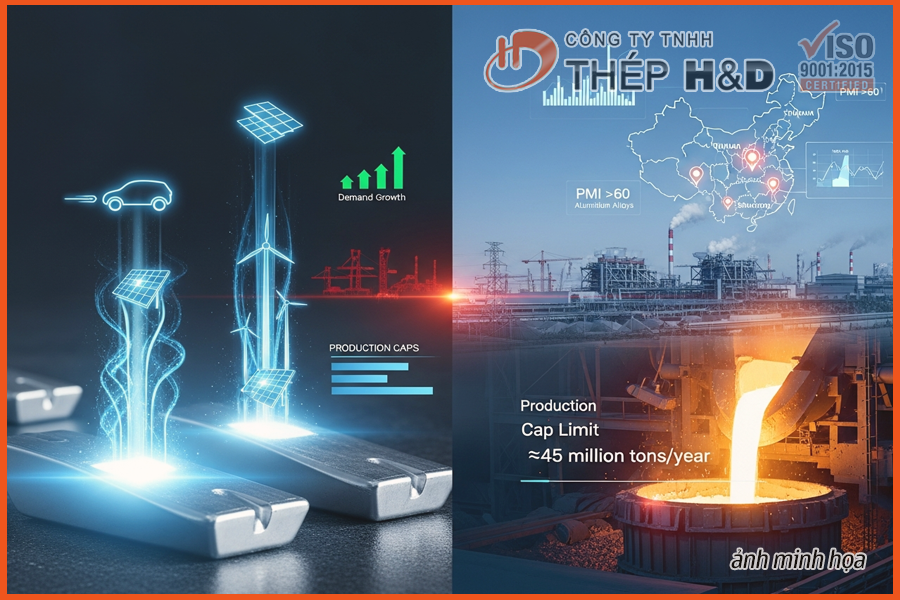
Shanghai, November 4, 2025 – China's aluminium market is demonstrating remarkable stability, underpinned by robust domestic demand from strategic industries and stringent government production control policies. Despite facing challenges from the real estate sector and energy supply fluctuations, the overall outlook for China's aluminium industry remains positive, especially as the nation continues to reshape the global aluminium supply landscape.
China, as the world's largest aluminium producer and consumer, has imposed a strict production cap of approximately 45 million metric tons per year, aiming to balance environmental objectives with economic needs. As of mid-2025, China's operating aluminium capacity has reached around 43.9 million metric tons, nearing this mandated ceiling. This indicates that future production growth will primarily rely on replacing older capacities with cleaner technologies and relocating plants to regions with abundant renewable energy sources, such as from Shandong to Yunnan.
Throughout 2025, China's aluminium production has shown moderate growth, with monthly increases ranging from 0.3% to 3.1% and year-over-year growth around 1-1.5%. This growth reflects ongoing efforts in optimizing and restructuring the industry rather than aggressive capacity expansion.
Aluminium demand in China remains stable and robust, primarily fueled by the significant development of emerging and strategic industries:
The expansion of these sectors has largely offset weaknesses in the real estate and export markets, maintaining a balanced domestic supply-demand dynamic. To gain a deeper understanding of this metal's diverse roles, you can explore more about the applications of aluminium in daily life and industry.
A significant policy shift occurred in December 2024 when China eliminated aluminium export tax rebates. This move has reduced China's aluminium exports by an estimated 8-11%, contributing to a tighter global supply and influencing international prices. This policy also aims to prioritize domestic consumption, supporting the internal supply-demand balance.
Globally, the outlook for aluminium remains positive, with demand projected to grow at an average of about 2.1% annually through 2040, primarily driven by construction, automotive (notably EVs), and energy technology. Meanwhile, supply is expected to grow slightly slower, at around 1.6%. Notably, aluminium recycling growth is forecast to be significantly faster, exceeding 4% per year, reflecting global sustainability trends.
Aluminium prices have been on an upward trend recently, with increases of approximately 7-11% in late 2025. This is partly due to tighter supply resulting from China's production cap and export restrictions, coupled with strong demand from the energy transition. Aluminium as a material is increasingly asserting its strategic position.
However, the Chinese aluminium market is not without its risks. Drought-induced power shortages could force production cuts, leading to price volatility. Furthermore, consumer demand recovery remains constrained by persistent issues in the real estate market, although government stimulus measures introduced in 2024 may have a lagged effect.
Looking ahead, analysts predict that moderate market deficits could emerge as demand outpaces supply growth, especially beyond 2025. The focus will increasingly shift towards sustainability, driving recycling growth and cleaner production methods. Aluminium prices are expected to continue rising, supported by tight supply and demand from long-term structural trends.
China's aluminium market in 2025 is characterized by stable yet limited production growth under a strict cap, robust demand from emerging sectors like EVs and renewable energy, export restrictions reducing global supply, and a cautious but positive outlook for future growth, albeit tempered by notable risks. A deep understanding of these factors is crucial for investors and industry professionals to make strategic decisions.
References:
Hanyang Digitech, which makes DRAM modules and SSDs for Samsung at Phu Ha Industrial...

A weight table for aluminum floor plate by thickness, a comparison with steel tread p...

The SMM A00 aluminium ingot price ended week 47/2026 at 22,340 CNY/t on 20 November,...

Registered FDI in Vietnam reached US$54.85 billion in the first ten months of 2026, u...

The aluminum jacket over pipe insulation decides whether the insulation stays dry and...

Vietnam's domestic car assembly rose 25.1% in the first ten months of 2026, yet impor...

10mm aluminum plate is true thick plate, used for machine bases, fixture tables, load...

The third Vietbuild Hanoi 2026 international exhibition runs from 11 to 14 November a...

5mm aluminum sheet is stiff enough for truck floors, machine bases, fixtures and load...

The SMM A00 aluminium ingot price ended week 44/2026 at 23,780 CNY/t on 30 October, 1...


