




Northern Vietnam semiconductor supply chain: Hanyang expands
Hanyang Digitech, which makes DRAM modules and SSDs for Samsung at Phu Ha Industrial...


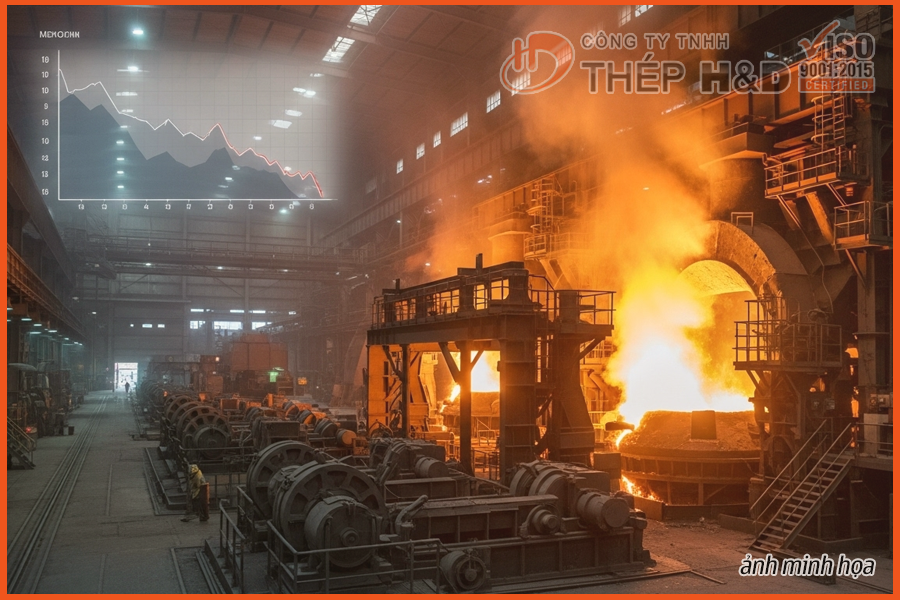
Hanoi, September 17, 2025 – The US steel industry is facing a challenging period as raw steel production recorded a significant decline in Week 38 of 2025. According to the latest data, US raw steel production reached approximately 1.62 million net tons, a 17% decrease from the previous week and about 5% lower compared to the same period in 2024. The capacity utilization rate also fell to 73% to 74%, notably below the industry's long-term average. This development raises questions about the health of the domestic steel market and the macroeconomic factors influencing this critical industry.
The sharp 17% week-over-week drop is a noteworthy signal, especially when compared to earlier weeks in 2025, where production and capacity utilization remained higher. For instance, in early September (Week 36), US raw steel production was close to 1.795 million net tons with a capacity utilization rate of approximately 79.2%. This disparity suggests a sudden adjustment or weakening in manufacturing activity.
Several potential reasons behind this decline include:
The capacity utilization rate hovering at 73-74% indicates that a significant portion of US steelmaking capacity is idle. This level is below the industry's long-term average (typically around 77-78%), reflecting either excess capacity or insufficient demand to fully utilize existing production capabilities. This could lead to downward pressure on domestic finished steel prices, impacting producers' profitability.
In the broader context of 2025, the US steel industry has shown volatility. While there have been periods of growth, the general trend since mid-year indicates fluctuations and sometimes slight declines in production. Investors and industry professionals need to closely monitor macroeconomic indicators, especially from major steel-consuming sectors, to accurately assess the market outlook.
For investors, this decline could be a signal to re-evaluate investments in steel stocks or industry-related funds. A deeper analysis of major steel companies' financial reports and demand forecasts from end-use sectors is essential.
Managers and technical experts in the steel industry should focus on optimizing production costs, improving operational efficiency, and seeking niche markets or higher value-added products. Diversifying products and services, as well as investing in new technologies to mitigate the impact of market fluctuations, will be key to maintaining competitiveness.
Furthermore, researching and adopting alternative or complementary materials is also a crucial strategy. For example, businesses can learn more about the applications of aluminum from daily life to industrial production or explore aluminum material - the material for modern and future industries to diversify supply sources and reduce risks from the volatility of a specific metal.
References:
Hanyang Digitech, which makes DRAM modules and SSDs for Samsung at Phu Ha Industrial...

A weight table for aluminum floor plate by thickness, a comparison with steel tread p...

The SMM A00 aluminium ingot price ended week 47/2026 at 22,340 CNY/t on 20 November,...

Registered FDI in Vietnam reached US$54.85 billion in the first ten months of 2026, u...

The aluminum jacket over pipe insulation decides whether the insulation stays dry and...

Vietnam's domestic car assembly rose 25.1% in the first ten months of 2026, yet impor...

10mm aluminum plate is true thick plate, used for machine bases, fixture tables, load...

The third Vietbuild Hanoi 2026 international exhibition runs from 11 to 14 November a...

5mm aluminum sheet is stiff enough for truck floors, machine bases, fixtures and load...

The SMM A00 aluminium ingot price ended week 44/2026 at 23,780 CNY/t on 30 October, 1...


