






5052 Aluminum: O, H32 or H34, Bend Radius and Buying Mistakes
5052 aluminum sheet in O, H32 and H34 tempers differs clearly in strength, ductility...


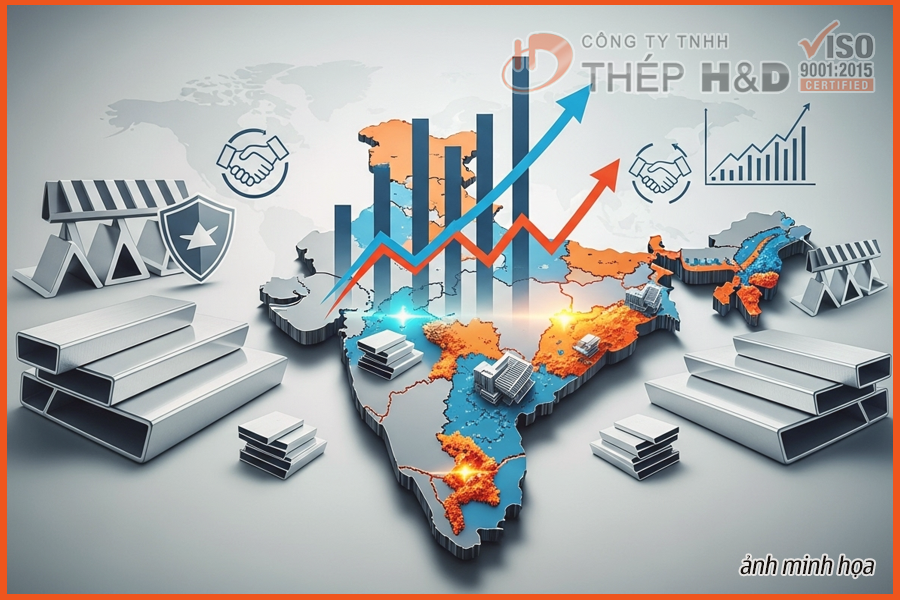
New Delhi, September 5, 2025 – The Indian aluminium industry is facing significant challenges due to increased US tariffs on aluminium and steel products, coupled with a surge in cheaper imports. The Aluminium Extrusion Manufacturers Association of India (ALEMAI) has officially urged the government to review existing import duties and Free Trade Agreements (FTAs) to protect domestic manufacturing and boost local consumption.
Context and Impact of US Tariffs
The US decision to raise tariffs on steel and aluminium imports from 25% to 50% has sent ripples across global markets. For India, this move directly affects approximately 20-25 Indian aluminium exporters, disrupting supply chains and reshaping international trade flows. A direct consequence is that cheaper aluminium products, unable to enter the US market, are now being diverted to other markets, including India, putting immense pressure on domestic producers.
Internal Challenges of the Indian Aluminium Industry
The Indian aluminium extrusion industry has a total installed capacity of about 3 million tonnes per annum. However, current capacity utilization stands at only around 1.2 million tonnes. More alarmingly, aluminium imports into India have exceeded 1.5 million tonnes. This significant disparity between utilized capacity and imports highlights a serious issue regarding the competitiveness of domestic production.
Several factors contribute to the high import volumes:
Untapped Potential and Strategic Importance
India's per capita aluminium consumption is currently around 3-4 kg, significantly lower than the global average of 11-13 kg, China (25-30 kg), and the US (17-18 kg). This figure indicates enormous potential for growth in domestic aluminium consumption. If adequately protected and encouraged, the domestic industry could thrive to meet this demand.
Aluminium is a strategic material, essential for various critical sectors such as construction, electronics, aerospace, and renewable energy. With its superior properties like lightweight, strength, and corrosion resistance, aluminium is a cornerstone for India's infrastructure development and economic growth. To understand more about this material, you can refer to the article What is Aluminium? All You Need to Know About its Properties and Applications.
ALEMAI's Proposals and Economic Benefits
Jitendra Chopra, President of ALEMAI, emphasized that restricting imports through a review of import duties and FTAs is crucial for the domestic industry to increase production and meet local demand. This would not only help create value-added products within India but also improve competitiveness in both domestic and international markets. These measures are expected to offset the negative impact of US tariffs and reduce overall costs through economies of scale.
Promoting domestic aluminium production and consumption will also generate employment opportunities, strengthen the value chain, and contribute to India's self-reliance goals. The diverse applications of aluminium in daily life and industry are also a crucial factor to be leveraged. Learn more about the Applications of Aluminium: From Everyday Life to Industrial Production.
Conclusion
The Indian aluminium industry is at a pivotal moment, requiring strategic intervention from the government. Reviewing and adjusting import duty policies and FTAs is not merely a temporary protective measure but a long-term strategy to strengthen the manufacturing base, boost domestic consumption, and secure India's competitive position on the global aluminium industry map. This is a necessary step to transform challenges into opportunities, moving towards a sustainable and prosperous future for the Indian aluminium sector.
References:
5052 aluminum sheet in O, H32 and H34 tempers differs clearly in strength, ductility...
Shanghai reopened after National Day with two down sessions: the SMM A00 aluminium in...
From 20 October 2026, Decree 344/2026/ND-CP opens a state ordering mechanism and ince...
Aluminum's physical figures differ between alloys, and each figure drives a concrete...
The SMM A00 aluminium ingot price fell in all three sessions of week 40/2026, closing...
Vietnam's car market sold 432,548 vehicles in the first eight months of 2026, the fas...
3mm aluminum sheet is the most requested thickness in the thin-to-medium range: stiff...
A6061 is a heat-treatable aluminium–magnesium–silicon alloy widely used for machine f...
Drewry's Intra-Asia Container Index closed at 1,491 USD/40ft on 24 September 2026, up...
The SMM A00 aluminium ingot price ended week 39/2026 at 24,240 CNY/t, up 60 CNY/t fro...


