




Northern Vietnam semiconductor supply chain: Hanyang expands
Hanyang Digitech, which makes DRAM modules and SSDs for Samsung at Phu Ha Industrial...


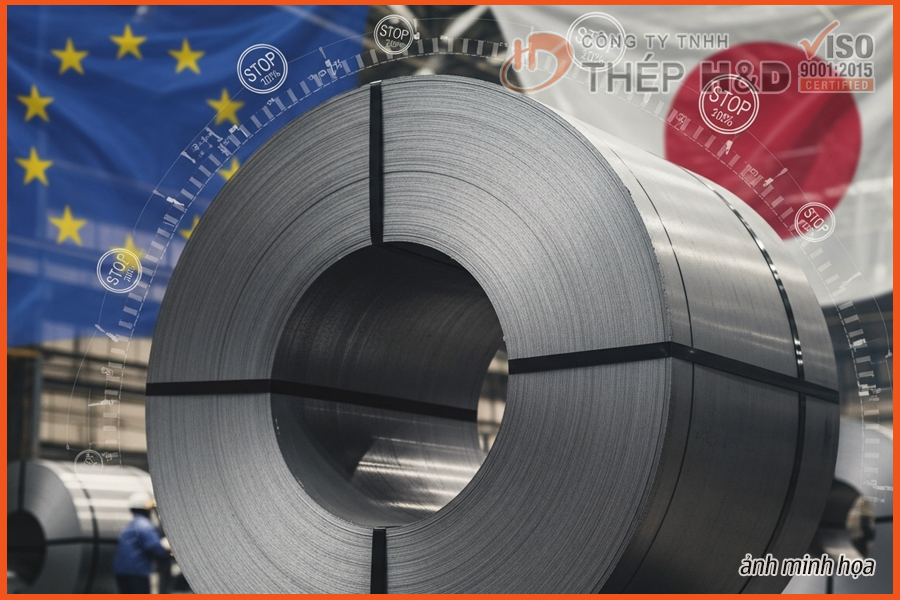
September 30, 2025 – Trade relations between the European Union (EU) and Japan are entering a new phase of tension after the European Commission officially imposed anti-dumping duties on certain hot-rolled flat steel products imported from Japan. This decision, effective in late September 2025, has met with strong opposition from the Japanese steel industry, raising concerns about increasing protectionism in the global steel market.
The EU's anti-dumping measures target certain hot-rolled flat steel products, also known as hot-rolled coil (HRC), from Japan. The definitive duties applied are as follows:
These duties are part of a broader EU effort to protect its domestic steel industry from imports deemed to be unfairly priced, which are alleged to be causing injury to European producers.
The Japan Iron and Steel Federation, representing the Japanese steel industry, has vehemently criticized the EU's action, calling it ""unjust and extremely regrettable."" The Federation's chairman, Tadashi Imai (who is also the president of Nippon Steel), asserted that the Japanese steel industry argued throughout the investigation that its exports of hot-rolled flat steel caused no injury to EU producers.
The Federation stated that it would carefully study the EU's decision to determine appropriate future responses. This could potentially include initiating a dispute settlement process at the World Trade Organization (WTO) or seeking resolutions through bilateral negotiations.
The EU's decision comes as European Commission President Ursula von der Leyen has repeatedly expressed intentions to strengthen protections for the European steel sector. She has proposed new methods to curb steel imports from competitors to safeguard domestic producers. These anti-dumping measures have also been applied to HRC from other countries such as Egypt and Vietnam, while the EU terminated its investigation into imports from India after finding no evidence of dumping.
These moves reflect a growing trend of protectionism in the global steel market, where nations are seeking to shield their strategic industries from competitive pressures and global overcapacity. For investors and industry professionals, closely monitoring trade policies and protectionist measures is essential for assessing risks and opportunities.
The imposition of anti-dumping duties will significantly increase costs for Japanese steel importers into the EU, potentially reducing Japan's export volumes to this market. This may compel Japanese steel producers to seek alternative markets or adjust their production strategies.
Concurrently, European steel producers may benefit from reduced competition from lower-priced imported steel, but this could also lead to higher steel prices for steel-consuming industries within the EU, such as construction and automotive sectors. This trade tension could also trigger a domino effect, encouraging other nations to adopt similar protectionist measures, further complicating global steel supply chains.
In this context, diversifying supply sources and seeking stable trade partners become more critical than ever. Businesses need to re-evaluate their supply chains and prepare for potential fluctuations in steel prices and availability.
To gain a deeper understanding of various steel types and their applications, you might also explore structural steel.
References:
Hanyang Digitech, which makes DRAM modules and SSDs for Samsung at Phu Ha Industrial...

A weight table for aluminum floor plate by thickness, a comparison with steel tread p...

The SMM A00 aluminium ingot price ended week 47/2026 at 22,340 CNY/t on 20 November,...

Registered FDI in Vietnam reached US$54.85 billion in the first ten months of 2026, u...

The aluminum jacket over pipe insulation decides whether the insulation stays dry and...

Vietnam's domestic car assembly rose 25.1% in the first ten months of 2026, yet impor...

10mm aluminum plate is true thick plate, used for machine bases, fixture tables, load...

The third Vietbuild Hanoi 2026 international exhibition runs from 11 to 14 November a...

5mm aluminum sheet is stiff enough for truck floors, machine bases, fixtures and load...

The SMM A00 aluminium ingot price ended week 44/2026 at 23,780 CNY/t on 30 October, 1...


