





Giá nhôm tấm tuần 41/2026: SMM A00 rơi về 23.650 CNY/tấn sau lễ
Sàn Thượng Hải mở cửa lại sau Quốc khánh với hai phiên giảm liền: giá nhôm thỏi SMM A...


Amidst a volatile global trade landscape and with the aim of protecting its domestic industry, Canada has announced significant changes to its aluminium and steel policies. These new measures, including tariff adjustments, quota implementations, and public procurement preferences, are expected to reshape metal trade flows and have considerable impacts on exporting partners, including Vietnam.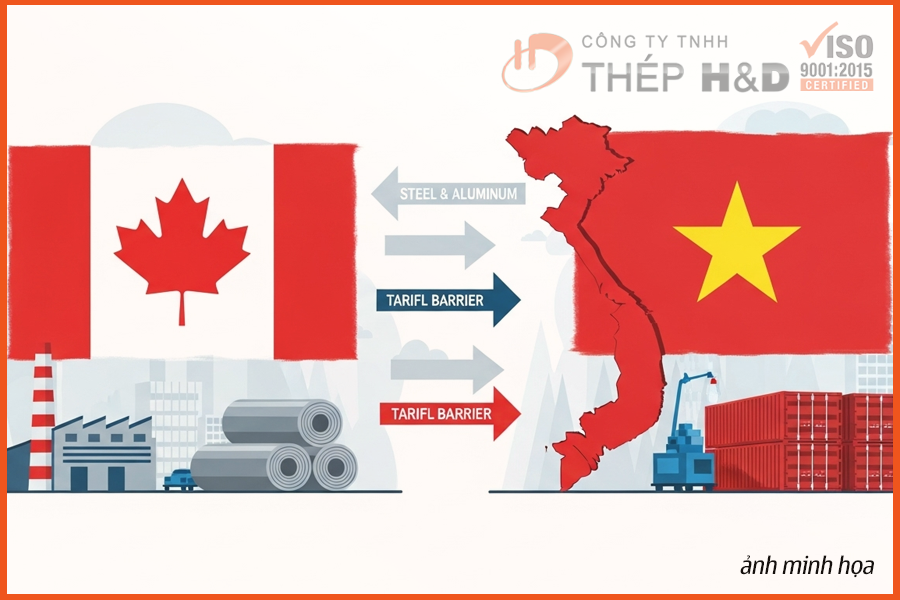
The Canadian government has implemented a series of measures to enhance the protection of its domestic aluminium and steel industries:
These changes in Canadian policy have had a clear impact on Vietnam's iron and steel export activities. In the first 5 months of 2025, Vietnam's exports of iron and steel (HS72 code) to Canada reached approximately 19 million USD, a sharp decrease of 38.6% compared to the same period in 2024. This sụt giảm này phần lớn là do chính sách hạn ngạch và thuế quan mới của Canada, đặc biệt là quy định về nguồn gốc "nấu chảy và đúc" có thể ảnh hưởng đến các sản phẩm sử dụng phôi thép từ Trung Quốc.
Although Vietnam has an FTA with Canada, the imposition of additional tariffs on steel originating from China poses a significant challenge for Vietnamese exporters who may use Chinese raw materials. This necessitates that Vietnamese businesses re-evaluate their supply chains and raw material origins to ensure compliance with the new regulations and maintain competitiveness.
Canada's protectionist policies reflect a broader trend among many nations in safeguarding strategic industries against global overcapacity and unfair trade practices. For steel exporters, especially from developing economies, adapting to increasingly stringent rules on origin and quotas will be a major challenge.
The Vietnamese steel industry needs to proactively monitor international trade policy developments, diversify export markets, and invest in production technology to enhance quality, reduce costs, and ensure clear and transparent raw material origins. This will not only help overcome trade barriers but also strengthen its competitive position in the global market.
Information compiled and updated as of July 24, 2025, based on reports concerning Canadian trade policies and import/export data.
Sàn Thượng Hải mở cửa lại sau Quốc khánh với hai phiên giảm liền: giá nhôm thỏi SMM A...
Từ ngày 20/10/2026, Nghị định 344/2026/NĐ-CP mở cơ chế đặt hàng và ưu đãi cho doanh n...
Các con số vật lý của nhôm không giống nhau giữa các mác, và mỗi con số dẫn tới một q...
Giá nhôm thỏi SMM A00 giảm ba phiên liên tiếp trong tuần 40/2026, chốt 24.030 CNY/tấn...
Sau 8 tháng 2026, thị trường ô tô Việt Nam bán 432.548 xe, mức tăng cao nhất trong 6...
Nhôm tấm 3mm là độ dày được hỏi nhiều nhất trong nhóm tấm mỏng vì đủ cứng để làm thùn...
Nhôm A6061 là hợp kim nhôm–magie–silic hoá bền bằng nhiệt luyện, được dùng nhiều nhất...
Chỉ số cước container nội Á của Drewry chốt ngày 24/9/2026 ở 1.491 USD/40ft, tăng 6%...
Giá nhôm thỏi SMM A00 chốt tuần 39/2026 ở 24.240 CNY/tấn, cao hơn 60 CNY/tấn so với t...
Nhôm chống trượt là tấm nhôm có gân nổi một mặt, dùng cho sàn xe, cầu thang và sàn xư...


.jpg)