





Giá nhôm tấm tuần 41/2026: SMM A00 rơi về 23.650 CNY/tấn sau lễ
Sàn Thượng Hải mở cửa lại sau Quốc khánh với hai phiên giảm liền: giá nhôm thỏi SMM A...


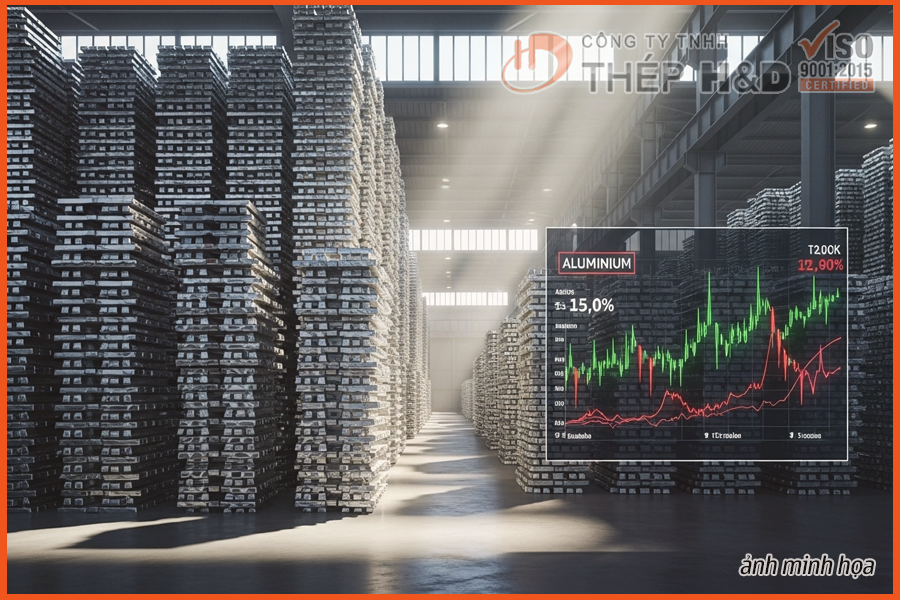
The aluminum market is currently in a complex tug-of-war. On one hand, favorable macroeconomic factors, both domestic and international, are supporting prices. On the other hand, fundamental factors, particularly weak off-season consumption and rising inventories, are creating significant pressure. After the positive sentiment is digested, aluminum prices face a risk of a downward correction, with the key resistance level of 21,000 yuan/mt still under pressure. For the upcoming week, SHFE aluminum is expected to trade within the range of 20,400-21,000 yuan/mt, while LME aluminum is forecast to trade between $2,570-$2,660/mt.
Recent global economic news has fostered market optimism. In the United States, the July Consumer Price Index (CPI) rose by 0.2% month-on-month, in line with expectations and slowing from June. The year-on-year inflation rate held steady at 2.7%, below the market forecast of 2.8%. This mild inflation data has solidified expectations for a US Federal Reserve interest rate cut in September, with market bets increasing for further easing policies later this year.
Additionally, reports from the China-US economic and trade talks in Stockholm, suggesting an agreement to suspend the 24% tariffs for another 90 days, have eased market uncertainty. Domestically, the Chinese government continues its supportive policies, with numerous provinces establishing state-owned asset M&A funds to strengthen and supplement local industrial chains, acting as a "ballast stone" for economic stability.
In contrast to the bright macroeconomic picture, the fundamentals of the aluminum industry reveal several concerning signs.
1. Supply Remains High and Stable: China's domestic aluminum operating capacity remains at high levels, especially after the second batch of replacement projects in Yunnan came online. Production costs have seen minimal changes, with the real-time cost of electrolytic aluminum at 16,738 yuan/mt. This allows the industry to maintain a very high theoretical profit of around 3,951 yuan/mt, incentivizing smelters to keep output high.
2. Weak Downstream Demand Recovery: Although the September-October peak season is approaching, demand recovery remains sluggish. The operating rate of the aluminum extrusion industry saw a slight weekly increase of 1 percentage point to 50.5%, mainly due to new orders from the automotive and photovoltaic sectors. However, the construction extrusion sector, a major consumer, remains sluggish with no signs of a turnaround. Growth in previously strong sectors like home appliances and PV has slowed, and some export orders have also declined.
3. Inventories Continue to Build: This is the direct consequence of the strong supply and weak demand dynamic. According to SMM statistics on August 14, aluminum ingot inventory in China's main consumption areas stood at 588,000 mt, an increase of 24,000 mt from the previous week. Warehouse outflows have not shown signs of strengthening, and the inventory buildup trend is expected to continue until the end of August. SMM predicts that inventory may rise to around 600,000-650,000 mt by late August.
Overall, the aluminum market is caught between conflicting influences. Macroeconomic optimism is preventing a sharp price drop, but the mounting pressure from rising inventories poses a significant barrier to further gains. Investors should be cautious as the positive sentiment from macro news is gradually priced in, as aluminum prices may face a "rise first, fall later" scenario. A genuine price recovery will depend on a tangible improvement in end-use demand as the market enters its traditional peak season.
Sàn Thượng Hải mở cửa lại sau Quốc khánh với hai phiên giảm liền: giá nhôm thỏi SMM A...
Từ ngày 20/10/2026, Nghị định 344/2026/NĐ-CP mở cơ chế đặt hàng và ưu đãi cho doanh n...
Các con số vật lý của nhôm không giống nhau giữa các mác, và mỗi con số dẫn tới một q...
Giá nhôm thỏi SMM A00 giảm ba phiên liên tiếp trong tuần 40/2026, chốt 24.030 CNY/tấn...
Sau 8 tháng 2026, thị trường ô tô Việt Nam bán 432.548 xe, mức tăng cao nhất trong 6...
Nhôm tấm 3mm là độ dày được hỏi nhiều nhất trong nhóm tấm mỏng vì đủ cứng để làm thùn...
Nhôm A6061 là hợp kim nhôm–magie–silic hoá bền bằng nhiệt luyện, được dùng nhiều nhất...
Chỉ số cước container nội Á của Drewry chốt ngày 24/9/2026 ở 1.491 USD/40ft, tăng 6%...
Giá nhôm thỏi SMM A00 chốt tuần 39/2026 ở 24.240 CNY/tấn, cao hơn 60 CNY/tấn so với t...
Nhôm chống trượt là tấm nhôm có gân nổi một mặt, dùng cho sàn xe, cầu thang và sàn xư...


.jpg)