





Aluminium sheet price, week 41/2026: SMM A00 drops to 23,650
Shanghai reopened after National Day with two down sessions: the SMM A00 aluminium in...


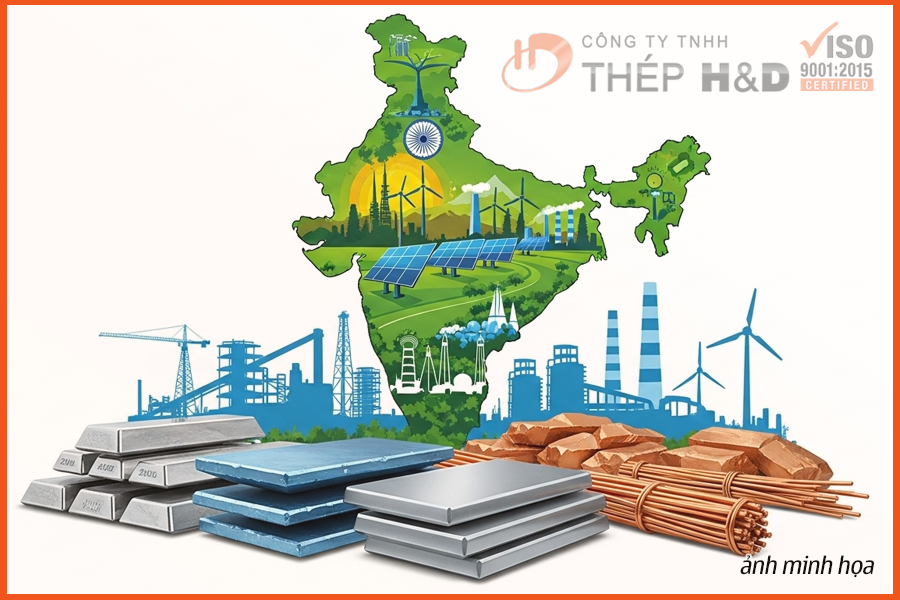
As India accelerates its energy transition and industrial growth, Vedanta Resources, under the leadership of CEO Deshnee Naidoo, is positioning itself as a key player in reducing the nation's reliance on imported critical minerals. With nearly 70% of Vedanta’s revenue now stemming from transition metals such as aluminium, zinc, copper, nickel, and rare earths, the company is asserting its central role in India’s evolving industrial ecosystem.
Domestic Backward Integration:
International Expansion:
Vedanta’s aggressive investment in backward integration, asset acquisition, and portfolio diversification is aimed at making India’s industrial base more resilient and less dependent on imported critical minerals. By securing and expanding domestic production of key transition metals and minerals, Vedanta not only supports India’s energy transition but also strengthens the country’s position in global clean energy supply chains.
CEO Deshnee Naidoo emphasizes the transformative power of metals and mining in economic development and sees India as ready to capitalize on its mineral potential to drive sustainable, inclusive growth. The company’s focus on reducing carbon footprints (e.g., through EcoZen) and advancing recycling and green technologies further aligns with global sustainability trends.
Deshnee Naidoo, a seasoned mining executive with experience across multiple geographies and commodities, returned to Vedanta in early 2025 to lead its next phase of growth, including a planned demerger to unlock greater value and focus on critical minerals. She has been recognized for her leadership in gender diversity and operational excellence in the mining sector.
Vedanta's strategy presents numerous opportunities for India, including enhanced economic security, job creation, and technological advancement. However, significant challenges also exist. Scaling up mineral extraction and processing requires substantial capital, advanced technology, and strict adherence to environmental regulations. Price volatility in global mineral markets can also impact profitability. Vedanta will need to balance its growth objectives with social and environmental responsibilities to ensure sustainable development.
Vedanta’s comprehensive expansion across aluminium, zinc, copper, nickel, rare earths, and other critical minerals is central to India’s ambition of reducing import reliance and building a self-sufficient, green industrial economy. Through large-scale capacity increases, strategic international investments, and a focus on sustainability, Vedanta is set to play a pivotal role in India’s energy transition and industrial modernization. This is a strong signal for investors, managers, and technical experts about the direction of one of India's largest industrial conglomerates in the coming decade.
References:
Shanghai reopened after National Day with two down sessions: the SMM A00 aluminium in...
From 20 October 2026, Decree 344/2026/ND-CP opens a state ordering mechanism and ince...
Aluminum's physical figures differ between alloys, and each figure drives a concrete...
The SMM A00 aluminium ingot price fell in all three sessions of week 40/2026, closing...
Vietnam's car market sold 432,548 vehicles in the first eight months of 2026, the fas...
3mm aluminum sheet is the most requested thickness in the thin-to-medium range: stiff...
A6061 is a heat-treatable aluminium–magnesium–silicon alloy widely used for machine f...
Drewry's Intra-Asia Container Index closed at 1,491 USD/40ft on 24 September 2026, up...
The SMM A00 aluminium ingot price ended week 39/2026 at 24,240 CNY/t, up 60 CNY/t fro...
Aluminum tread plate is sheet with a raised pattern on one face, used for truck floor...


.jpg)