






Nhôm A5052: chọn O, H32 hay H34, bán kính chấn và lỗi khi mua
Cùng là nhôm A5052 nhưng tấm trạng thái O, H32 và H34 có độ bền, độ dẻo và bán kính c...


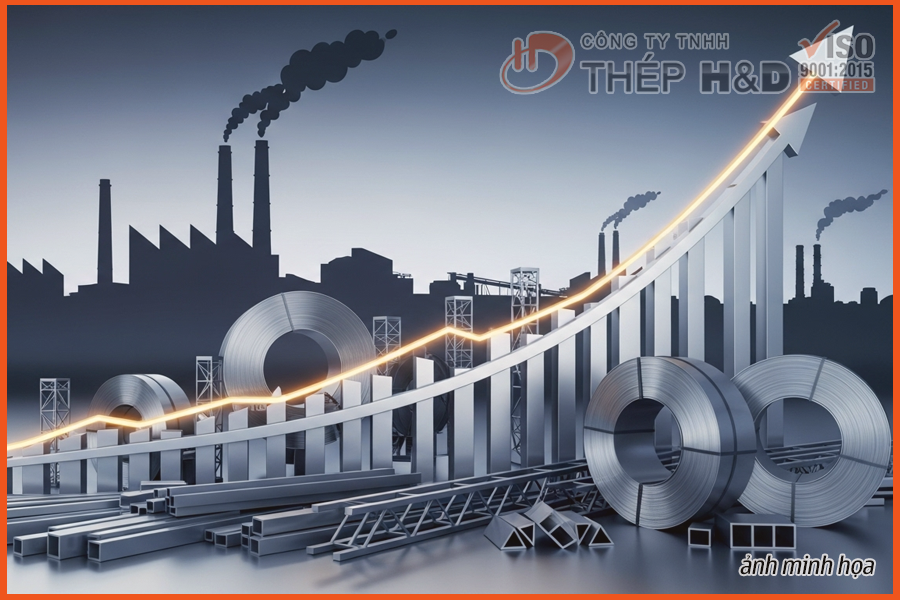
Washington D.C., USA – October 28, 2025 – The U.S. steel market is witnessing a notable shift as two major producers, NLMK USA and Atlas Tube, announce price increases for their products. This move comes amidst a robust recovery in steel demand, signaling a new phase after a period of relative price stability and even declines. The decision to raise prices not only reflects market improvement but is also influenced by input costs and trade policies.
NLMK USA, a leading sheet steel producer, has announced price increases for its hot-rolled (HR) and cold-rolled (CR) coil products by at least $50 per short ton (st). Notably, prices for coated steel will see an even larger increase of $100 per short ton. These adjustments are effective immediately, marking a significant turn in the company's pricing strategy.
Following suit, Atlas Tube, a division of Zekelman Industries and North America's largest producer of mechanical tubing, hollow structural sections (HSS), and piling products, also announced a price hike. Atlas Tube's products will increase by at least $50 per short ton. This price increase is effective immediately for all new orders and applies to unconfirmed quotes and contracts. However, orders already on the books are price-protected for shipment through November 21.
Other producers are also making similar moves. Nucor, one of the largest steel producers in the U.S., recently raised its spot price for hot-rolled coil by $10 per ton, after keeping prices steady since late August.
The recovery in demand is the primary catalyst behind these price increases. After a period where the market was dominated by concerns over excess supply and volatile costs, construction and industrial activities are showing signs of revitalization. This creates a favorable environment for steel producers to adjust their pricing.
Furthermore, prior price announcements by sheet producers have played a crucial role. Sheet steel is a key input material for welded tubular products like HSS and mechanical tubing. Therefore, as sheet steel prices rise, the production costs for tube manufacturers like Atlas Tube also increase, compelling them to adjust their selling prices to maintain profit margins. Specifically, hot-rolled coil prices reached $805 per short ton as of October 21, 2025, a $20 per ton increase from the previous month.
In addition, trade policy is an undeniable factor. The U.S. government confirmed an increase in tariffs on steel and aluminum imports to 25% in early 2025. These tariffs raise costs for manufacturers using imported materials, thereby adding further upward pressure on domestically produced steel prices.
The global steel market is navigating a complex period. While demand in some regions, such as the U.S., is recovering, geopolitical factors, energy volatility, and environmental policies continue to influence supply and production costs.
For investors, closely monitoring these price movements is crucial. They could signal a more sustained upward trend in the steel industry, impacting company profitability and stock values. Managers need to re-evaluate procurement strategies and supply chain management to cope with rising raw material costs. Meanwhile, technical experts should assess the impact of increased steel prices on project costs and explore opportunities for alternative materials or design optimization to mitigate expenses.
While this article focuses on steel, price movements in one basic metal industry can often be indicative of broader trends in the materials market. To understand more about how other metal products are priced, you can refer to Pricing of aluminum coils/sheets for a general overview of factors influencing prices in the industry.
In conclusion, the price increases by NLMK USA and Atlas Tube are clear evidence of recovering steel demand in the U.S., bolstered by input cost factors and tariff policies. This is a positive signal for the steel industry but also presents new challenges for stakeholders in managing costs and business strategies.
References:
Cùng là nhôm A5052 nhưng tấm trạng thái O, H32 và H34 có độ bền, độ dẻo và bán kính c...
Sàn Thượng Hải mở cửa lại sau Quốc khánh với hai phiên giảm liền: giá nhôm thỏi SMM A...
Từ ngày 20/10/2026, Nghị định 344/2026/NĐ-CP mở cơ chế đặt hàng và ưu đãi cho doanh n...
Các con số vật lý của nhôm không giống nhau giữa các mác, và mỗi con số dẫn tới một q...
Giá nhôm thỏi SMM A00 giảm ba phiên liên tiếp trong tuần 40/2026, chốt 24.030 CNY/tấn...
Sau 8 tháng 2026, thị trường ô tô Việt Nam bán 432.548 xe, mức tăng cao nhất trong 6...
Nhôm tấm 3mm là độ dày được hỏi nhiều nhất trong nhóm tấm mỏng vì đủ cứng để làm thùn...
Nhôm A6061 là hợp kim nhôm–magie–silic hoá bền bằng nhiệt luyện, được dùng nhiều nhất...
Chỉ số cước container nội Á của Drewry chốt ngày 24/9/2026 ở 1.491 USD/40ft, tăng 6%...
Giá nhôm thỏi SMM A00 chốt tuần 39/2026 ở 24.240 CNY/tấn, cao hơn 60 CNY/tấn so với t...


