






Nhôm A5052: chọn O, H32 hay H34, bán kính chấn và lỗi khi mua
Cùng là nhôm A5052 nhưng tấm trạng thái O, H32 và H34 có độ bền, độ dẻo và bán kính c...


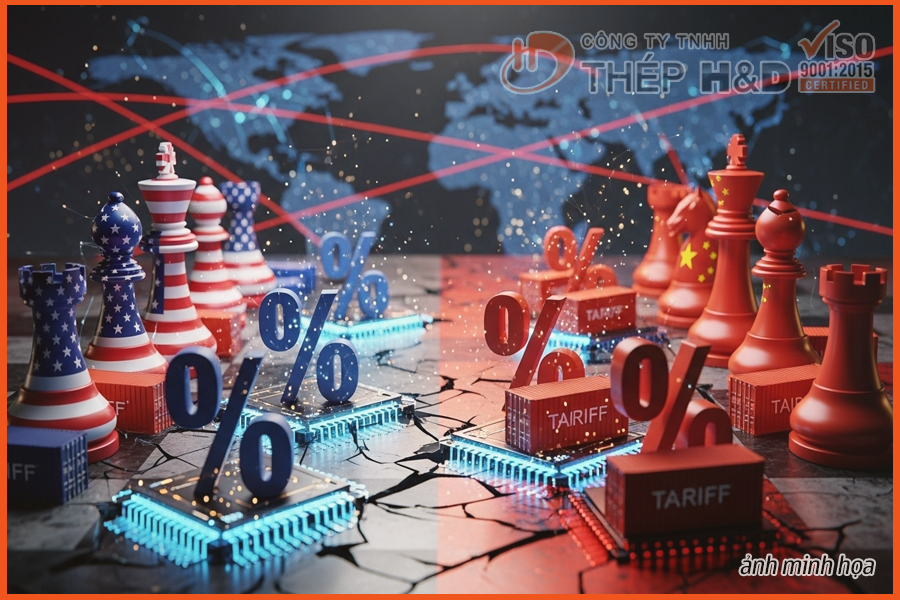
The global market is facing growing uncertainty as trade tensions between the United States and China show signs of re-escalation. Key developments are unfolding on two fronts: potential tariff policies from former President Donald Trump and the technology war, particularly China's efforts to reduce its reliance on Nvidia's semiconductor chips. These moves threaten to reshape global supply chains and profoundly impact numerous industries.
With the US presidential election approaching, the market is paying close attention to Donald Trump's policy proposals. Most notable is the plan to impose tariffs of up to 60% on goods imported from China and a blanket 10% tariff on all goods from other countries. The stated goal is to protect domestic manufacturing and rebalance the trade deficit.
However, analysts warn that such a hardline tariff policy could trigger major shocks to the economy. Businesses dependent on Chinese supply chains would face soaring costs, likely passing the burden onto consumers. Furthermore, this action would almost certainly be met with retaliatory measures from Beijing and other trading partners, raising the risk of a full-blown trade war that could disrupt existing agreements.
Beyond facing tariff pressures, China is also accelerating its strategy for technological self-reliance, especially in the semiconductor sector. It has been recently reported that the Chinese government is encouraging, and even pressuring, major domestic tech companies to phase out the use of high-performance AI chips from Nvidia. This move stems from two primary concerns: national security, particularly the risk of "backdoors" in American technology products, and the desire to bolster its domestic chip industry.
This technology war places Nvidia and other Western semiconductor firms in a difficult position. Although the US government recently re-licensed Nvidia to sell its H20 chip version to China, accompanying requirements for revenue sharing and technical limitations indicate tight control. In the long run, China's determination to build its own chip ecosystem will shift the balance of power in the high-tech industry, which heavily relies on strategic materials. You can learn more about the role of aluminum in mechanical engineering to better understand the importance of materials.
Although US-China trade negotiations are ongoing and some temporary truces have been extended, the overall atmosphere remains tense. The confrontation is not limited to economics but has spilled over into technology and security. The complexity of this relationship is highlighted by the US simultaneously licensing chip sales to China while maintaining sanctions and tariff threats.
In this context, businesses, especially in the manufacturing and construction sectors, must prepare for volatile scenarios. Diversifying supply chains and seeking alternative markets and suppliers is a crucial survival strategy. At the same time, mastering regulations, such as procedures for importing raw materials, will help businesses be more proactive in the face of sudden policy changes.
Sources: Compiled and analyzed from Yahoo Finance and other international market sources as of August 13, 2025.
Cùng là nhôm A5052 nhưng tấm trạng thái O, H32 và H34 có độ bền, độ dẻo và bán kính c...
Sàn Thượng Hải mở cửa lại sau Quốc khánh với hai phiên giảm liền: giá nhôm thỏi SMM A...
Từ ngày 20/10/2026, Nghị định 344/2026/NĐ-CP mở cơ chế đặt hàng và ưu đãi cho doanh n...
Các con số vật lý của nhôm không giống nhau giữa các mác, và mỗi con số dẫn tới một q...
Giá nhôm thỏi SMM A00 giảm ba phiên liên tiếp trong tuần 40/2026, chốt 24.030 CNY/tấn...
Sau 8 tháng 2026, thị trường ô tô Việt Nam bán 432.548 xe, mức tăng cao nhất trong 6...
Nhôm tấm 3mm là độ dày được hỏi nhiều nhất trong nhóm tấm mỏng vì đủ cứng để làm thùn...
Nhôm A6061 là hợp kim nhôm–magie–silic hoá bền bằng nhiệt luyện, được dùng nhiều nhất...
Chỉ số cước container nội Á của Drewry chốt ngày 24/9/2026 ở 1.491 USD/40ft, tăng 6%...
Giá nhôm thỏi SMM A00 chốt tuần 39/2026 ở 24.240 CNY/tấn, cao hơn 60 CNY/tấn so với t...


