





Aluminium sheet price, week 41/2026: SMM A00 drops to 23,650
Shanghai reopened after National Day with two down sessions: the SMM A00 aluminium in...


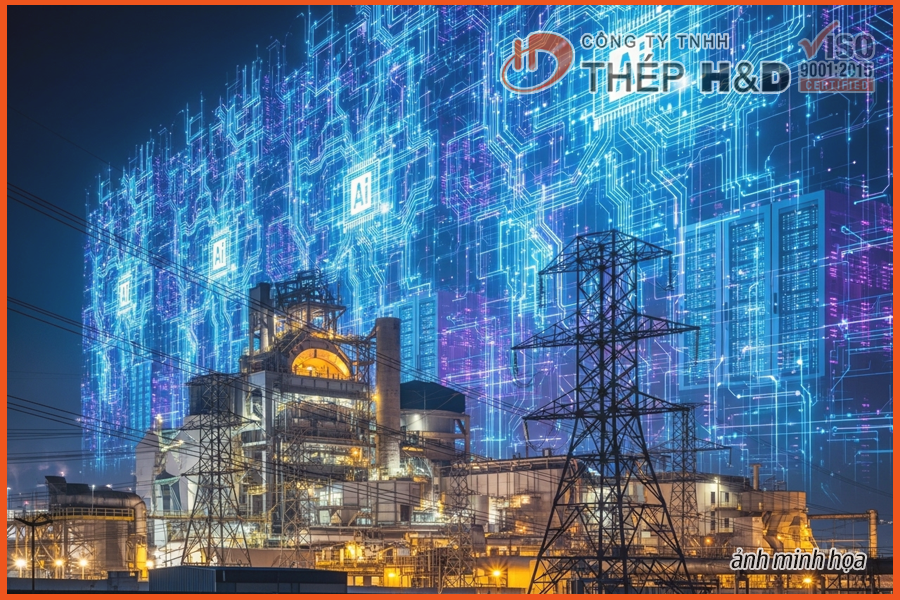
October 23, 2025 – The ambitious drive to reshore aluminum production to the United States, a strategic goal aimed at bolstering supply chain security and creating jobs, is encountering a formidable challenge: an "energy wall." The explosive growth of artificial intelligence (AI) and data centers has created intense competition for electricity, driving up energy prices and making domestic aluminum production increasingly economically unfeasible. This situation is reshaping the future of the American aluminum industry and raising urgent questions about national energy policy.
Primary aluminum production is one of the most energy-intensive industrial processes globally. The Hall-Héroult smelting process requires approximately 13,500–16,000 kWh of electricity per metric ton of aluminum produced [6]. This means that electricity accounts for nearly 40% of the total production costs for U.S. aluminum smelters, and 80% of the industry's CO₂ emissions come directly from power consumption [4].
Historically, the decline in the number of U.S. aluminum smelters from 33 to just 4 today has been primarily attributed to high and volatile electricity costs [9]. Current U.S. industrial electricity rates range from $65 to $82 per MWh, significantly higher than the $40 per MWh considered necessary for profitable smelting operations [4]. In contrast, Canadian smelters, which supply 40% of U.S. aluminum demand, benefit from much lower hydroelectric power rates, ranging from just $26–$41 per MWh [4]. This energy cost disparity creates a massive competitive advantage for foreign rivals.
As the aluminum industry seeks to revive itself, a new and powerful contender has emerged in the energy market: the AI and data center industry. The explosive development of AI has led to unprecedented demand for massive data centers, which consume enormous amounts of electricity to power servers and cooling systems. These data centers are rapidly becoming leading "power guzzlers," directly competing with heavy industries like aluminum for stable and affordable electricity supplies [5].
This surge in demand not only drives up electricity prices but also places immense pressure on national power grids, which are already grappling with modernization and the transition to renewable energy. Electricity providers face the dual challenge of meeting soaring demand from high-tech sectors while maintaining stable supplies for traditional industries.
The U.S. aluminum reshoring policy, despite being supported by tariffs and a desire for increased economic security, is encountering a major hurdle in the form of energy availability and cost [5].
The future of the U.S. aluminum industry hinges on its ability to overcome this "energy wall." For successful reshoring, a comprehensive energy strategy is required, including:
The race to reshore aluminum production in the U.S. faces a dual challenge: the industry's own immense energy requirements and fierce competition from emerging sectors like AI and data centers. To ensure a sustainable future for domestic aluminum, policymakers, investors, and technical experts must collaborate to develop innovative, sustainable, and competitive energy solutions. Without such efforts, the "energy wall" is likely to continue hindering the growth of the U.S. aluminum industry, despite trade protection efforts.
References:
Shanghai reopened after National Day with two down sessions: the SMM A00 aluminium in...
From 20 October 2026, Decree 344/2026/ND-CP opens a state ordering mechanism and ince...
Aluminum's physical figures differ between alloys, and each figure drives a concrete...
The SMM A00 aluminium ingot price fell in all three sessions of week 40/2026, closing...
Vietnam's car market sold 432,548 vehicles in the first eight months of 2026, the fas...
3mm aluminum sheet is the most requested thickness in the thin-to-medium range: stiff...
A6061 is a heat-treatable aluminium–magnesium–silicon alloy widely used for machine f...
Drewry's Intra-Asia Container Index closed at 1,491 USD/40ft on 24 September 2026, up...
The SMM A00 aluminium ingot price ended week 39/2026 at 24,240 CNY/t, up 60 CNY/t fro...
Aluminum tread plate is sheet with a raised pattern on one face, used for truck floor...


.jpg)