






5052 Aluminum: O, H32 or H34, Bend Radius and Buying Mistakes
5052 aluminum sheet in O, H32 and H34 tempers differs clearly in strength, ductility...


As of mid-July 2025, the global steel market is witnessing a significant strategic shift from Chinese producers. Faced with hefty tariffs on finished steel products in major markets, these companies have found a new, effective workaround: exporting semi-finished steel billet. This tactic is not only reshaping trade flows but also posing a new set of challenges for steelmakers worldwide, particularly in Southeast Asia.
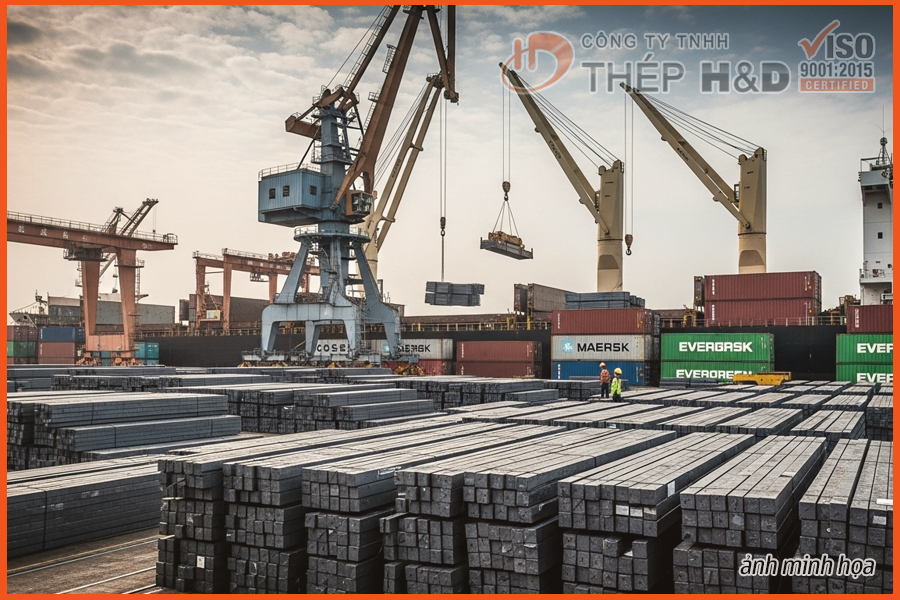
The data reveals a clear and dramatic trend. In the first half of 2025, China's steel billet exports surged to an astonishing 15 million metric tons. This represents a massive 45% increase compared to the 10.3 million tons exported during the same period in 2024. The primary driver for this shift is tariff arbitrage.
While finished Chinese steel products, such as hot-rolled coil (HRC), face tariffs of 25-30% in key markets like the European Union, the import duties on semi-finished billet are significantly lower, often falling below 5% or even zero in many ASEAN nations. This discrepancy has created a lucrative loophole, which Chinese exporters are fully exploiting. The current FOB price for Chinese billet (Q235 grade) hovers around $480-$490 per metric ton, a highly competitive price point that is difficult for international competitors to match.
The main theater for this new trade dynamic is Southeast Asia. Countries like Vietnam, Indonesia, Thailand, and Turkey have become the primary destinations for this influx of Chinese billet. The impact, however, is creating a divided industry. Re-rollers, who import billet to process into finished goods, are benefiting from lower raw material costs. This allows them to improve their margins and offer more competitive prices in their domestic markets.
Conversely, integrated steelmakers in the region—those that produce their own steel from iron ore and coal—are facing immense pressure. The flood of cheap billet undermines their pricing power and squeezes their profitability. Industry bodies, such as the Southeast Asia Iron and Steel Institute (SEAISI), have voiced growing concerns, warning of long-term damage to the region's steel self-sufficiency. This strategic pivot in the steel industry highlights the complex global trade of industrial metals, a world where materials like aluminum and steel are at the center of economic strategy.
The strategy of exporting billet is a clever, market-driven response to existing trade barriers. However, it is unlikely to go unnoticed for long. Analysts predict that this will become the next major flashpoint in global trade disputes. Governments in affected regions are now under pressure to act, and we may see the implementation of new anti-dumping investigations or safeguard measures specifically targeting semi-finished steel in the coming months.
For now, Chinese steel producers have successfully opened a new valve to release their vast production capacity onto the world stage, forcing a realignment of strategies for competitors, customers, and regulators alike.
Sources: Verified data from Reuters, S&P Global, Fastmarkets, and the World Steel Association as of July 2025.
5052 aluminum sheet in O, H32 and H34 tempers differs clearly in strength, ductility...
Shanghai reopened after National Day with two down sessions: the SMM A00 aluminium in...
From 20 October 2026, Decree 344/2026/ND-CP opens a state ordering mechanism and ince...
Aluminum's physical figures differ between alloys, and each figure drives a concrete...
The SMM A00 aluminium ingot price fell in all three sessions of week 40/2026, closing...
Vietnam's car market sold 432,548 vehicles in the first eight months of 2026, the fas...
3mm aluminum sheet is the most requested thickness in the thin-to-medium range: stiff...
A6061 is a heat-treatable aluminium–magnesium–silicon alloy widely used for machine f...
Drewry's Intra-Asia Container Index closed at 1,491 USD/40ft on 24 September 2026, up...
The SMM A00 aluminium ingot price ended week 39/2026 at 24,240 CNY/t, up 60 CNY/t fro...


