091 327 0770 - 090 326 2566
info@hdsteel.com.vn


Reusing Old Building Materials: A Sustainable Trend for New Constructions in Vietnam

October 27, 2025 – Vietnam's construction industry is undergoing a significant shift towards sustainable solutions, with the reuse of old building materials and the integration of low-carbon materials becoming a top priority. While specific details from certain sources may be difficult to access, the general trend indicates a substantial effort to minimize waste, optimize resources, and enhance the climate resilience of new constructions.

(Note: The original content from the URL hanoimoi.vn was inaccessible. This article is compiled based on publicly available information and in-depth analysis of sustainable efforts in Vietnam's construction industry.)

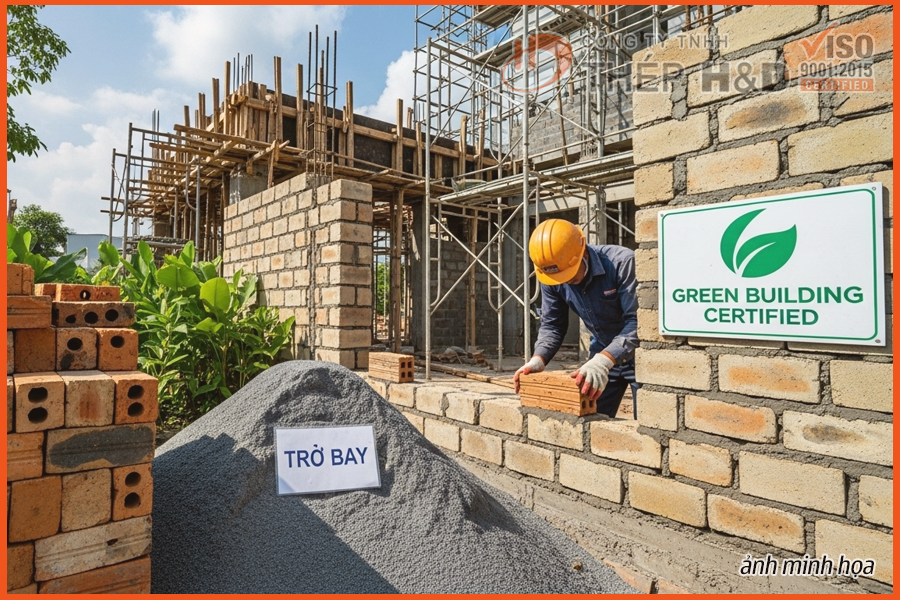
Material Reuse: From Fly Ash to Unfired Bricks

The reuse of old building materials not only helps reduce the amount of waste sent to landfills but also contributes to cost savings and the conservation of natural resources. In Vietnam, several recycled materials are gaining widespread application:

  • Fly Ash Utilization: Fly ash, a byproduct of coal combustion, is being repurposed to create eco-friendly concrete. This not only minimizes industrial waste but also enhances concrete strength while reducing cement usage, thereby lowering the carbon footprint of construction material production.
  • Unfired Bricks: Unfired bricks, made from natural materials like clay without the need for high-temperature firing, are becoming increasingly popular. These bricks significantly reduce energy consumption and greenhouse gas emissions during production compared to traditional fired bricks.

These initiatives demonstrate Vietnam's commitment to fostering a circular economy within the construction sector, where materials are kept in the value chain for as long as possible.

Comprehensive Sustainability Efforts in Vietnam's Construction Industry

Vietnam is actively promoting sustainable practices in the construction sector through various initiatives and policies:

  • Low-Carbon Materials: Projects are focusing on integrating low-embodied carbon materials to reduce the carbon footprint of buildings, aligning with Vietnam's National Determined Contributions (NDC) Buildings Roadmap to 2050. This target aims for a 9%-27% reduction in greenhouse gas emissions by 2030 and net-zero emissions by 2050.
  • Green Certifications: The number of green-certified building projects in Vietnam is growing, with systems like EDGE, LEED, Green Mark, and Lotus. This reflects the nation's strong commitment to green building development.
  • Climate Resilience: Tools such as the Building Resilience Index (BRI) are assisting developers in assessing and improving the climate resilience of buildings against climate-related risks.
  • Sustainable Public Procurement (SPP): SPP is considered a crucial strategy to enhance environmental sustainability and resource efficiency in the construction sector, particularly in public infrastructure projects.

Opportunities and Challenges

The transition to sustainable construction presents numerous opportunities but also comes with challenges:

  • Opportunities: Opens new markets for recycled material producers and green technologies. Reduces long-term operational costs for buildings through energy efficiency. Enhances brand image and value for developers. Contributes to national climate change goals.
  • Challenges: Higher initial costs for green materials and technologies. Shortage of high-quality recycled material supply and standardized recycling processes. Need for training and capacity building for the workforce. Regulatory frameworks and standards require refinement to encourage and manage effectively.

To further promote this trend, the Vietnamese government is considering preferential policies such as tax reductions, land rent incentives, and financial support to encourage green building development. Collaboration among the government, businesses, and research institutions will be key to overcoming challenges and realizing the full potential of sustainable construction.

In this context, selecting appropriate materials is paramount. Investors and project managers need to carefully consider material properties to ensure efficiency and sustainability. For instance, various aluminum sheets 1050, 3003, 5052, 6061, 7075 and aluminum 6061 T6 are popular aluminum alloys, highly valued for their durability, corrosion resistance, and recyclability, making them suitable for numerous applications in modern construction.

References:

  • Market Research Vietnam
  • RNDBI.org
  • IFC (International Finance Corporation)
  • Tatler Asia
  • Switch-Asia.eu
  • International Trade Administration (trade.gov)
  • Connect-Education-Research-Innovation.de
  • Ardor Green

Related Post

Aluminium sheet price, week 41/2026: SMM A00 drops to 23,650

Aluminium sheet price, week 41/2026: SMM A00 drops to 23,650

Shanghai reopened after National Day with two down sessions: the SMM A00 aluminium in...

Decree 344: Incentives for Power Equipment Makers from 20 Oct

Decree 344: Incentives for Power Equipment Makers from 20 Oct

From 20 October 2026, Decree 344/2026/ND-CP opens a state ordering mechanism and ince...

Physical Properties of Aluminum: 1050, 3003, 5052 Data for Shops

Physical Properties of Aluminum: 1050, 3003, 5052 Data for Shops

Aluminum's physical figures differ between alloys, and each figure drives a concrete...

Aluminium sheet price, week 40/2026: SMM A00 eases to 24,030

Aluminium sheet price, week 40/2026: SMM A00 eases to 24,030

The SMM A00 aluminium ingot price fell in all three sessions of week 40/2026, closing...

Vietnam car market grows fastest in Southeast Asia in 8M 2026

Vietnam car market grows fastest in Southeast Asia in 8M 2026

Vietnam's car market sold 432,548 vehicles in the first eight months of 2026, the fas...

3mm Aluminum Sheet: Weight, Tolerance, Alloy and Buying Errors

3mm Aluminum Sheet: Weight, Tolerance, Alloy and Buying Errors

3mm aluminum sheet is the most requested thickness in the thin-to-medium range: stiff...

6061 aluminum plate: T6 vs T651, thickness and buying pitfalls

6061 aluminum plate: T6 vs T651, thickness and buying pitfalls

A6061 is a heat-treatable aluminium–magnesium–silicon alloy widely used for machine f...

Intra-Asia freight at record high before Golden Week 2026

Intra-Asia freight at record high before Golden Week 2026

Drewry's Intra-Asia Container Index closed at 1,491 USD/40ft on 24 September 2026, up...

Aluminium sheet price, week 39/2026: SMM A00 at 24,240 CNY/t

Aluminium sheet price, week 39/2026: SMM A00 at 24,240 CNY/t

The SMM A00 aluminium ingot price ended week 39/2026 at 24,240 CNY/t, up 60 CNY/t fro...

Aluminum tread plate: choosing alloy, pattern and thickness

Aluminum tread plate: choosing alloy, pattern and thickness

Aluminum tread plate is sheet with a raised pattern on one face, used for truck floor...