






Nhôm A5052: chọn O, H32 hay H34, bán kính chấn và lỗi khi mua
Cùng là nhôm A5052 nhưng tấm trạng thái O, H32 và H34 có độ bền, độ dẻo và bán kính c...


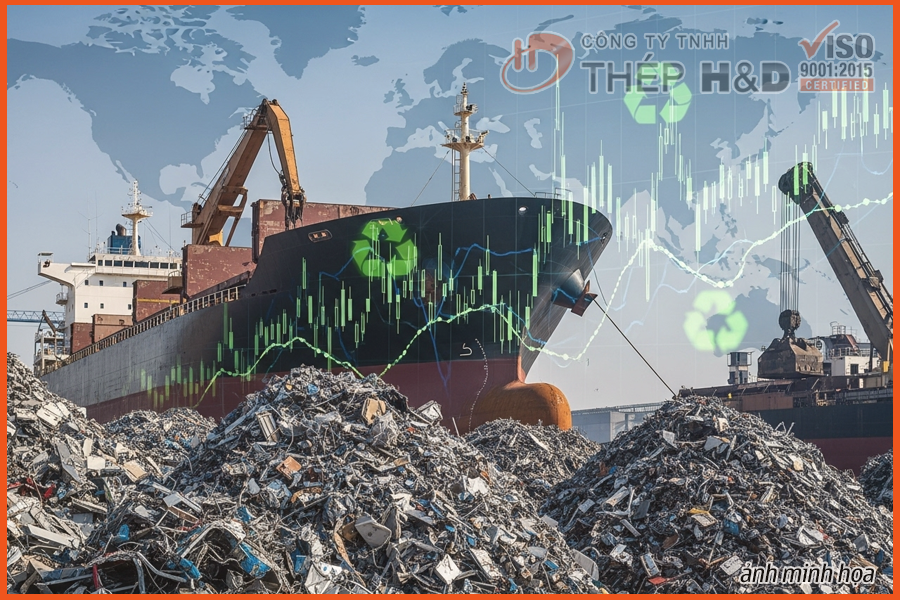
October 14, 2025 – The global ship recycling industry is navigating a challenging period, primarily due to the unpredictable volatility of steel scrap prices – a core determinant of recyclers' profitability. Amidst persistent global macroeconomic uncertainties, ship recyclers are confronting a multitude of pressures stemming from currency fluctuations, trade policies, increasingly stringent environmental regulations, and weak export demand. These factors are significantly reshaping the operations and outlook of an already complex industry.
Steel scrap prices are not only affected by macroeconomic factors but also by specific industry dynamics:
Market Sentiment: There is a broad market consensus that scrap metal prices will continue to face downward pressure in the short term, reflecting deeper systemic challenges rather than temporary fluctuations. Analysts predict that the ship recycling market is likely to remain volatile throughout 2025.
Long-Term Opportunities: Despite current volatility, the long-term outlook for ship recycling and scrap metal remains positive. This is driven by the global push for sustainability, circular economy practices, and technological advancements in recycling processes. Demand for recycled materials, especially steel, will continue to grow as industries seek to reduce their carbon footprint and production costs.
In this context, closely monitoring overall metal market trends, including aluminum coil and sheet pricing and understanding the diverse applications of aluminum, is essential for investors and businesses to gain a comprehensive view of the material supply chain and make strategic decisions.
Ship recyclers in 2025 are operating in a complex and volatile environment, marked by unpredictable steel prices, currency risks, regulatory changes, and weak export demand. These challenges stem from global overcapacity, trade policies, geopolitical tensions, and local market dynamics. While the short-term outlook is tough, the industry's future may be buoyed by sustainability trends and technological innovation, transforming end-of-life vessels into circular economy opportunities. Successfully navigating these factors will be key to the industry's survival and growth in the coming years.
References:
Cùng là nhôm A5052 nhưng tấm trạng thái O, H32 và H34 có độ bền, độ dẻo và bán kính c...
Sàn Thượng Hải mở cửa lại sau Quốc khánh với hai phiên giảm liền: giá nhôm thỏi SMM A...
Từ ngày 20/10/2026, Nghị định 344/2026/NĐ-CP mở cơ chế đặt hàng và ưu đãi cho doanh n...
Các con số vật lý của nhôm không giống nhau giữa các mác, và mỗi con số dẫn tới một q...
Giá nhôm thỏi SMM A00 giảm ba phiên liên tiếp trong tuần 40/2026, chốt 24.030 CNY/tấn...
Sau 8 tháng 2026, thị trường ô tô Việt Nam bán 432.548 xe, mức tăng cao nhất trong 6...
Nhôm tấm 3mm là độ dày được hỏi nhiều nhất trong nhóm tấm mỏng vì đủ cứng để làm thùn...
Nhôm A6061 là hợp kim nhôm–magie–silic hoá bền bằng nhiệt luyện, được dùng nhiều nhất...
Chỉ số cước container nội Á của Drewry chốt ngày 24/9/2026 ở 1.491 USD/40ft, tăng 6%...
Giá nhôm thỏi SMM A00 chốt tuần 39/2026 ở 24.240 CNY/tấn, cao hơn 60 CNY/tấn so với t...


