






Nhôm A5052: chọn O, H32 hay H34, bán kính chấn và lỗi khi mua
Cùng là nhôm A5052 nhưng tấm trạng thái O, H32 và H34 có độ bền, độ dẻo và bán kính c...


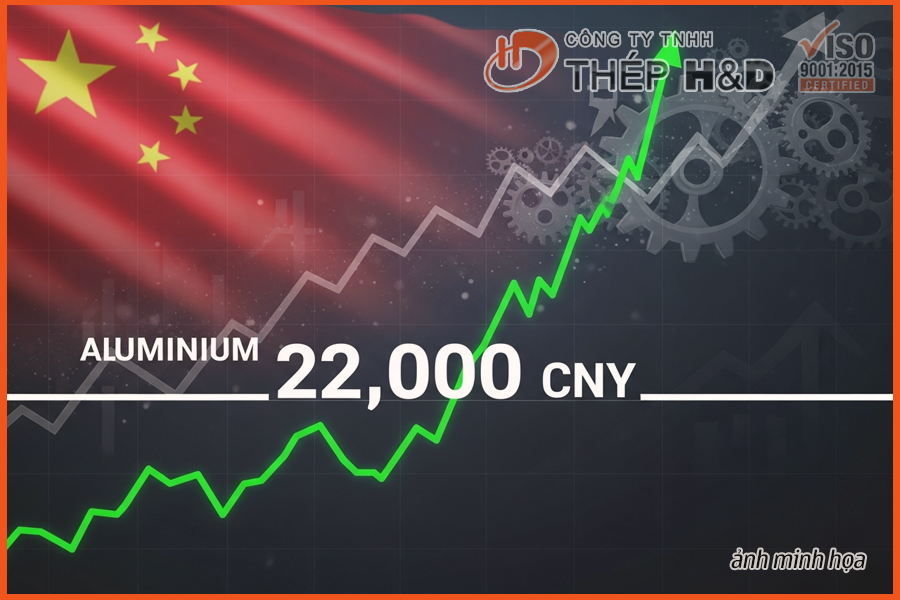
November 14, 2025 – The Shanghai Futures Exchange (SHFE) aluminum market is witnessing a remarkable phenomenon as prices have surged past the 22,000 CNY/ton threshold, defying typical off-season pressures. This breakthrough not only reflects the strength of macroeconomic factors but also highlights the significant resilience of China's aluminum industry against seasonal challenges. For investors, managers, and technical experts, a deep analysis of the drivers behind this trend is crucial for shaping future strategies.
Typically, the winter months in China are considered an off-season for the aluminum industry due to a slowdown in construction and manufacturing activities. However, in mid-November 2025, SHFE aluminum prices have not only held firm but have shown robust growth, with November and January 2026 contracts trading around 21,990 CNY/ton and 22,080 CNY/ton respectively [1]. This indicates that supportive macroeconomic factors are significantly outweighing seasonal demand weakness.
The upward trajectory of SHFE aluminum prices is underpinned by several critical macroeconomic factors:
Beyond China, the global aluminum market is also experiencing supply tightness. In Europe, duty-paid aluminum premiums soared to $324 per tonne in November 2025, reaching a nine-month high, driven by smelter disruptions and elevated energy costs [2]. This global supply tightness, coupled with geopolitical factors and shipping costs, has created a positive "spillover effect" on SHFE aluminum prices, further reinforcing the upward trend [2].
The breakthrough of SHFE aluminum past the 22,000 CNY/ton mark during the off-season is a strong indicator of a structural shift in market dynamics. It suggests that fundamental factors such as policy support and sustained industrial demand are carrying more weight than seasonal fluctuations. This could lead to a higher price "floor" for aluminum in the future, even during periods of weaker demand.
For investors, this signals potential growth in the aluminum sector, particularly in China. Companies capable of optimizing energy costs and managing supply chains efficiently will gain a competitive edge. Closely monitoring aluminium coil and sheet pricing and macroeconomic indicators will be key to making informed investment decisions.
Managers and technical experts need to re-evaluate procurement and risk management strategies. The volatility in prices and global supply pressures necessitate a more agile and proactive approach. Investing in energy-efficient production technologies and diversifying raw material sources can help mitigate risks. To gain a deeper understanding of this material, you can refer to what is aluminium.
Conclusion:
The SHFE aluminum market is demonstrating strong resilience, supported by positive macroeconomic factors from Chinese policies, recovering industrial demand, and controlled inventories. While seasonal pressures persist, the strength of these underlying factors has propelled aluminum prices past a significant threshold. The long-term outlook suggests a market that may sustain higher price levels, requiring stakeholders to adopt adaptive strategies and smart investments.
Sources:
[1] metal.com
[2] alcircle.com
Cùng là nhôm A5052 nhưng tấm trạng thái O, H32 và H34 có độ bền, độ dẻo và bán kính c...
Sàn Thượng Hải mở cửa lại sau Quốc khánh với hai phiên giảm liền: giá nhôm thỏi SMM A...
Từ ngày 20/10/2026, Nghị định 344/2026/NĐ-CP mở cơ chế đặt hàng và ưu đãi cho doanh n...
Các con số vật lý của nhôm không giống nhau giữa các mác, và mỗi con số dẫn tới một q...
Giá nhôm thỏi SMM A00 giảm ba phiên liên tiếp trong tuần 40/2026, chốt 24.030 CNY/tấn...
Sau 8 tháng 2026, thị trường ô tô Việt Nam bán 432.548 xe, mức tăng cao nhất trong 6...
Nhôm tấm 3mm là độ dày được hỏi nhiều nhất trong nhóm tấm mỏng vì đủ cứng để làm thùn...
Nhôm A6061 là hợp kim nhôm–magie–silic hoá bền bằng nhiệt luyện, được dùng nhiều nhất...
Chỉ số cước container nội Á của Drewry chốt ngày 24/9/2026 ở 1.491 USD/40ft, tăng 6%...
Giá nhôm thỏi SMM A00 chốt tuần 39/2026 ở 24.240 CNY/tấn, cao hơn 60 CNY/tấn so với t...


