






Nhôm A5052: chọn O, H32 hay H34, bán kính chấn và lỗi khi mua
Cùng là nhôm A5052 nhưng tấm trạng thái O, H32 và H34 có độ bền, độ dẻo và bán kính c...


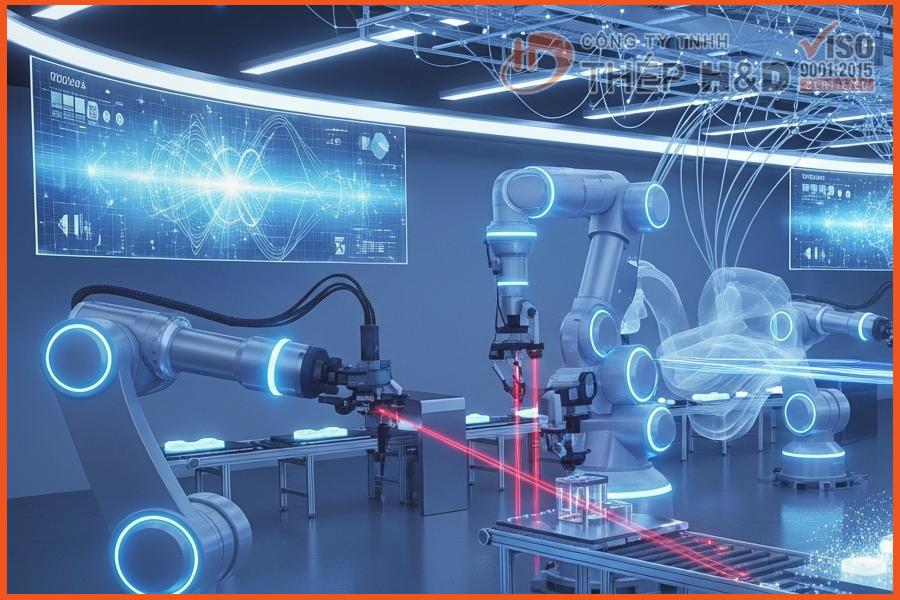
As of September 4, 2025, the global manufacturing landscape is undergoing a profound transformation, driven by the increasing integration of photonics into advanced manufacturing processes. Photonics, the science and technology of light, is unlocking unprecedented capabilities in precision, energy efficiency, and real-time quality control. This development not only promises to significantly enhance existing manufacturing methods but also paves the way for groundbreaking applications across a wide range of industries, from electronics and automotive to food processing and aerospace. For investors, managers, and technical experts, understanding the pivotal role of photonics is essential for shaping strategies in this Industry 4.0 era.
Photonics in advanced manufacturing involves the use of light-based technologies—such as lasers, optical fibers, and photonics sensors—to enhance and optimize manufacturing processes. These technologies enable high precision, superior energy efficiency, and real-time quality monitoring, driving significant improvements in areas like cutting, welding, engraving, additive manufacturing (metal 3D printing), and sensing.
Key photonics technologies include:
The integration of photonics brings transformative benefits across various industries:
One of the most exciting emerging trends is the convergence of photonics with artificial intelligence (AI). This combination is enabling intelligent control, automated decision-making, and automation in manufacturing systems. AI helps optimize the design, execution, and real-time adaptation of photonics-based manufacturing processes, contributing to the development of smart factories and advanced optical networking.
Advances in AI-driven sensing, human-machine interaction, and automated control are enhancing the precision and capabilities of photonics-enabled manufacturing. This creates a more agile manufacturing ecosystem, capable of adapting to changing requirements and continuously optimizing performance.
Leading experts in the field emphasize that the combination of photonics and AI in manufacturing represents a significant step toward Industry 4.0, facilitating smarter, faster, and more reliable production lines. The ability to manipulate light at micro- and nano-scales, integrated with electronic control systems, is revolutionizing how manufacturing challenges related to speed, quality, and customization are addressed.
Looking ahead, we can expect to see further developments in novel photonic materials, light-based additive manufacturing techniques, and more intelligent sensing systems. These innovations will continue to drive efficiency, reduce costs, and expand the scope of what is achievable in manufacturing.
Conclusion: Photonics is no longer a niche technology but a pivotal force shaping the future of advanced manufacturing. By harnessing the power of light, industries can achieve unprecedented levels of precision, efficiency, and control, ushering in a new era of innovation and productivity. Investors and technical experts should closely monitor advancements in this field, as they will continue to generate significant opportunities and reshape the global industrial landscape.
Cùng là nhôm A5052 nhưng tấm trạng thái O, H32 và H34 có độ bền, độ dẻo và bán kính c...
Sàn Thượng Hải mở cửa lại sau Quốc khánh với hai phiên giảm liền: giá nhôm thỏi SMM A...
Từ ngày 20/10/2026, Nghị định 344/2026/NĐ-CP mở cơ chế đặt hàng và ưu đãi cho doanh n...
Các con số vật lý của nhôm không giống nhau giữa các mác, và mỗi con số dẫn tới một q...
Giá nhôm thỏi SMM A00 giảm ba phiên liên tiếp trong tuần 40/2026, chốt 24.030 CNY/tấn...
Sau 8 tháng 2026, thị trường ô tô Việt Nam bán 432.548 xe, mức tăng cao nhất trong 6...
Nhôm tấm 3mm là độ dày được hỏi nhiều nhất trong nhóm tấm mỏng vì đủ cứng để làm thùn...
Nhôm A6061 là hợp kim nhôm–magie–silic hoá bền bằng nhiệt luyện, được dùng nhiều nhất...
Chỉ số cước container nội Á của Drewry chốt ngày 24/9/2026 ở 1.491 USD/40ft, tăng 6%...
Giá nhôm thỏi SMM A00 chốt tuần 39/2026 ở 24.240 CNY/tấn, cao hơn 60 CNY/tấn so với t...


