






5052 Aluminum: O, H32 or H34, Bend Radius and Buying Mistakes
5052 aluminum sheet in O, H32 and H34 tempers differs clearly in strength, ductility...


The copper market is facing mounting downward pressure as a confluence of bearish factors clouds the long-term bullish narrative driven by the energy transition. The 3-month copper price on the London Metal Exchange (LME) has dipped over the past week, now trading around $9,850 per tonne. This decline reflects growing market concerns over a short-term supply-demand imbalance, trade headwinds, and global economic health.
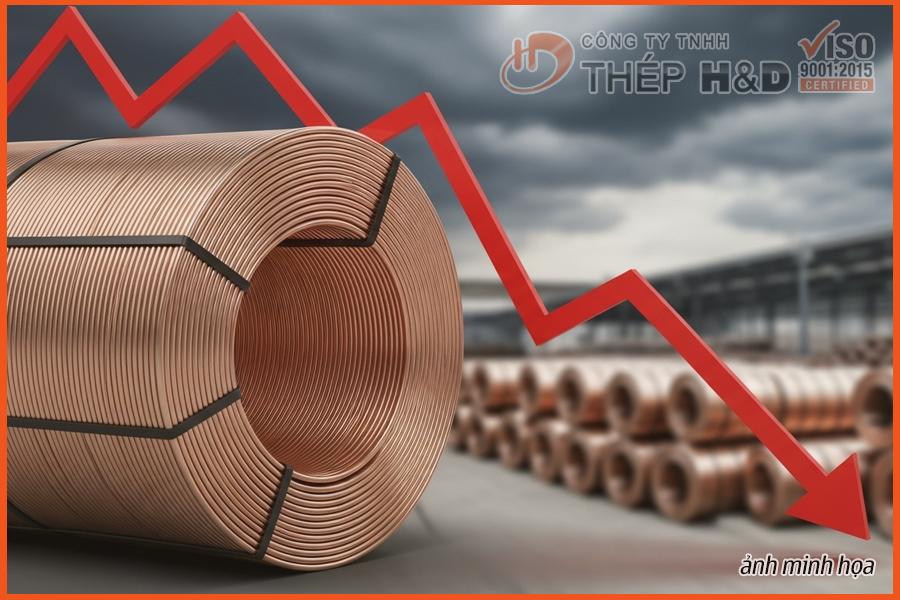
One of the most concerning indicators for the market is the significant build-up of copper stocks in major warehouses. Copper inventories in LME-approved warehouses have risen to approximately 122,075 tonnes. In parallel, stocks at Shanghai Futures Exchange (SHFE) warehouses also remain elevated, recently reported at a substantial level of around 330,000 tonnes. A simultaneous rise in inventories on the world's two largest exchanges is a clear sign that physical supply is currently outpacing real demand. This oversupply situation puts direct pressure on prices, as it indicates that end-users are not absorbing the metal being produced.
The demand outlook for copper is being clouded by protectionist trade policies. The US administration recently announced significant tariffs on a range of Chinese green technology products. Most notably, this includes a tariff hike on electric vehicles (EVs) from 25% to 100%, alongside new or increased levies on lithium-ion batteries (up to 25%) and solar cells (up to 50%). As these products are all highly copper-intensive, these trade barriers risk slowing the pace of the energy transition in the US, thereby dampening a key future demand driver for the red metal. This uncertainty erodes investor confidence and caps price potential.
The health of China's economy, the world's largest copper consumer, remains a major concern. Recent economic data continues to paint a weak picture. The manufacturing Purchasing Managers' Index (PMI) has been struggling below the 50-point threshold, indicating a contraction in industrial activity. Furthermore, the property sector, a traditionally massive consumer of copper, has yet to show signs of a sustainable recovery. Weak demand from China has a direct and outsized impact on the global supply-demand balance.
Simultaneously, the strength of the US dollar is acting as a further headwind. As copper is priced in dollars, a stronger greenback makes the metal more expensive for buyers using other currencies, thus curbing demand.
In summary, the copper market is currently caught in a perfect storm of negative factors: rising physical inventories, demand threatened by trade tensions, sluggish Chinese economic growth, and a strong US dollar. While the long-term story of copper demand for global electrification remains valid, investors are currently focused on the tangible, immediate challenges. The short-to-medium-term outlook appears set for continued volatility with a bearish bias, pending any significant shifts in supply-demand dynamics or the macroeconomic environment.
Source: Analysis based on market data and trends as of July 22, 2025. Inspired by the framework of Bigmint.
5052 aluminum sheet in O, H32 and H34 tempers differs clearly in strength, ductility...
Shanghai reopened after National Day with two down sessions: the SMM A00 aluminium in...
From 20 October 2026, Decree 344/2026/ND-CP opens a state ordering mechanism and ince...
Aluminum's physical figures differ between alloys, and each figure drives a concrete...
The SMM A00 aluminium ingot price fell in all three sessions of week 40/2026, closing...
Vietnam's car market sold 432,548 vehicles in the first eight months of 2026, the fas...
3mm aluminum sheet is the most requested thickness in the thin-to-medium range: stiff...
A6061 is a heat-treatable aluminium–magnesium–silicon alloy widely used for machine f...
Drewry's Intra-Asia Container Index closed at 1,491 USD/40ft on 24 September 2026, up...
The SMM A00 aluminium ingot price ended week 39/2026 at 24,240 CNY/t, up 60 CNY/t fro...


