






Nhôm A5052: chọn O, H32 hay H34, bán kính chấn và lỗi khi mua
Cùng là nhôm A5052 nhưng tấm trạng thái O, H32 và H34 có độ bền, độ dẻo và bán kính c...


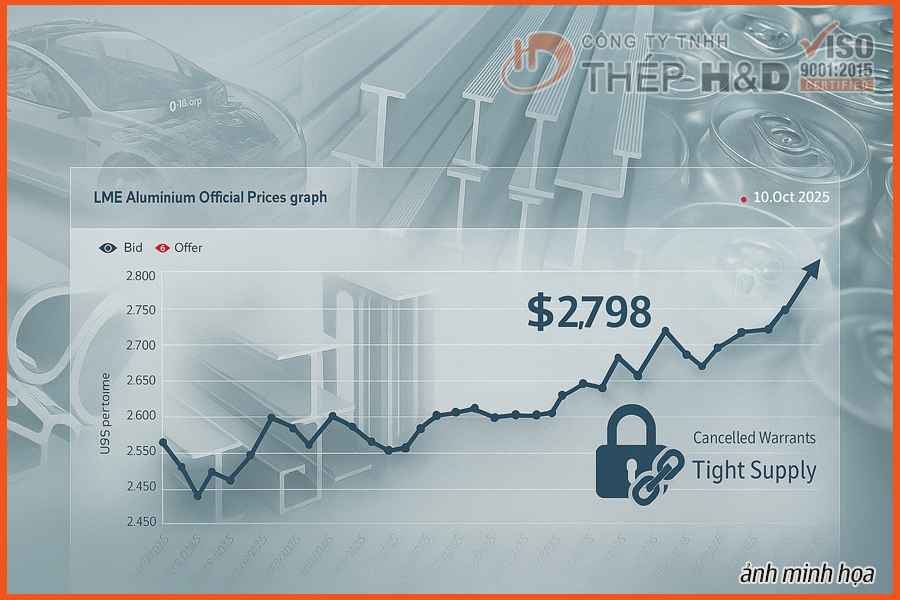
London, October 10, 2025 – The global aluminium market is witnessing significant developments as the London Metal Exchange (LME) cash aluminium price rose by 1.63%, reaching USD 2,798/ton on October 10, 2025. This price surge coincided with a dramatic increase in cancelled warrants, a strong indicator of rising physical demand and tightening available warehouse stocks. This event not only reflects a market recovery but also signals a new phase full of challenges and opportunities for investors and businesses in the industry.
Price Movements and Inventory Dynamics:
On October 8, the LME cash aluminium price closed at USD 2,798/ton, a notable increase from previous sessions. The three-month contract price also maintained a similar level, indicating market consensus on the upward trend. Notably, on October 9, aluminium prices continued their ascent, approaching USD 2,785-2,786/ton, nearing a three-year high. The Asian Reference Price for aluminium also recorded a USD 12/ton spike, further reinforcing the global upward price trend.
A crucial highlight is the sharp increase in cancelled warrants. These warrants represent aluminium that has been purchased and is awaiting withdrawal from LME warehouses. This surge suggests that buyers are actively taking physical aluminium out of the warehousing system, reducing the readily available supply for trading and putting pressure on the supply side. Although total LME aluminium stocks hovered around 505,000-506,000 tonnes in early October, the shift from live to cancelled warrants is a clear signal of tightening physical supply.
Factors Driving the Market:
Impact and Outlook:
Rising aluminium prices will have a significant impact on industries that use aluminium as a raw material, from automotive, aerospace, and construction to packaging. Businesses will face increased raw material costs, necessitating risk management strategies and supply chain optimization. Conversely, aluminium producers and traders will benefit from higher profit margins.
In the long term, demand for aluminum is expected to continue growing, especially from green and high-tech industries. This will drive investment in more efficient, environmentally friendly aluminium production technologies and advanced recycling solutions. The applications of aluminum are becoming increasingly diverse, from everyday consumer products to complex industrial components, affirming its indispensable role.
Conclusion:
The rise in LME aluminium prices to USD 2,798/ton, coupled with the surge in cancelled warrants, is a clear indicator of a tightening global aluminium market. This is a result of a combination of strong demand from growing industries, restrictive production policies in major countries, and cost factors. In this context, stakeholders across the aluminium value chain need to closely monitor market developments, adjust strategies to capitalize on opportunities, and mitigate risks, moving towards a more sustainable future for this critical metal industry.
References:
Cùng là nhôm A5052 nhưng tấm trạng thái O, H32 và H34 có độ bền, độ dẻo và bán kính c...
Sàn Thượng Hải mở cửa lại sau Quốc khánh với hai phiên giảm liền: giá nhôm thỏi SMM A...
Từ ngày 20/10/2026, Nghị định 344/2026/NĐ-CP mở cơ chế đặt hàng và ưu đãi cho doanh n...
Các con số vật lý của nhôm không giống nhau giữa các mác, và mỗi con số dẫn tới một q...
Giá nhôm thỏi SMM A00 giảm ba phiên liên tiếp trong tuần 40/2026, chốt 24.030 CNY/tấn...
Sau 8 tháng 2026, thị trường ô tô Việt Nam bán 432.548 xe, mức tăng cao nhất trong 6...
Nhôm tấm 3mm là độ dày được hỏi nhiều nhất trong nhóm tấm mỏng vì đủ cứng để làm thùn...
Nhôm A6061 là hợp kim nhôm–magie–silic hoá bền bằng nhiệt luyện, được dùng nhiều nhất...
Chỉ số cước container nội Á của Drewry chốt ngày 24/9/2026 ở 1.491 USD/40ft, tăng 6%...
Giá nhôm thỏi SMM A00 chốt tuần 39/2026 ở 24.240 CNY/tấn, cao hơn 60 CNY/tấn so với t...


