





Giá nhôm tấm tuần 41/2026: SMM A00 rơi về 23.650 CNY/tấn sau lễ
Sàn Thượng Hải mở cửa lại sau Quốc khánh với hai phiên giảm liền: giá nhôm thỏi SMM A...


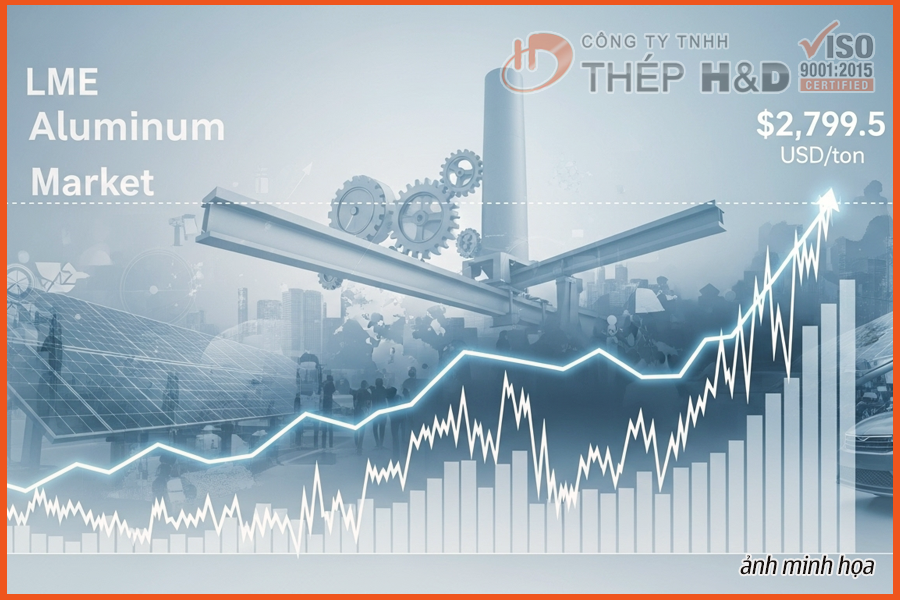
October 14, 2025 – The global metals market is witnessing significant developments, particularly concerning aluminum. The price of aluminum on the London Metal Exchange (LME) has reached USD 2,799.5 per metric ton, a figure that has captured the attention of investors and industry experts. This price, recorded on October 10, 2025, falls within the steady upward trend of aluminum during Q3 and early Q4 of this year, raising the question of whether this is an early sign of a major surge or merely the consolidation of a recovering market.
According to reputable market sources such as Platts Metals Week, Thomson Reuters Datastream, Metal.com, and Westmetall, the LME aluminum price of USD 2,799.5/t on October 10, 2025, is entirely consistent with market developments. LME aluminum prices have fluctuated between USD 2,740 and USD 2,800/t in recent days, with a recent peak of USD 2,785.9/t on October 9. This growth represents an increase of approximately 5.4-5.9% from a low of around USD 2,564.6/t in early August 2025.
This recovery is not coincidental but is driven by a confluence of global supply and demand factors, coupled with positive market sentiment.
Despite the high aluminum prices, the market still faces several potential challenges:
Nevertheless, given aluminum's growing role in critical industries such as electric vehicles, renewable energy, and sustainable construction, the long-term outlook for the metal remains quite positive. Investors and industry professionals should closely monitor supply-demand dynamics, macroeconomic policies, and geopolitical developments to make informed decisions.
In Vietnam, the aluminum market also reflects global trends, with aluminum coil and sheet pricing and other aluminum products being influenced by LME prices. Understanding the diverse applications of aluminum across various industries will help businesses formulate effective procurement and production strategies.
The LME aluminum price of USD 2,799.5/t is a clear indicator of the dynamism in the global aluminum market. Supported by tightening supply and robust industrial demand, particularly from growth sectors like electric vehicles and renewable energy, aluminum is in a period of significant appreciation. Despite potential challenges, the outlook for aluminum remains optimistic, solidifying its position as a strategic metal in the modern economy.
References:
Sàn Thượng Hải mở cửa lại sau Quốc khánh với hai phiên giảm liền: giá nhôm thỏi SMM A...
Từ ngày 20/10/2026, Nghị định 344/2026/NĐ-CP mở cơ chế đặt hàng và ưu đãi cho doanh n...
Các con số vật lý của nhôm không giống nhau giữa các mác, và mỗi con số dẫn tới một q...
Giá nhôm thỏi SMM A00 giảm ba phiên liên tiếp trong tuần 40/2026, chốt 24.030 CNY/tấn...
Sau 8 tháng 2026, thị trường ô tô Việt Nam bán 432.548 xe, mức tăng cao nhất trong 6...
Nhôm tấm 3mm là độ dày được hỏi nhiều nhất trong nhóm tấm mỏng vì đủ cứng để làm thùn...
Nhôm A6061 là hợp kim nhôm–magie–silic hoá bền bằng nhiệt luyện, được dùng nhiều nhất...
Chỉ số cước container nội Á của Drewry chốt ngày 24/9/2026 ở 1.491 USD/40ft, tăng 6%...
Giá nhôm thỏi SMM A00 chốt tuần 39/2026 ở 24.240 CNY/tấn, cao hơn 60 CNY/tấn so với t...
Nhôm chống trượt là tấm nhôm có gân nổi một mặt, dùng cho sàn xe, cầu thang và sàn xư...


.jpg)