





Aluminium sheet price, week 41/2026: SMM A00 drops to 23,650
Shanghai reopened after National Day with two down sessions: the SMM A00 aluminium in...


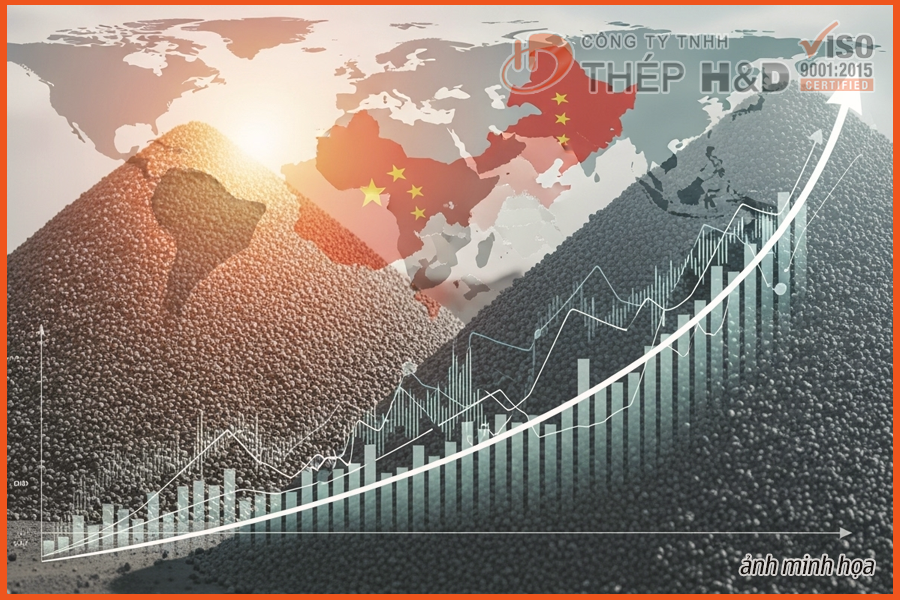
New Delhi, September 5, 2025 – The global iron ore market is witnessing cautious signs of recovery, with prices drifting higher on hopes of improving demand from China – the world's largest steel consumer. Despite lingering macroeconomic uncertainties, Beijing's steel capacity control policies are being viewed as a supportive factor for iron ore prices, creating a complex yet potentially promising market landscape.
Iron Ore Price Dynamics and Market Drivers
In recent weeks, iron ore prices have shown an upward drift. Iron ore futures recorded nearly a 5% monthly gain in August 2025, marking the first consecutive monthly increase since 2024. On the Singapore Exchange, iron ore prices have stabilized around $104 per ton. This recovery, though modest, has bolstered market sentiment and indicates a positive shift after a period of volatility.
The primary driver behind this price increase is the expectation of more stable steel demand from China. While China's policy to reduce steel output might raise concerns about overall iron ore demand, analysts suggest that controlling excess capacity will improve the profitability and pricing power of steel mills, thereby sustaining iron ore consumption at a more viable level.
China's Decisive Role: Policy and Demand
China, as the world's largest steel producer and iron ore consumer, exerts a profound influence on the global market. The Chinese government's policies to strictly control steel capacity are key factors shaping the market:
Global Supply-Demand and Regulatory Pressures
Beyond China's influence, the global iron ore market is also affected by other supply and demand factors. Supply constraints, including mining and logistical issues, also contribute to price support. Concurrently, increasingly stringent environmental regulations in various iron ore-producing countries can impact production volumes and extraction costs.
In this context, steel and iron ore producers face a dual challenge: meeting market demand while adhering to increasingly high environmental and social standards. This drives innovation in mining technology and steel production, moving towards more efficient and sustainable processes.
Outlook and Risks
Market sentiment for iron ore is currently cautious but optimistic. Investors are betting on China's ability to stabilize its steel industry and maintain reasonable iron ore demand. However, risks remain:
In the materials industry, understanding the factors influencing prices and demand is crucial. Metals like steel and aluminum play foundational roles in many sectors. For a deeper insight into the importance of these materials, you can refer to the article Aluminum Material: Material for Modern and Future Industry.
Conclusion
As of early September 2025, the iron ore market is showing positive signs of recovery, primarily driven by expectations of more stable demand from China and its steel capacity control policies. While challenges and risks persist, market sentiment is shifting towards cautious optimism. Investors and industry professionals should continue to closely monitor China's policy developments, global macroeconomic conditions, and supply-demand factors to make strategic decisions in a volatile yet opportunity-rich iron ore market.
References:
Shanghai reopened after National Day with two down sessions: the SMM A00 aluminium in...
From 20 October 2026, Decree 344/2026/ND-CP opens a state ordering mechanism and ince...
Aluminum's physical figures differ between alloys, and each figure drives a concrete...
The SMM A00 aluminium ingot price fell in all three sessions of week 40/2026, closing...
Vietnam's car market sold 432,548 vehicles in the first eight months of 2026, the fas...
3mm aluminum sheet is the most requested thickness in the thin-to-medium range: stiff...
A6061 is a heat-treatable aluminium–magnesium–silicon alloy widely used for machine f...
Drewry's Intra-Asia Container Index closed at 1,491 USD/40ft on 24 September 2026, up...
The SMM A00 aluminium ingot price ended week 39/2026 at 24,240 CNY/t, up 60 CNY/t fro...
Aluminum tread plate is sheet with a raised pattern on one face, used for truck floor...


.jpg)