






Nhôm A5052: chọn O, H32 hay H34, bán kính chấn và lỗi khi mua
Cùng là nhôm A5052 nhưng tấm trạng thái O, H32 và H34 có độ bền, độ dẻo và bán kính c...


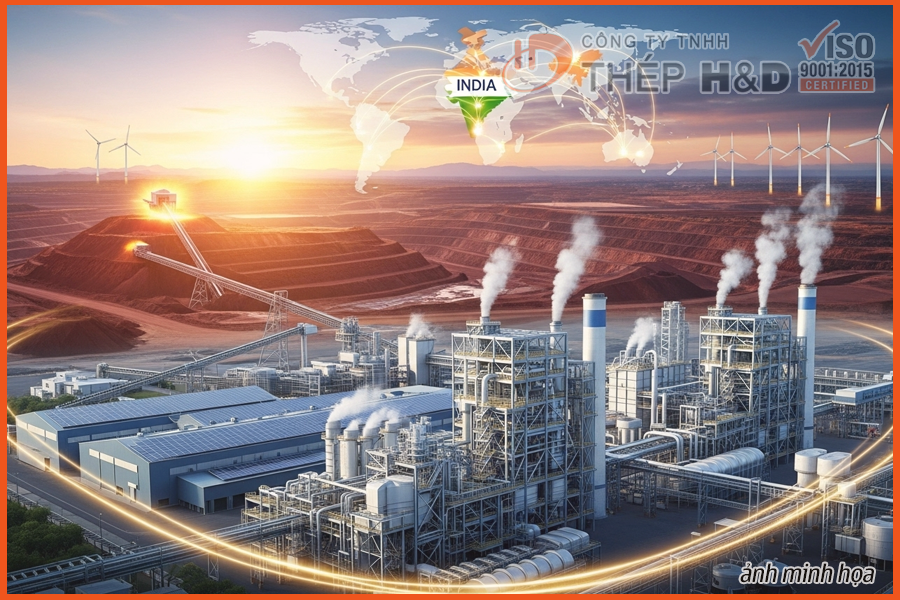
New Delhi, September 12, 2025 – India's aluminium industry stands at a historic juncture, ready to assert a larger presence on the global stage. With abundant resources, increasing production capacity, and robust domestic demand fueled by infrastructure and industrial growth, India is positioning itself as an aluminium powerhouse. Mr. Kumar Mangalam Birla, one of India's leading industrial figures, has underscored the nation's immense potential to leverage its rich bauxite reserves and expanding integrated capacity to become a cost-competitive and sustainable aluminium producer internationally.
India is currently the world's second-largest aluminium producer, contributing approximately 6% of global output. In 2024, India's primary aluminium production reached around 4.15 million tonnes (mnt). With ambitious expansion plans from major producers such as Vedanta, Hindalco, BALCO, and NALCO, production is projected to surge to 6-6.5 million tonnes per annum (mntpa) by the end of 2025. This growth not only reflects market confidence but also significant investments in technology and infrastructure.
Indian aluminium smelters, particularly concentrated in mineral-rich states like Odisha, Chhattisgarh, and Jharkhand, are undergoing upgrades to optimize efficiency and reduce costs. Vedanta Aluminium, with a capacity of approximately 2.3 mnt, is a key driver of this growth, alongside Hindalco and NALCO, leading the charge in capacity expansion and value chain integration.
India's domestic aluminium consumption stood near 4.5 mnt in 2024, experiencing a modest year-on-year growth of about 1.55%. This growth is primarily propelled by key sectors such as construction, automotive, and power transmission. Government initiatives like the “Make in India” program and the “Smart Cities” project are generating a new wave of demand for aluminium, especially in infrastructure and urban development applications. The applications of aluminium are incredibly diverse, ranging from everyday consumer products to complex industrial components.
Valued at USD 13.77 billion in 2024, the Indian aluminium market is anticipated to project a Compound Annual Growth Rate (CAGR) of approximately 4.1% through the 2030–2033 period. This growth is underpinned by rapid urbanization, a burgeoning middle class, and a growing emphasis on sustainability, which favors aluminium as a lightweight, durable, and recyclable material.
Despite the bright prospects, the Indian aluminium industry also faces several challenges. High energy costs remain a significant hurdle, as aluminium production is an energy-intensive process. Ensuring a stable supply of raw materials is another concern, with India still importing substantial quantities of bauxite and alumina. In 2024, India imported over 4.5 mnt of bauxite, a 20% increase year-on-year, and alumina prices surged over 70% due to global supply disruptions.
However, these challenges also present opportunities. The industry is increasingly focusing on green aluminium production, recycling, and developing value-added products. Investments in emission reduction technologies and enhanced energy efficiency are top priorities. Government policies such as the Production Linked Incentive (PLI) schemes and the National Infrastructure Pipeline (with an estimated investment of US$1.4 trillion through 2025) directly support capacity expansion and technology adoption. Understanding what is aluminium and its properties is becoming crucial for optimizing its applications.
India's aluminium industry, supported by rich mineral endowments, growing consumption, government backing, and industry investments, stands at an inflection point to enhance its global footprint. To realize this potential, India must navigate raw material volatility, manage energy costs effectively, and continuously innovate in sustainability. With a strategic vision and relentless efforts, India is well on its way to becoming one of the world's leading aluminium suppliers, making a significant contribution to the global supply chain.
References:
Cùng là nhôm A5052 nhưng tấm trạng thái O, H32 và H34 có độ bền, độ dẻo và bán kính c...
Sàn Thượng Hải mở cửa lại sau Quốc khánh với hai phiên giảm liền: giá nhôm thỏi SMM A...
Từ ngày 20/10/2026, Nghị định 344/2026/NĐ-CP mở cơ chế đặt hàng và ưu đãi cho doanh n...
Các con số vật lý của nhôm không giống nhau giữa các mác, và mỗi con số dẫn tới một q...
Giá nhôm thỏi SMM A00 giảm ba phiên liên tiếp trong tuần 40/2026, chốt 24.030 CNY/tấn...
Sau 8 tháng 2026, thị trường ô tô Việt Nam bán 432.548 xe, mức tăng cao nhất trong 6...
Nhôm tấm 3mm là độ dày được hỏi nhiều nhất trong nhóm tấm mỏng vì đủ cứng để làm thùn...
Nhôm A6061 là hợp kim nhôm–magie–silic hoá bền bằng nhiệt luyện, được dùng nhiều nhất...
Chỉ số cước container nội Á của Drewry chốt ngày 24/9/2026 ở 1.491 USD/40ft, tăng 6%...
Giá nhôm thỏi SMM A00 chốt tuần 39/2026 ở 24.240 CNY/tấn, cao hơn 60 CNY/tấn so với t...


