





Giá nhôm tấm tuần 41/2026: SMM A00 rơi về 23.650 CNY/tấn sau lễ
Sàn Thượng Hải mở cửa lại sau Quốc khánh với hai phiên giảm liền: giá nhôm thỏi SMM A...


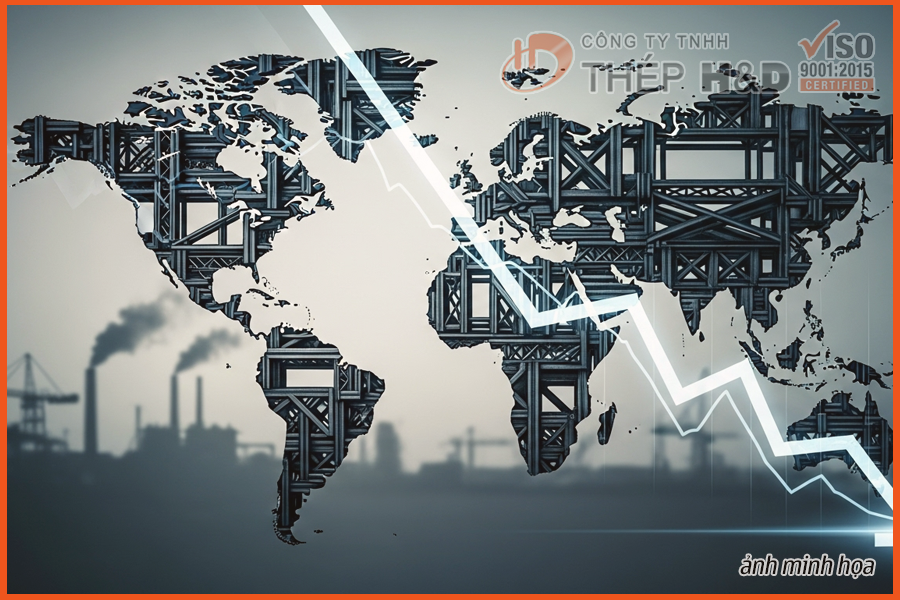
New Delhi, September 5, 2025 – The global steel industry is bracing for a challenging period, with analysts at the 2025 SMU Steel Summit forecasting continued weak demand until at least 2027. The confluence of declines in key consuming sectors, persistent overcapacity, and macroeconomic pressures is painting a somber picture for producers, investors, and supply chain stakeholders.
Current Steel Demand Situation and Forecast to 2027
Experts at the SMU Steel Summit indicated that steel demand is expected to remain sluggish throughout 2025 and 2026, with a significant recovery unlikely before 2027. Two primary drivers of steel demand – the construction sector and lightweight automotive production – are experiencing notable downturns.
Overcapacity and Price Pressure
The OECD Steel Outlook 2025 report corroborates these concerns, projecting slow global steel demand growth of only about 0.7% per year through 2030. Demand in OECD countries is expected to remain roughly constant, while Chinese demand is forecasted to decline. Global steel production overcapacity remains a persistent issue, leading to downward price pressures and impacting the profitability of steelmakers.
Steel production is anticipated to rise faster than demand in the coming years, while imports, though decreasing, remain significant. This creates a fiercely competitive environment, forcing producers to seek cost optimization and operational efficiency.
Rare Bright Spots and Strategic Challenges
Amidst the generally gloomy outlook, there are a few minor bright spots. Stainless steel demand in China began to pick up in August 2025 due to seasonal factors and strong raw material prices. However, this represents a specific market segment and does not reflect the broader trend across the entire steel industry.
For investors and managers, this period demands caution and flexible strategies. Steel companies need to focus on:
In a context where industrial materials like steel and aluminium play essential roles across various sectors, understanding market trends is critically important. For a deeper insight into the roles of these materials, you can refer to the articles Applications of Aluminium: From Everyday Life to Industrial Production and Aluminum Material: Material for Modern and Future Industry.
Conclusion
The global steel industry is facing a prolonged period of difficulty, with demand expected to stagnate until 2027. Factors such as declining automotive production, sluggish construction activity, and persistent overcapacity are exerting significant pressure on prices and profitability. To navigate this period, steel businesses must adopt stringent cost management strategies, diversify products, and invest in technological innovation to prepare for a long-term recovery and maintain competitiveness in an increasingly volatile market.
References:
Sàn Thượng Hải mở cửa lại sau Quốc khánh với hai phiên giảm liền: giá nhôm thỏi SMM A...
Từ ngày 20/10/2026, Nghị định 344/2026/NĐ-CP mở cơ chế đặt hàng và ưu đãi cho doanh n...
Các con số vật lý của nhôm không giống nhau giữa các mác, và mỗi con số dẫn tới một q...
Giá nhôm thỏi SMM A00 giảm ba phiên liên tiếp trong tuần 40/2026, chốt 24.030 CNY/tấn...
Sau 8 tháng 2026, thị trường ô tô Việt Nam bán 432.548 xe, mức tăng cao nhất trong 6...
Nhôm tấm 3mm là độ dày được hỏi nhiều nhất trong nhóm tấm mỏng vì đủ cứng để làm thùn...
Nhôm A6061 là hợp kim nhôm–magie–silic hoá bền bằng nhiệt luyện, được dùng nhiều nhất...
Chỉ số cước container nội Á của Drewry chốt ngày 24/9/2026 ở 1.491 USD/40ft, tăng 6%...
Giá nhôm thỏi SMM A00 chốt tuần 39/2026 ở 24.240 CNY/tấn, cao hơn 60 CNY/tấn so với t...
Nhôm chống trượt là tấm nhôm có gân nổi một mặt, dùng cho sàn xe, cầu thang và sàn xư...


.jpg)