






Nhôm A5052: chọn O, H32 hay H34, bán kính chấn và lỗi khi mua
Cùng là nhôm A5052 nhưng tấm trạng thái O, H32 và H34 có độ bền, độ dẻo và bán kính c...


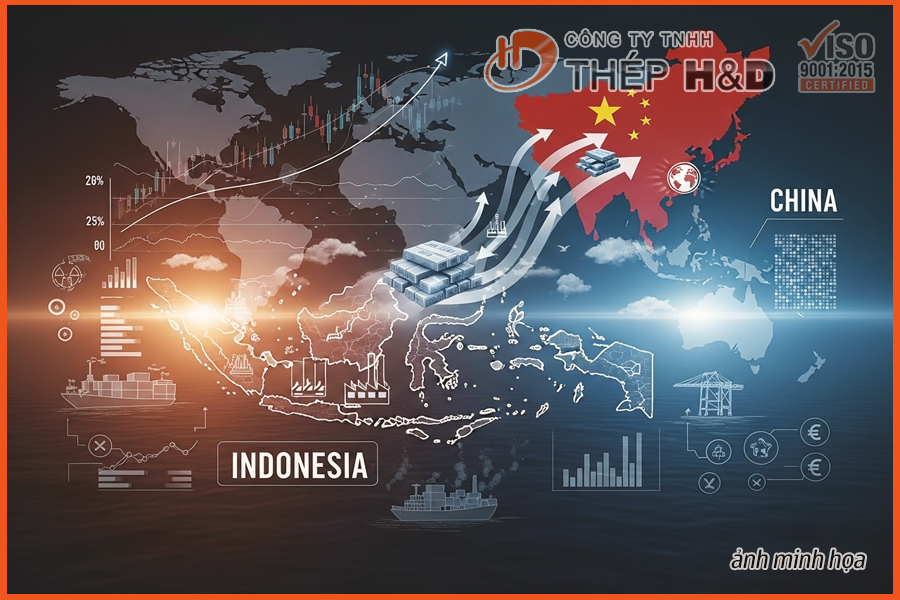
Jakarta, Indonesia – October 28, 2025 – The global aluminum industry is facing a significant shift as Chinese companies ramp up investment and expand production capacity in Indonesia. This wave of investment, driven by abundant bauxite resources, affordable coal-fired power, and competitive labor costs, is transforming Indonesia into a new aluminum production hub, while simultaneously raising deep concerns about a potential supply surplus in the global market.
Major Chinese corporations like Tsingshan Holding Group, China Hongqiao Group, and Shandong Nanshan Aluminum are leading this revolution. They are replicating the success they achieved in Indonesia's nickel sector, with substantial investments in aluminum smelting and alumina refining projects. Currently, Indonesia has only one operational aluminum smelter, but ambitious plans include adding 11 more smelters with a total capacity of approximately 13 million tonnes. Notably, about 84% of this capacity is controlled by Chinese companies.
Alumina production capacity is also being aggressively expanded, projected to reach around 24-25 million tonnes, supported by projects such as those by Jinjiang Group. Goldman Sachs forecasts that Indonesia's aluminum output could quintuple by 2030, significantly impacting the global supply-demand balance. This rapid expansion stems partly from China's domestic primary aluminum production cap of 45 million tonnes, forcing Chinese companies to seek overseas opportunities to meet demand.
The Indonesian government has played a crucial role in attracting these investments through policies encouraging downstream processing and a ban on raw bauxite exports. These policies aim to increase the value-added of domestic resources and promote industrial development. China may import some aluminum from Indonesia to meet its domestic needs or export the surplus to the global market.
However, this rapid expansion is raising serious concerns about an aluminum surplus in the global market. Goldman Sachs predicts the global aluminum market will see a surplus of 1.5 million tonnes in 2026, rising to 2 million tonnes in 2027, primarily due to the capacity increase from Indonesia. This could exert downward pressure on global aluminum prices, especially given the existing overcapacity in alumina production and the possibility of China becoming a net importer of alumina.
This surplus could challenge other producers worldwide and disrupt market equilibrium. Investors and technical experts need to monitor this development closely, as it could affect procurement strategies, investment decisions, and risk management. For a better understanding of the factors influencing prices, you can refer to the Aluminum Coil and Sheet Price Quote.
For Indonesia, this partnership provides resource security and economic growth. However, the rapid expansion driven by Chinese investment also risks saturating the global market, depressing prices, and potentially leading to trade tensions. Chinese companies are seeking to diversify international production to reduce reliance on domestic capacity limits.
In summary, Chinese companies are strategically transforming Indonesia into a large-scale new aluminum production center, leveraging favorable local conditions and government policies. This expansion is projected to significantly increase global aluminum supply and could lead to market surpluses, impacting prices and the competitive landscape worldwide.
References:
Cùng là nhôm A5052 nhưng tấm trạng thái O, H32 và H34 có độ bền, độ dẻo và bán kính c...
Sàn Thượng Hải mở cửa lại sau Quốc khánh với hai phiên giảm liền: giá nhôm thỏi SMM A...
Từ ngày 20/10/2026, Nghị định 344/2026/NĐ-CP mở cơ chế đặt hàng và ưu đãi cho doanh n...
Các con số vật lý của nhôm không giống nhau giữa các mác, và mỗi con số dẫn tới một q...
Giá nhôm thỏi SMM A00 giảm ba phiên liên tiếp trong tuần 40/2026, chốt 24.030 CNY/tấn...
Sau 8 tháng 2026, thị trường ô tô Việt Nam bán 432.548 xe, mức tăng cao nhất trong 6...
Nhôm tấm 3mm là độ dày được hỏi nhiều nhất trong nhóm tấm mỏng vì đủ cứng để làm thùn...
Nhôm A6061 là hợp kim nhôm–magie–silic hoá bền bằng nhiệt luyện, được dùng nhiều nhất...
Chỉ số cước container nội Á của Drewry chốt ngày 24/9/2026 ở 1.491 USD/40ft, tăng 6%...
Giá nhôm thỏi SMM A00 chốt tuần 39/2026 ở 24.240 CNY/tấn, cao hơn 60 CNY/tấn so với t...


