






Nhôm A5052: chọn O, H32 hay H34, bán kính chấn và lỗi khi mua
Cùng là nhôm A5052 nhưng tấm trạng thái O, H32 và H34 có độ bền, độ dẻo và bán kính c...


In a strategic move set to reshape the global metals trade landscape, the European Union (EU) and the United States are nearing the finalization of a landmark alliance on steel and aluminum. This pact, known as the Global Arrangement on Sustainable Steel and Aluminum (GSA), not only aims to resolve long-standing trade disputes but also to create a powerful counterbalance to non-market excess capacity and high-carbon production, primarily from China.
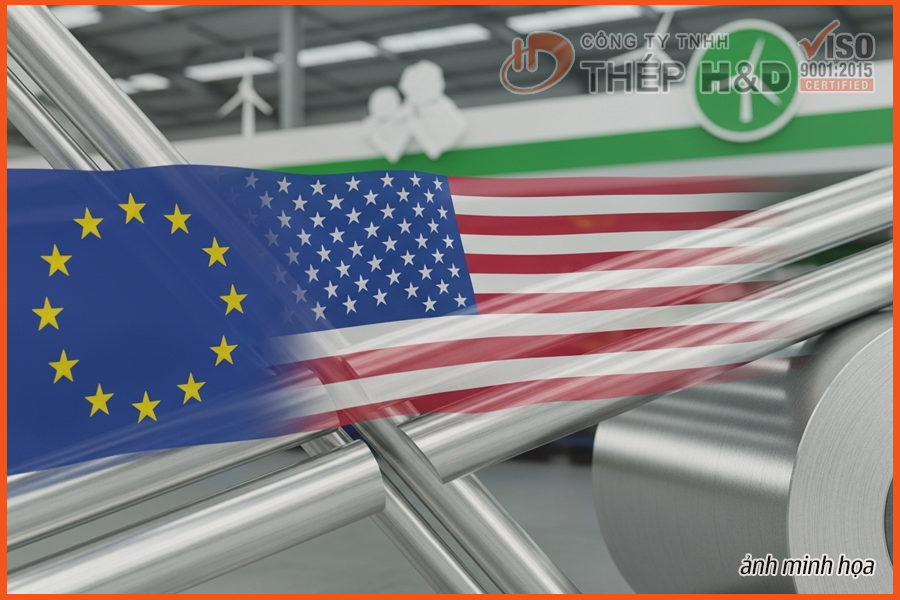
The GSA originated from negotiations to definitively resolve the Section 232 tariffs imposed by the US under the former Trump administration. However, its objectives have evolved far beyond a simple trade agreement. Currently, the GSA focuses on two primary goals:
As of July 29, 2025, the GSA negotiations are still ongoing. In a critical move to allow discussions to continue, the US has extended its tariff-rate quota (TRQ) mechanism for EU steel and aluminum through the end of 2025. The formation of this alliance is projected to have profound impacts:
For China: As the primary target, China's metals industry could face increased trade barriers in two of the world's largest consumer markets. This would exert significant pressure on its export-oriented economy and could compel Beijing to reconsider its industrial policies.
For the EU and US: Domestic producers stand to benefit from protection against unfair competition and will be incentivized to invest in cleaner production technologies. However, consumers and downstream industries may face higher metal prices in the short term before supply chains stabilize. Understanding the physical properties of aluminum becomes crucial for manufacturers adapting to these new market dynamics.
Key Sticking Points: The greatest challenge currently is harmonizing different policy mechanisms, particularly between the US approach and the EU's Carbon Border Adjustment Mechanism (CBAM). Agreeing on a common methodology for measuring carbon intensity and applying corresponding trade measures remains a point of contention.
The extension of the trade "truce" to the end of 2025 signals the political will on both sides to finalize the GSA. The EU is expected to propose new trade measures in Q3 2025 to replace existing safeguards. The success of the GSA would not only be a victory for protecting the Western metals industry but would also mark a significant shift in global trade policy—where factors of economic security and environmental sustainability are becoming more critical than traditional free trade principles. Businesses involved in the metal trade should stay updated on regulations, including the procedures for importing aluminum sheets and coils, as these are likely to be affected.
Source: Based on a report from Reuters on July 28, 2025, and verified data on the GSA negotiation status as of July 2025.
Cùng là nhôm A5052 nhưng tấm trạng thái O, H32 và H34 có độ bền, độ dẻo và bán kính c...
Sàn Thượng Hải mở cửa lại sau Quốc khánh với hai phiên giảm liền: giá nhôm thỏi SMM A...
Từ ngày 20/10/2026, Nghị định 344/2026/NĐ-CP mở cơ chế đặt hàng và ưu đãi cho doanh n...
Các con số vật lý của nhôm không giống nhau giữa các mác, và mỗi con số dẫn tới một q...
Giá nhôm thỏi SMM A00 giảm ba phiên liên tiếp trong tuần 40/2026, chốt 24.030 CNY/tấn...
Sau 8 tháng 2026, thị trường ô tô Việt Nam bán 432.548 xe, mức tăng cao nhất trong 6...
Nhôm tấm 3mm là độ dày được hỏi nhiều nhất trong nhóm tấm mỏng vì đủ cứng để làm thùn...
Nhôm A6061 là hợp kim nhôm–magie–silic hoá bền bằng nhiệt luyện, được dùng nhiều nhất...
Chỉ số cước container nội Á của Drewry chốt ngày 24/9/2026 ở 1.491 USD/40ft, tăng 6%...
Giá nhôm thỏi SMM A00 chốt tuần 39/2026 ở 24.240 CNY/tấn, cao hơn 60 CNY/tấn so với t...


