






5052 Aluminum: O, H32 or H34, Bend Radius and Buying Mistakes
5052 aluminum sheet in O, H32 and H34 tempers differs clearly in strength, ductility...


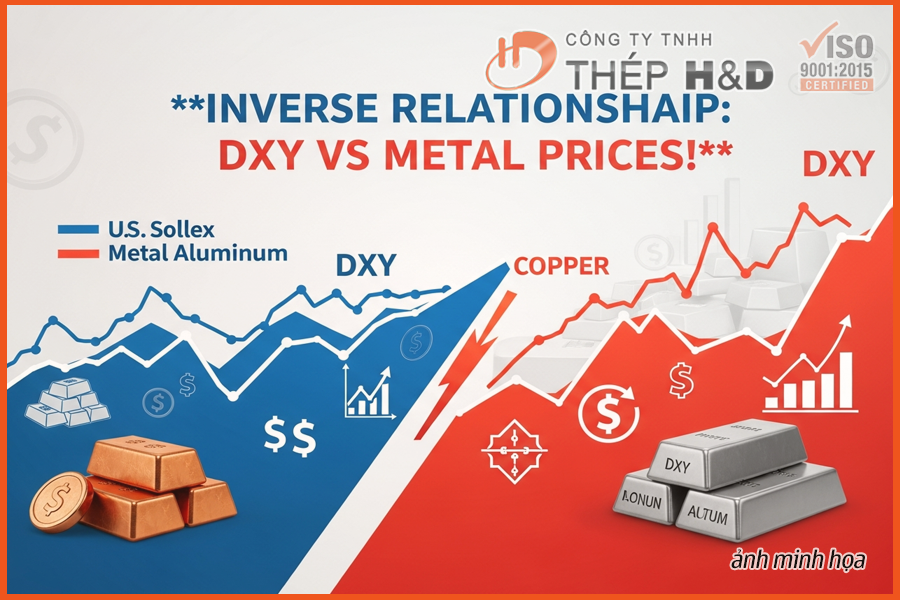
The global non-ferrous metal markets, particularly copper and aluminium, are profoundly influenced by fluctuations in the US Dollar Index (DXY), macroeconomic data, and central bank policies. The strong inverse relationship between the dollar and metal prices has become a pivotal factor that investors, managers, and technical experts must closely monitor. This in-depth news report will meticulously analyze the key drivers behind this relationship, along with forecasts and challenges in the current global economic landscape.
One of the most fundamental rules in commodity markets is the inverse relationship between the value of the US dollar and the prices of non-ferrous metals. When the dollar strengthens, copper and aluminium prices generally tend to fall, and vice versa. The primary reason is that these metals are globally priced in US dollars. A stronger dollar makes metals more expensive for buyers using other currencies, thereby reducing demand and exerting downward pressure on prices.
Macroeconomic indicators such as US employment data, inflation (CPI), and GDP growth directly influence the dollar's value and, by extension, metal prices. The monetary policy stance of the US Federal Reserve (Fed) is a critically important factor.
US trade policy, including tariffs and import investigations, has introduced significant volatility into the metals market.
Despite downward revisions, some analysts remain optimistic about the outlook for copper and aluminium:
Supply disruptions in the copper industry could offset some of the downward pressure from a strong dollar. Analysts estimate that industry disruptions could lead to a loss of nearly 600,000 tons of copper output in late 2025, which could support prices if demand remains stable. Understanding what is aluminium and the factors affecting its supply chain is crucial.
The US dollar index remains a dominant factor influencing the prices of non-ferrous metals, especially copper and aluminium. Macroeconomic data and central bank policies, particularly those of the Federal Reserve, play a crucial role in shaping the dollar's strength and, consequently, metal prices. Trade policy uncertainty and the threat of tariffs add further volatility, while supply-side disruptions could provide some support to prices in the latter part of 2025. Investors and experts must continue to closely monitor these interconnected factors to make informed decisions in the dynamic metal markets.
References:
5052 aluminum sheet in O, H32 and H34 tempers differs clearly in strength, ductility...
Shanghai reopened after National Day with two down sessions: the SMM A00 aluminium in...
From 20 October 2026, Decree 344/2026/ND-CP opens a state ordering mechanism and ince...
Aluminum's physical figures differ between alloys, and each figure drives a concrete...
The SMM A00 aluminium ingot price fell in all three sessions of week 40/2026, closing...
Vietnam's car market sold 432,548 vehicles in the first eight months of 2026, the fas...
3mm aluminum sheet is the most requested thickness in the thin-to-medium range: stiff...
A6061 is a heat-treatable aluminium–magnesium–silicon alloy widely used for machine f...
Drewry's Intra-Asia Container Index closed at 1,491 USD/40ft on 24 September 2026, up...
The SMM A00 aluminium ingot price ended week 39/2026 at 24,240 CNY/t, up 60 CNY/t fro...


