






Nhôm A5052: chọn O, H32 hay H34, bán kính chấn và lỗi khi mua
Cùng là nhôm A5052 nhưng tấm trạng thái O, H32 và H34 có độ bền, độ dẻo và bán kính c...


China's vast steel industry is showing signs of a fragile recovery, with mill profits rebounding from a prolonged downturn. This turnaround is not driven by a surge in demand, but rather by a disciplined, state-mandated campaign to curb production and tackle the chronic issue of overcapacity. As of late July 2025, this supply-side intervention has successfully propped up prices, offering a much-needed lifeline to producers.
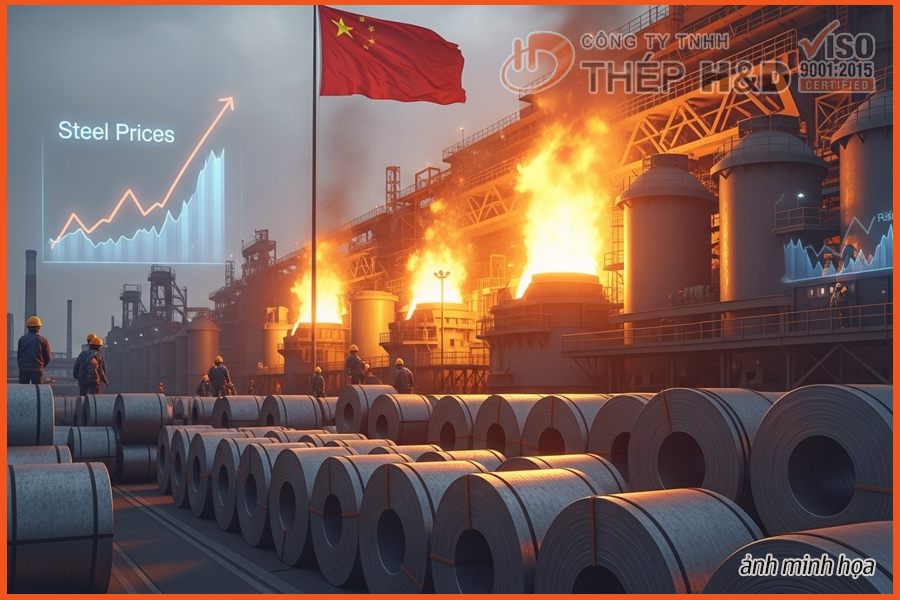
The core of the recovery lies in Beijing's aggressive policy to cap crude steel output for 2025. Verified reports confirm a nationwide target to cut production by approximately 50 million tons this year. This has forced mills to scale back operations, creating an artificial scarcity that has supported prices despite underlying weak demand.
Price trends reflect this dynamic. In late July 2025, steel futures (including key products like hot-rolled coil) peaked near CNY 3,300 per ton before settling around CNY 3,219. This represents a significant monthly gain of about 8.68%, allowing mills to once again turn a profit on products like rebar, a stark contrast to the losses incurred previously.
The domestic market remains the industry's Achilles' heel. The persistent crisis in the property sector continues to depress demand for construction steel. While the government has announced large-scale infrastructure projects, such as a CNY 1.2 trillion hydropower plant, this has only partially offset the construction slump.
Consequently, Chinese steelmakers have pivoted aggressively towards exports to maintain production volumes. This export-led strategy has become a critical stabilizing factor, helping to clear inventory and sustain operations. However, this path is fraught with challenges, including lower profit margins on international sales and the growing threat of trade barriers as other nations move to protect their own industries from a flood of Chinese steel.
The current profitability of Chinese steel mills is built on a precarious foundation. It hinges on the government's continued ability and willingness to enforce strict production discipline. Any relaxation of these cuts could quickly lead to a supply glut and send prices tumbling once more.
The long-term health of the industry still depends on a genuine recovery in domestic consumption, particularly from the real estate and manufacturing sectors. Until that happens, the market will remain in a delicate balancing act, managed by state policy rather than organic economic fundamentals. For now, the intervention has worked, but the question of its sustainability looms large over the global steel market.
Source: Based on reports from Bloomberg on July 28, 2025, and verified market data for the Chinese steel industry as of July 2025.
Cùng là nhôm A5052 nhưng tấm trạng thái O, H32 và H34 có độ bền, độ dẻo và bán kính c...
Sàn Thượng Hải mở cửa lại sau Quốc khánh với hai phiên giảm liền: giá nhôm thỏi SMM A...
Từ ngày 20/10/2026, Nghị định 344/2026/NĐ-CP mở cơ chế đặt hàng và ưu đãi cho doanh n...
Các con số vật lý của nhôm không giống nhau giữa các mác, và mỗi con số dẫn tới một q...
Giá nhôm thỏi SMM A00 giảm ba phiên liên tiếp trong tuần 40/2026, chốt 24.030 CNY/tấn...
Sau 8 tháng 2026, thị trường ô tô Việt Nam bán 432.548 xe, mức tăng cao nhất trong 6...
Nhôm tấm 3mm là độ dày được hỏi nhiều nhất trong nhóm tấm mỏng vì đủ cứng để làm thùn...
Nhôm A6061 là hợp kim nhôm–magie–silic hoá bền bằng nhiệt luyện, được dùng nhiều nhất...
Chỉ số cước container nội Á của Drewry chốt ngày 24/9/2026 ở 1.491 USD/40ft, tăng 6%...
Giá nhôm thỏi SMM A00 chốt tuần 39/2026 ở 24.240 CNY/tấn, cao hơn 60 CNY/tấn so với t...


