






5052 Aluminum: O, H32 or H34, Bend Radius and Buying Mistakes
5052 aluminum sheet in O, H32 and H34 tempers differs clearly in strength, ductility...


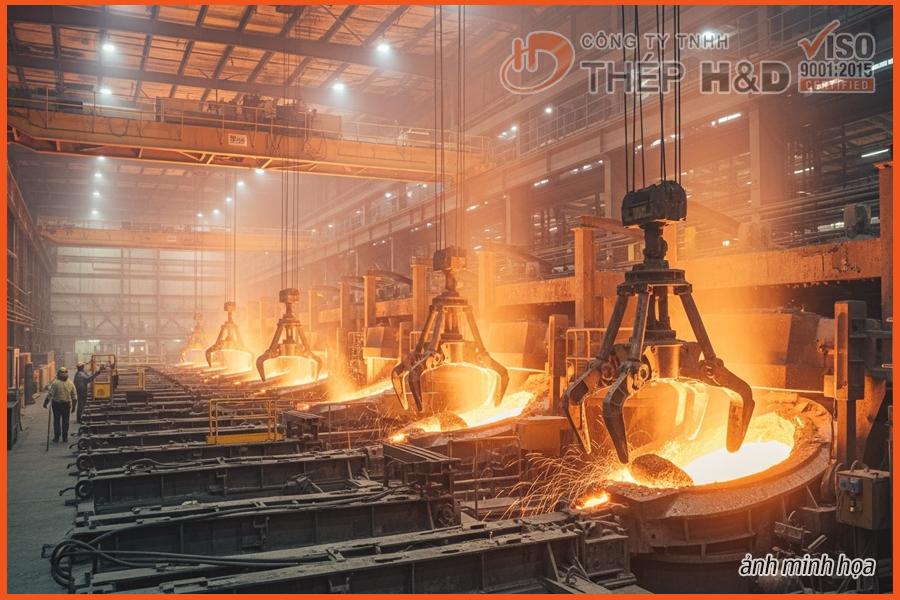
Century Aluminum (NASDAQ: CENX) has officially announced its plan to restart production at its Mt. Holly aluminum smelter in South Carolina. This move, backed by a $50 million investment, is considered a strategic step to capitalize on the U.S. government's Section 232 tariff policy, which is designed to protect the domestic aluminum industry and reduce reliance on foreign supply.
Century Aluminum's decision is inseparable from the current U.S. trade policy landscape. The Section 232 tariffs, imposed on imported aluminum products, have significantly altered the competitive balance, creating favorable conditions for domestic producers to recover. Century's CEO, Jesse Gary, emphasized that this policy was the key factor that made the Mt. Holly restart economically viable. This serves as clear evidence that protectionist measures are directly fueling the revival of heavy industry in the United States.
Contrary to some initial reports, this project is not directly funded by the Department of Defense. Instead, the $50 million capital is an internal investment by the company, based on confidence in policy stability and domestic market demand. The project is expected to complete its restart and reach full operational capacity by the end of June 2026.
The restart will add over 50,000 tonnes of aluminum production capacity annually, bringing the smelter to its maximum output and increasing U.S. primary aluminum production by approximately 10%. On the social front, the project is expected to create over 100 high-quality local jobs, contributing to the economic development of South Carolina.
A critical factor ensuring the project's success is the collaboration with power supplier Santee Cooper. Energy cost is one of the largest components in aluminum smelting, making a stable and competitive power supply agreement fundamental to the plant's sustainable operation. The production of high-quality alloy aluminum plates at this facility will help meet the growing demand from key industries such as aerospace, automotive, and construction.
This event signals a significant trend: the onshoring of essential industrial manufacturing in the U.S. For investors, it is a positive sign of the American metallurgical industry's resilience under policy support. However, challenges remain. The reliance on trade policy could create risks if there are future shifts. Furthermore, maintaining cost competitiveness, especially in energy, will always be a difficult challenge for U.S. smelters compared to their global counterparts.
Source: Analysis based on press releases from Century Aluminum and financial market data as of August 8, 2025.
5052 aluminum sheet in O, H32 and H34 tempers differs clearly in strength, ductility...
Shanghai reopened after National Day with two down sessions: the SMM A00 aluminium in...
From 20 October 2026, Decree 344/2026/ND-CP opens a state ordering mechanism and ince...
Aluminum's physical figures differ between alloys, and each figure drives a concrete...
The SMM A00 aluminium ingot price fell in all three sessions of week 40/2026, closing...
Vietnam's car market sold 432,548 vehicles in the first eight months of 2026, the fas...
3mm aluminum sheet is the most requested thickness in the thin-to-medium range: stiff...
A6061 is a heat-treatable aluminium–magnesium–silicon alloy widely used for machine f...
Drewry's Intra-Asia Container Index closed at 1,491 USD/40ft on 24 September 2026, up...
The SMM A00 aluminium ingot price ended week 39/2026 at 24,240 CNY/t, up 60 CNY/t fro...


