





Aluminium sheet price, week 41/2026: SMM A00 drops to 23,650
Shanghai reopened after National Day with two down sessions: the SMM A00 aluminium in...


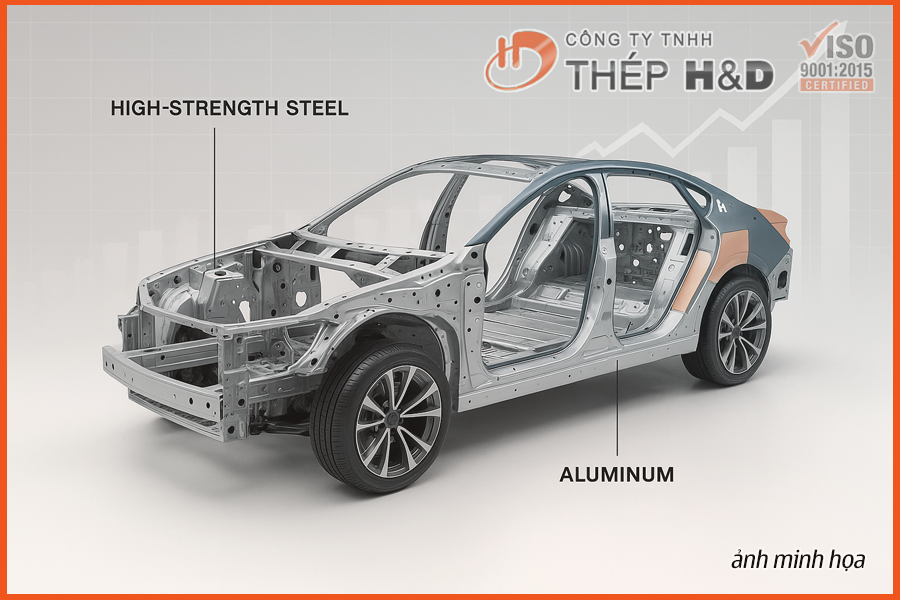
Hanoi, November 10, 2025 – The global automotive structural sheet metal market is experiencing robust growth, fueled by the increasing demand for lightweight, high-strength materials in vehicle manufacturing. With stringent regulations on fuel efficiency and emissions, coupled with the boom in electric vehicles (EVs), automakers are actively seeking advanced sheet metal solutions to reduce vehicle weight, enhance safety, and improve operational efficiency.
The global automotive structural sheet metal market was valued at approximately USD 17.4 billion in 2024. Experts project this market to continue growing at a compound annual growth rate (CAGR) of 2.5% to 3.8% over the next decade, reaching a valuation between USD 20 billion and USD 26 billion by the early to mid-2030s. This steady growth reflects the increasing importance of structural sheet metal in the modern automotive industry.
The expansion of the automotive structural sheet metal market is propelled by several key factors:
The automotive structural sheet metal market primarily utilizes the following material types:
These materials are widely applied in the manufacturing of body-in-white components, chassis, doors, hoods, trunks, and battery protection structures for electric vehicles.
Major companies shaping the automotive structural sheet metal market include:
Geographically, Asia is the leading region for automotive production and, consequently, the largest market for structural sheet metal, accounting for over half of total global automobile production. Europe and North America are also significant markets with high demand for advanced material solutions.
Challenges:
Opportunities:
The automotive structural sheet metal market is in a dynamic growth phase, shaped by technological trends, regulations, and market demand. Automakers and material suppliers must continue to innovate, investing in research and development to create more advanced material solutions that meet increasingly stringent requirements for performance, safety, and sustainability.
Close collaboration among material producers, component suppliers, and automotive manufacturers will be key to maximizing the potential of this market, especially in the context of the transition to the electric vehicle era and smart manufacturing.
Further Reading:
References:
Shanghai reopened after National Day with two down sessions: the SMM A00 aluminium in...
From 20 October 2026, Decree 344/2026/ND-CP opens a state ordering mechanism and ince...
Aluminum's physical figures differ between alloys, and each figure drives a concrete...
The SMM A00 aluminium ingot price fell in all three sessions of week 40/2026, closing...
Vietnam's car market sold 432,548 vehicles in the first eight months of 2026, the fas...
3mm aluminum sheet is the most requested thickness in the thin-to-medium range: stiff...
A6061 is a heat-treatable aluminium–magnesium–silicon alloy widely used for machine f...
Drewry's Intra-Asia Container Index closed at 1,491 USD/40ft on 24 September 2026, up...
The SMM A00 aluminium ingot price ended week 39/2026 at 24,240 CNY/t, up 60 CNY/t fro...
Aluminum tread plate is sheet with a raised pattern on one face, used for truck floor...


.jpg)