






5052 Aluminum: O, H32 or H34, Bend Radius and Buying Mistakes
5052 aluminum sheet in O, H32 and H34 tempers differs clearly in strength, ductility...


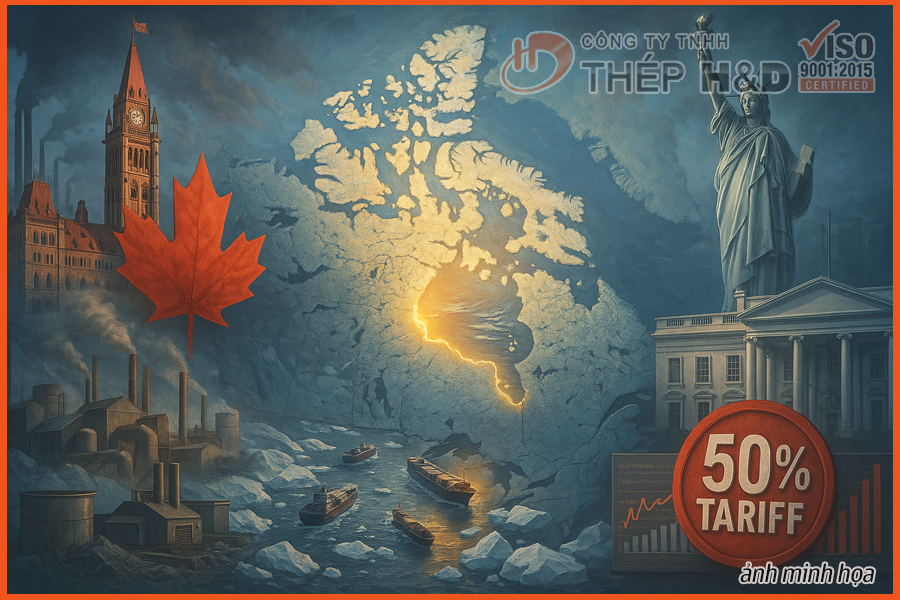
October 13, 2025 – Amidst escalating trade tensions between Canada and the United States, particularly concerning the re-imposition of Section 232 tariffs on Canadian steel and aluminum, a new geopolitical factor is emerging as a potential bargaining chip: the control and access to the Northwest Passage. This strategic sea route, increasingly accessible due to climate change, could significantly reshape bilateral trade negotiations, offering Canada substantial leverage in seeking tariff relief.
Section 232 tariffs, authorized under the U.S. Trade Expansion Act of 1962, allow the President to impose tariffs on imports deemed a threat to national security. After a period of exemption, the U.S. administration reinstated these tariffs in early 2025, imposing a 50% duty on steel and aluminum imports from Canada. This decision triggered strong opposition from Ottawa and has had severe repercussions for Canada's metals industry.
The 50% tariff effectively blocked many Canadian steel and aluminum producers from their most critical export market, the United States. This not only significantly depressed Canadian steel prices but also caused supply chain disruptions and increased costs for downstream industries in both countries. While justified on national security grounds, many analysts view these tariffs as protectionist measures aimed at boosting U.S. domestic production. Canadian businesses, from major steel mills to suppliers of aluminum sheets and aluminum coils, are facing immense challenges in maintaining competitiveness and market access.
The Northwest Passage (NWP) is a network of sea routes through the Canadian Arctic Archipelago, connecting the Atlantic and Pacific Oceans. Historically, the route was ice-bound for most of the year, rendering it impassable. However, due to climate change, melting ice has dramatically increased the NWP's accessibility, transforming it into an attractive potential shipping lane. This route is estimated to be approximately 7,000 km shorter than the Panama Canal route, offering significant time and cost savings for international maritime transport.
Despite its growing navigability, the legal status of the Northwest Passage remains a fiercely contested issue. Canada asserts that these are its internal waters, granting Ottawa full sovereign rights to regulate and control shipping, including environmental protection and resource management. Conversely, the United States considers it an international strait, allowing for free passage without Canadian consent, under the United Nations Convention on the Law of the Sea (UNCLOS). This disagreement underpins the geopolitical tension surrounding the route.
The Steel Market Update article suggests that the U.S. might view more liberal access to, or Canadian control over, the Northwest Passage as a valuable bargaining chip in trade negotiations. Canada could leverage its asserted sovereignty to offer concessions on NWP access in exchange for reduced or removed Section 232 tariffs on its steel and aluminum. This would be a strategic move, linking a significant geopolitical issue with an economic trade dispute.
For the U.S., gaining easier access to a new strategic sea route could offer substantial economic and military advantages, especially in an era of heightened global geopolitical competition. For Canada, alleviating the tariff burden would be a lifeline for its struggling metals industry, helping Canadian producers regain their footing in the U.S. market.
Should Canada indeed use the Northwest Passage as a bargaining chip, it would mark a significant shift in the dynamics of Canada-U.S. trade relations. It would elevate negotiations from purely economic matters to a more complex geopolitical level. Discussions could extend beyond steel and aluminum, encompassing other sectors such as critical minerals, energy, and the broader terms of the USMCA agreement.
However, linking two such complex issues also presents numerous challenges. Both nations would need to carefully weigh the benefits and risks. For Canada, making concessions on Arctic sovereignty could face domestic opposition. For the U.S., accepting such a deal might set a precedent for future trade negotiations. Nevertheless, this possibility highlights the intricate and multifaceted nature of modern international relations, where economic, geopolitical, and environmental issues are increasingly intertwined.
References:
5052 aluminum sheet in O, H32 and H34 tempers differs clearly in strength, ductility...
Shanghai reopened after National Day with two down sessions: the SMM A00 aluminium in...
From 20 October 2026, Decree 344/2026/ND-CP opens a state ordering mechanism and ince...
Aluminum's physical figures differ between alloys, and each figure drives a concrete...
The SMM A00 aluminium ingot price fell in all three sessions of week 40/2026, closing...
Vietnam's car market sold 432,548 vehicles in the first eight months of 2026, the fas...
3mm aluminum sheet is the most requested thickness in the thin-to-medium range: stiff...
A6061 is a heat-treatable aluminium–magnesium–silicon alloy widely used for machine f...
Drewry's Intra-Asia Container Index closed at 1,491 USD/40ft on 24 September 2026, up...
The SMM A00 aluminium ingot price ended week 39/2026 at 24,240 CNY/t, up 60 CNY/t fro...


