





Aluminium sheet price, week 41/2026: SMM A00 drops to 23,650
Shanghai reopened after National Day with two down sessions: the SMM A00 aluminium in...


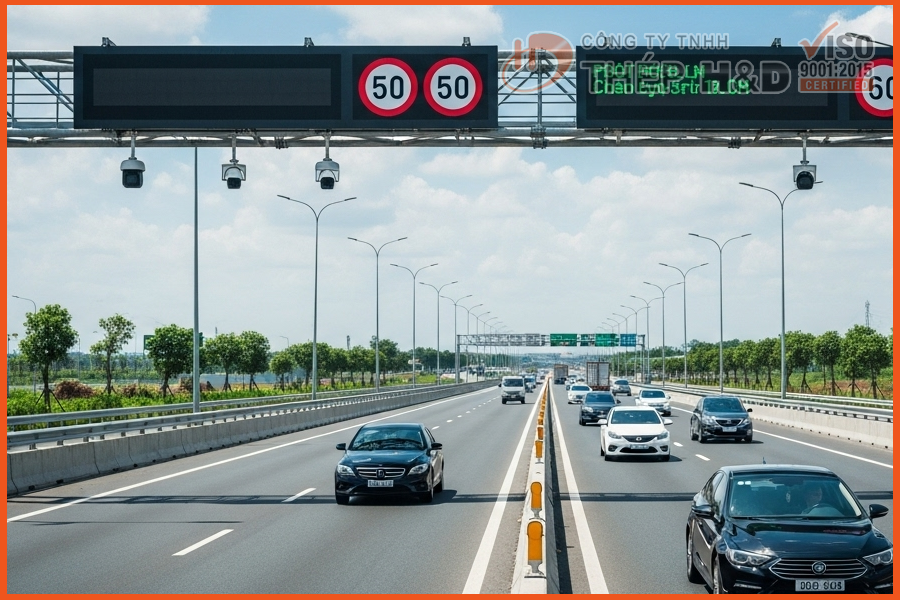
The national key project, the Eastern North-South Expressway for the 2017-2020 period, is facing a critical challenge that threatens to directly impact its operational efficiency and traffic safety upon completion. According to the latest report from the Ministry of Transport (MoT), the implementation progress of the Intelligent Transportation System (ITS) for eight component projects is rated as "very slow," raising concerns about a modern expressway lacking its central operational "brain".
The stagnation in installing the ITS system stems not from a single cause but from a combination of complex factors. Firstly, bottlenecks in capital arrangement procedures are the biggest hurdle, causing delays in disbursement and the implementation of high-tech procurement packages. Secondly, the technical complexity of the ITS system demands very high standards and requirements, from technology selection and system-wide synchronized design to ensuring future compatibility and scalability. This process has taken much longer than anticipated.
Finally, difficulties in selecting qualified and experienced contractors are also a significant factor. The search for entities that can meet both the stringent technical requirements and Vietnam's complex bidding regulations has created a bottleneck in the project's implementation process.
Putting a modern expressway into operation without a synchronized ITS system will lead to several serious consequences. First and foremost is reduced operational efficiency. Without ITS, traffic regulation, flow monitoring, incident management, and electronic toll collection will be fragmented, manual, and inefficient. This contradicts the goal of building a modern, seamless transportation system.
More serious are the traffic safety risks. The ITS plays a crucial role in providing early warnings of hazards (accidents, adverse weather, obstacles), coordinating rescue efforts, and delivering information to drivers. Its absence would mean the expressways operate in an "information blind" state, posing a high potential for accidents. Constructing robust infrastructure with steel structures is essential, but the "soul" of the system—the intelligent management system—is equally important.
Faced with this situation, the MoT is under pressure to take decisive action. Directives have been issued requiring Project Management Units and related agencies to urgently resolve capital and procedural bottlenecks. However, for a thorough solution, a more specific and flexible mechanism for high-tech procurement packages is needed, along with enhanced international cooperation to access leading contractors and technologies.
Without a breakthrough in direction and execution, the prospect of sections of the North-South Expressway having to operate temporarily without an ITS system is entirely possible, significantly diminishing the socio-economic benefits the project is expected to deliver.
Source: Analysis based on reports from the Ministry of Transport and related news, as of August 8, 2025.
Shanghai reopened after National Day with two down sessions: the SMM A00 aluminium in...
From 20 October 2026, Decree 344/2026/ND-CP opens a state ordering mechanism and ince...
Aluminum's physical figures differ between alloys, and each figure drives a concrete...
The SMM A00 aluminium ingot price fell in all three sessions of week 40/2026, closing...
Vietnam's car market sold 432,548 vehicles in the first eight months of 2026, the fas...
3mm aluminum sheet is the most requested thickness in the thin-to-medium range: stiff...
A6061 is a heat-treatable aluminium–magnesium–silicon alloy widely used for machine f...
Drewry's Intra-Asia Container Index closed at 1,491 USD/40ft on 24 September 2026, up...
The SMM A00 aluminium ingot price ended week 39/2026 at 24,240 CNY/t, up 60 CNY/t fro...
Aluminum tread plate is sheet with a raised pattern on one face, used for truck floor...


.jpg)