






Nhôm A5052: chọn O, H32 hay H34, bán kính chấn và lỗi khi mua
Cùng là nhôm A5052 nhưng tấm trạng thái O, H32 và H34 có độ bền, độ dẻo và bán kính c...


Aluminum (chemical symbol Al) is a silvery-white, soft, lightweight, and highly durable metal. It is the third most abundant element in the Earth's crust, after oxygen and silicon. Thanks to its superior properties, aluminum has become an indispensable material in modern industry, playing a strategic role in the development of many key sectors.
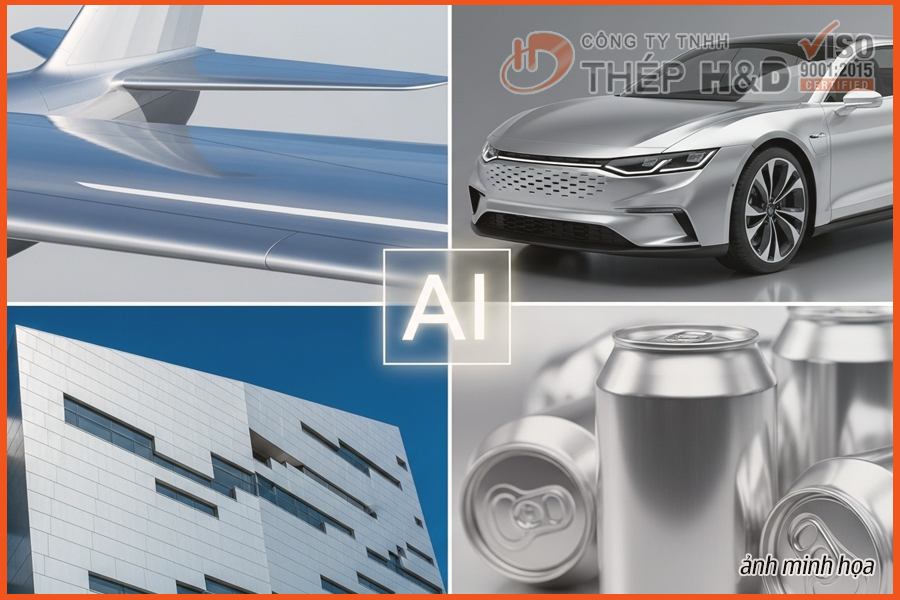
From aerospace to everyday items, the applications of aluminum are incredibly diverse, demonstrating its irreplaceable importance.
The aluminum production process begins with bauxite ore, which is refined into alumina and then smelted via molten salt electrolysis to produce pure aluminum. From there, it is alloyed to create thousands of different alloys with varying properties, serving:
Material selection heavily depends on the application's requirements. Similar to when comparing stainless steel types, weighing aluminum against steel, copper, or plastic clearly shows its pros and cons.
| Criteria | Aluminum | Steel | Copper |
|---|---|---|---|
| Weight | Very Light | Heavy | Heavy |
| Strength-to-Weight Ratio | Very High | High | Low |
| Corrosion Resistance | Good | Poor (needs plating or painting) | Good |
| Cost | Medium | Low | High |
With its global production continuing to rise and its increasingly important role in the circular economy, aluminum is more than just a common metal. It is the material of the future, key to solutions for lighter transportation, more energy-efficient buildings, and a more sustainable production-consumption cycle. Continuous innovation in alloy technology and recycling will continue to unlock new potential, solidifying aluminum's position in the Industry 4.0 era.
Cùng là nhôm A5052 nhưng tấm trạng thái O, H32 và H34 có độ bền, độ dẻo và bán kính c...
Sàn Thượng Hải mở cửa lại sau Quốc khánh với hai phiên giảm liền: giá nhôm thỏi SMM A...
Từ ngày 20/10/2026, Nghị định 344/2026/NĐ-CP mở cơ chế đặt hàng và ưu đãi cho doanh n...
Các con số vật lý của nhôm không giống nhau giữa các mác, và mỗi con số dẫn tới một q...
Giá nhôm thỏi SMM A00 giảm ba phiên liên tiếp trong tuần 40/2026, chốt 24.030 CNY/tấn...
Sau 8 tháng 2026, thị trường ô tô Việt Nam bán 432.548 xe, mức tăng cao nhất trong 6...
Nhôm tấm 3mm là độ dày được hỏi nhiều nhất trong nhóm tấm mỏng vì đủ cứng để làm thùn...
Nhôm A6061 là hợp kim nhôm–magie–silic hoá bền bằng nhiệt luyện, được dùng nhiều nhất...
Chỉ số cước container nội Á của Drewry chốt ngày 24/9/2026 ở 1.491 USD/40ft, tăng 6%...
Giá nhôm thỏi SMM A00 chốt tuần 39/2026 ở 24.240 CNY/tấn, cao hơn 60 CNY/tấn so với t...


