




Chuỗi cung ứng bán dẫn miền Bắc: Hanyang mở rộng ở Phú Thọ
Hanyang Digitech, nhà cung ứng mô-đun DRAM và ổ SSD cho Samsung tại KCN Phú Hà (Phú T...


The global aluminum market is currently navigating a complex phase, described by experts as "strong reality, weak expectations." On one hand, fundamental factors such as supply disruptions and low inventory levels are providing solid support for aluminum prices. On the other hand, concerns about weak downstream demand are creating headwinds that hinder growth momentum. This analysis will delve into the key factors shaping aluminum prices today.
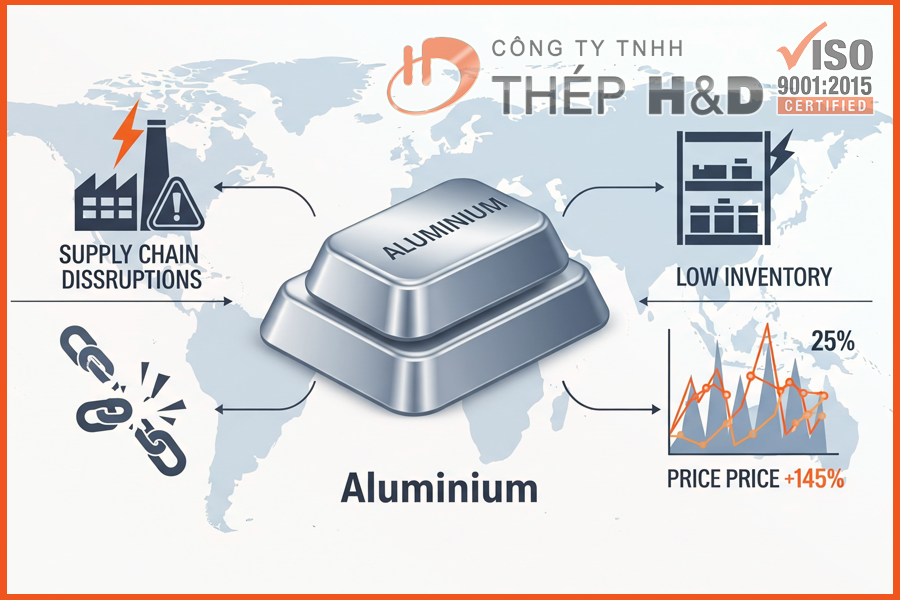
The aluminum supply is facing significant challenges, primarily from major production hubs in China. In Yunnan province, the resumption of electrolytic aluminum production after the dry season is proceeding slower than expected, directly impacting output. Concurrently, Shanxi province is grappling with bauxite mining issues, leading some aluminum smelters to curtail production. These incidents are tightening the short-term supply. The already complex process of smelting aluminum from bauxite has become even more challenging.
Furthermore, the import arbitrage window remains closed, leading to a downward trend in imported aluminum volumes. This exacerbates the supply shortage in the domestic market, especially for products like aluminum plates and aluminum coils.
One of the strongest factors supporting aluminum prices is the critically low level of social inventories. Data indicates that inventories of aluminum billets and ingots have fallen to their lowest levels for the same period in many years. This continuous de-stocking creates a firm price floor, making the market more sensitive to any supply disruptions. Businesses requiring specialized products such as checkered aluminum plates or solid aluminum round bars may face longer lead times.
In contrast to the tight supply picture, the demand side shows worrying signs. Downstream consumption has yet to show a clear improvement. Key consuming sectors such as construction, real estate, and photovoltaics are all performing below expectations. The traditional peak consumption season is gradually passing without a significant breakthrough. This weakness in long-term demand is the main factor pressuring prices and creating the "weak expectations" sentiment in the market. Although the applications of aluminum are diverse, the slowdown in major industries remains a challenge.
In the current context, the aluminum market is expected to remain in a tug-of-war. Fundamentals (actual supply and demand) are supporting prices, while macroeconomic factors and future expectations are exerting pressure. Technically, Shanghai aluminum prices are likely to fluctuate within a certain range. A key support level is around 20,000 RMB/ton, while the resistance zone is near 21,000 RMB/ton.
Conclusion: Investors and businesses need to closely monitor supply-side developments, especially the pace of production recovery in Yunnan, as well as demand signals from downstream industries. The delicate balance between a "strong reality" and "weak expectations" will continue to dominate the trend of aluminum prices in the near future.
Source: Stockstar Futures
Hanyang Digitech, nhà cung ứng mô-đun DRAM và ổ SSD cho Samsung tại KCN Phú Hà (Phú T...

Bảng trọng lượng tấm nhôm lót sàn theo độ dày, so sánh với thép gân cùng độ dày và ví...

Giá nhôm thỏi SMM A00 chốt tuần 47/2026 ở 22.340 CNY/tấn ngày 20/11, thấp hơn 790 CNY...

Vốn FDI đăng ký 10 tháng 2026 đạt 54,85 tỷ USD, tăng 74%, nhưng trong khoảng 1.000 do...

Lớp nhôm bọc bên ngoài bảo ôn quyết định bảo ôn có khô và bền hay không. Bài viết đưa...

Sản lượng ô tô lắp ráp trong nước 10 tháng 2026 tăng 25,1%, nhưng nhập khẩu linh kiện...

Nhôm tấm 10mm là tấm bản dày dùng làm đế máy, bàn gá, bản mã chịu tải và chi tiết pha...

Triển lãm Quốc tế Vietbuild Hà Nội 2026 lần III diễn ra từ 11 đến 14/11 tại VEC Đông...

Nhôm tấm 5mm đủ cứng để làm sàn xe, đế máy, gá và bản mã chịu lực mà vẫn cắt, khoan,...

Giá nhôm thỏi SMM A00 chốt tuần 44/2026 ở 23.780 CNY/tấn ngày 30/10, cao hơn 110 CNY/...


