





Giá nhôm tấm tuần 41/2026: SMM A00 rơi về 23.650 CNY/tấn sau lễ
Sàn Thượng Hải mở cửa lại sau Quốc khánh với hai phiên giảm liền: giá nhôm thỏi SMM A...


When we think of aluminum, we often consider its light weight and corrosion resistance. However, an equally important mechanical property that directly impacts its performance and purpose is its hardness. Pure aluminum is quite soft, but through alloying and heat treatment, its hardness can be flexibly adjusted to meet the demanding requirements of countless modern industries.
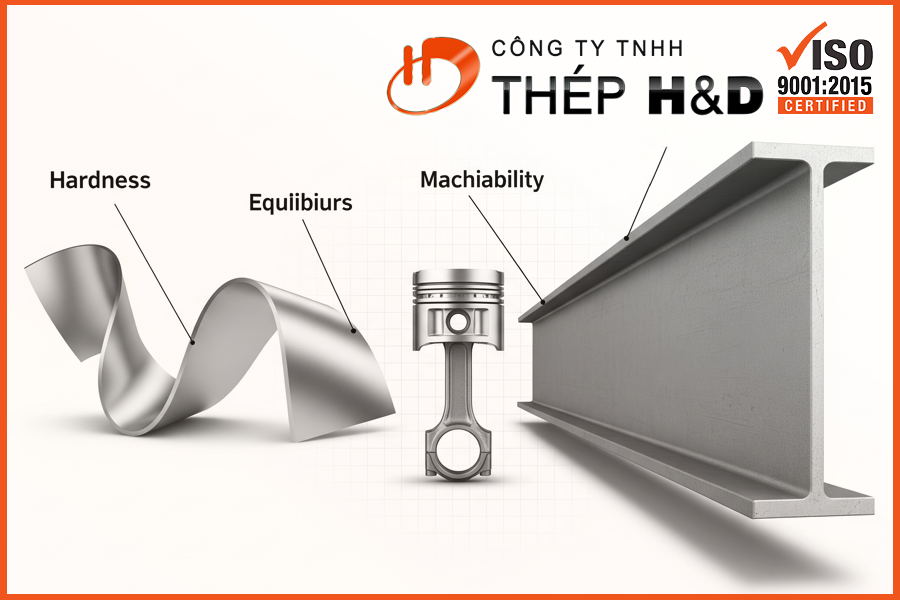
The hardness of aluminum is typically measured using standard scales like Brinell (HB), Vickers (HV), or Rockwell (HRB, HRC). Depending on the alloy composition and treatment method, different types of aluminum will have varying hardness levels:
A clear understanding of the hardness of each aluminum type helps us select the optimal material for each specific purpose.
The hardness of aluminum directly affects how we cut, bend, or form the material. Each type has its own pros and cons during the production process.
The hardness of aluminum is the key factor that determines which applications the final product is suitable for.
Aluminum with high hardness often comes with superior tensile and yield strength. This makes it an ideal choice for parts that need to withstand high loads and resist deformation under strong mechanical stress, such as aluminum plates used as load-bearing structures in aerospace, car frames, and high-load machine components.
A harder material will have better resistance to abrasion and scratching, thereby extending the product's lifespan, especially in harsh working environments or for moving machine parts.
For structures that require rigidity, such as window and door frames or scaffolding, the hardness of the aluminum alloy helps the product resist warping or deforming over its service life.
Hardness is not just a number but a key characteristic that shapes the entire lifecycle of an aluminum product, from fabrication to final application. Choosing the right aluminum alloy with the appropriate hardness is the deciding factor for production efficiency, product durability, and cost optimization. Carefully consider the requirements for strength, machinability, and service conditions to make the most optimal choice!
Sàn Thượng Hải mở cửa lại sau Quốc khánh với hai phiên giảm liền: giá nhôm thỏi SMM A...
Từ ngày 20/10/2026, Nghị định 344/2026/NĐ-CP mở cơ chế đặt hàng và ưu đãi cho doanh n...
Các con số vật lý của nhôm không giống nhau giữa các mác, và mỗi con số dẫn tới một q...
Giá nhôm thỏi SMM A00 giảm ba phiên liên tiếp trong tuần 40/2026, chốt 24.030 CNY/tấn...
Sau 8 tháng 2026, thị trường ô tô Việt Nam bán 432.548 xe, mức tăng cao nhất trong 6...
Nhôm tấm 3mm là độ dày được hỏi nhiều nhất trong nhóm tấm mỏng vì đủ cứng để làm thùn...
Nhôm A6061 là hợp kim nhôm–magie–silic hoá bền bằng nhiệt luyện, được dùng nhiều nhất...
Chỉ số cước container nội Á của Drewry chốt ngày 24/9/2026 ở 1.491 USD/40ft, tăng 6%...
Giá nhôm thỏi SMM A00 chốt tuần 39/2026 ở 24.240 CNY/tấn, cao hơn 60 CNY/tấn so với t...
Nhôm chống trượt là tấm nhôm có gân nổi một mặt, dùng cho sàn xe, cầu thang và sàn xư...


.jpg)