





Aluminium sheet price, week 41/2026: SMM A00 drops to 23,650
Shanghai reopened after National Day with two down sessions: the SMM A00 aluminium in...


CNC (Computer Numerical Control) machining is the premier method for fabricating high-precision aluminum parts. However, due to its unique properties—softness, ductility, and high thermal conductivity—machining aluminum requires specific expertise and parameter settings compared to steel. Mastering these techniques will help you achieve a perfect surface finish, optimize cycle time, and extend the life of your cutting tools.
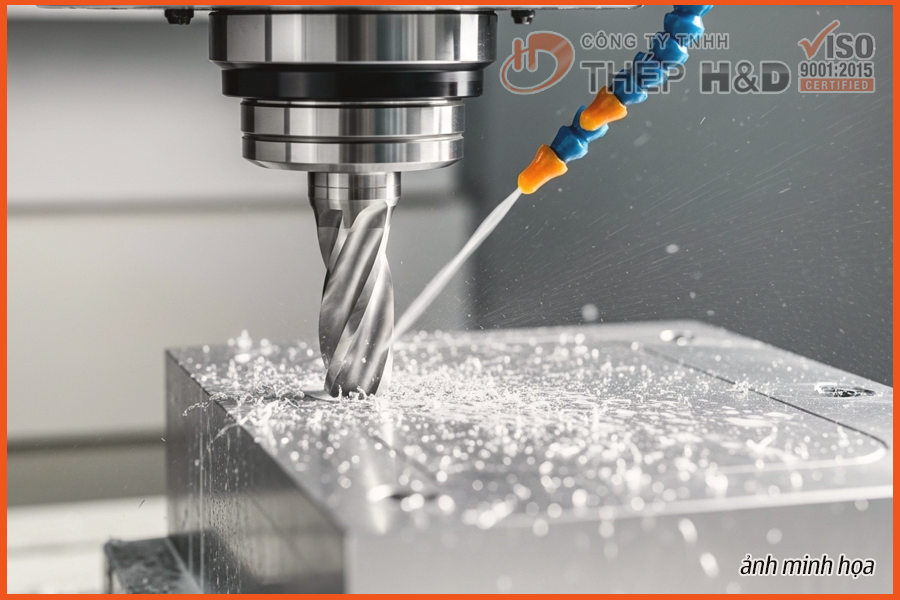
These two factors are key, determining 90% of the success in any mechanical machining process. Mistakes in this stage can lead to a built-up edge, poor surface finish, and tool breakage.
Note: This table is for reference only. Actual parameters should be adjusted based on the specific CNC machine, work-holding rigidity, and the aluminum alloy being machined.
| Parameter | Reference Value | Notes |
|---|---|---|
| Spindle Speed (RPM) | 8,000 – 20,000 RPM | Depends on tool diameter and alloy |
| Feed Rate | 1,000 – 3,000 mm/min | For 6–12 mm diameter end mills |
| Depth of Cut (DOC) | 0.5 – 2.0 mm | Depends on machine rigidity and workpiece |
| Cutting Tool Type | 2–3 flute, DLC/TiB2 coated | Prioritize sharp tools with a high helix angle |
| Easiest Alloys to Machine | 6061-T6, 5052-H32 | Harder alloys like 7075 aluminum require adjustments. |
By correctly applying these principles, the CNC machining process for aluminum becomes highly efficient, yielding products that are not only dimensionally accurate but also have a high aesthetic quality, meeting the most stringent industrial requirements.
Shanghai reopened after National Day with two down sessions: the SMM A00 aluminium in...
From 20 October 2026, Decree 344/2026/ND-CP opens a state ordering mechanism and ince...
Aluminum's physical figures differ between alloys, and each figure drives a concrete...
The SMM A00 aluminium ingot price fell in all three sessions of week 40/2026, closing...
Vietnam's car market sold 432,548 vehicles in the first eight months of 2026, the fas...
3mm aluminum sheet is the most requested thickness in the thin-to-medium range: stiff...
A6061 is a heat-treatable aluminium–magnesium–silicon alloy widely used for machine f...
Drewry's Intra-Asia Container Index closed at 1,491 USD/40ft on 24 September 2026, up...
The SMM A00 aluminium ingot price ended week 39/2026 at 24,240 CNY/t, up 60 CNY/t fro...
Aluminum tread plate is sheet with a raised pattern on one face, used for truck floor...


.jpg)