






5052 Aluminum: O, H32 or H34, Bend Radius and Buying Mistakes
5052 aluminum sheet in O, H32 and H34 tempers differs clearly in strength, ductility...


Aluminum is everywhere – from the familiar beverage can in your hand to the modern airplanes in the sky. But what makes this metal so special and popular? Thanks to its unique properties, aluminum not only serves our daily lives but also plays a crucial role in industrial production and sustainable development. Let's explore the most common applications of aluminum.
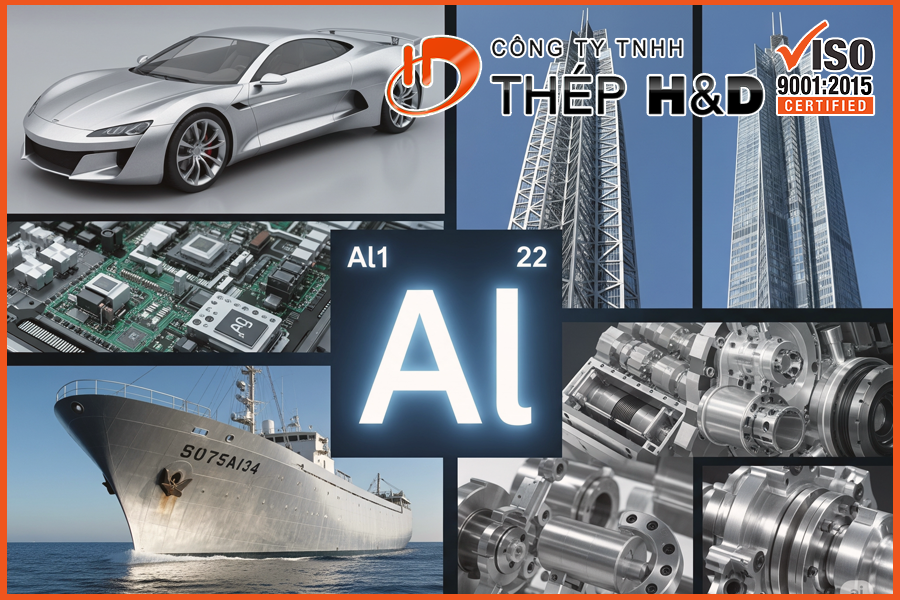
Aluminum possesses ideal characteristics that make it a top-choice material in many fields.
Aluminum is present in many familiar items, providing convenience, safety, and efficiency.
Aluminum is considered a "hero" in heavy industries thanks to its durability, versatility, and high customizability.
From the historic Empire State Building to modern structures, aluminum is always present in frames and cladding panels due to its light weight and corrosion resistance. Window systems, doors, roofing, and sun louvers made from 6063 aluminum are both durable and aesthetically pleasing.
Aluminum is the top choice for high-voltage power transmission lines due to its light weight and reasonable cost. In high-tech fields, aluminum is used in solar panels and semiconductor components thanks to its purity and efficient thermal conductivity.
From the kitchen to outer space, aluminum has proven itself to be an indispensable metal for the 21st century. With its superior properties and nearly infinite recyclability, aluminum is not only a useful material but also environmentally friendly, promising to play an even greater role in a sustainable future.
5052 aluminum sheet in O, H32 and H34 tempers differs clearly in strength, ductility...
Shanghai reopened after National Day with two down sessions: the SMM A00 aluminium in...
From 20 October 2026, Decree 344/2026/ND-CP opens a state ordering mechanism and ince...
Aluminum's physical figures differ between alloys, and each figure drives a concrete...
The SMM A00 aluminium ingot price fell in all three sessions of week 40/2026, closing...
Vietnam's car market sold 432,548 vehicles in the first eight months of 2026, the fas...
3mm aluminum sheet is the most requested thickness in the thin-to-medium range: stiff...
A6061 is a heat-treatable aluminium–magnesium–silicon alloy widely used for machine f...
Drewry's Intra-Asia Container Index closed at 1,491 USD/40ft on 24 September 2026, up...
The SMM A00 aluminium ingot price ended week 39/2026 at 24,240 CNY/t, up 60 CNY/t fro...


