091 327 0770 - 090 326 2566
info@hdsteel.com.vn


EU and UK Steel Prices Set to Surge: Dual Impact of New Tariffs and Carbon Border Adjustment Mechanism (CBAM)

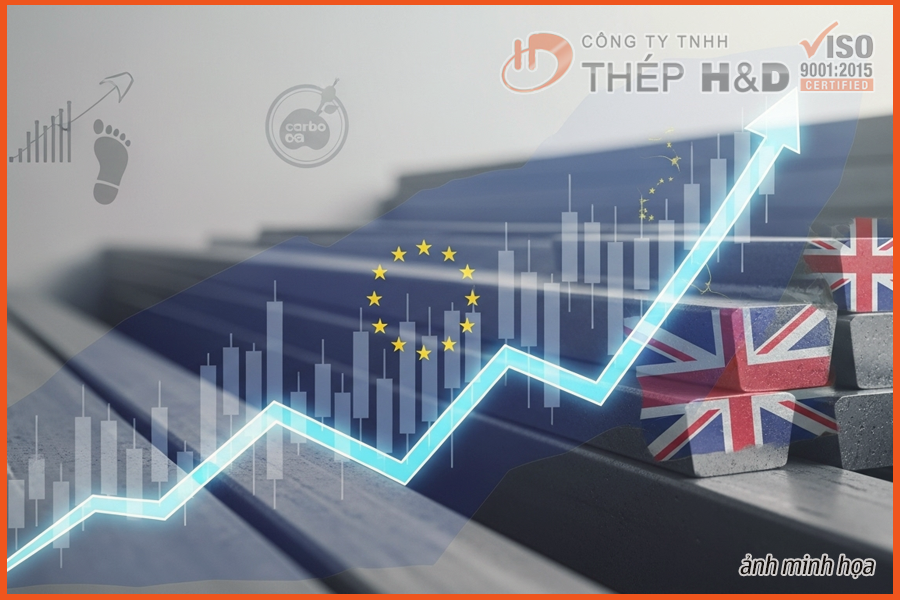
October 21, 2025 – The steel markets in the European Union (EU) and the United Kingdom are on the cusp of significant upheaval, with steel prices projected to surge as new trade and environmental policies take effect. The confluence of tightened import tariffs and the EU's Carbon Border Adjustment Mechanism (CBAM) is creating a ""perfect storm,"" reshaping supply chains and investment strategies across the global steel industry.

1. New Tariff Regimes: Reduced Quotas, Increased Duties

The European Commission has proposed a package of measures aimed at addressing global steel overcapacity, particularly from Asian producers. Under these proposals, existing tariff-free import quotas are expected to be substantially reduced to approximately 18 million tonnes. Concurrently, the out-of-quota tariff applied to steel imports exceeding this limit will double to 50%.

  • Impact on UK Steelmakers: This proposal raises significant concerns for UK steel producers. The EU is their largest export market, accounting for 78% of total UK steel exports. The reduction in quotas and increased tariffs will severely curtail access to this crucial market, forcing UK producers to seek alternative markets or face intensified competition domestically. Furthermore, steel volumes ""barred"" from the EU could be redirected to the UK market, adding further pressure on domestic prices and output.
  • Shifting Market Dynamics: These new tariff measures are expected to reduce the influx of cheaper imported steel into the EU and UK, thereby supporting domestic steel prices. While this may offer short-term benefits to regional steel producers, it also carries the risk of inflationary cost pressures for steel-dependent industries such as construction and automotive manufacturing.

2. CBAM: The Carbon Border Adjustment Mechanism – A Game Changer

Beyond tariffs, the EU's Carbon Border Adjustment Mechanism (CBAM) is another pivotal factor driving steel price changes. CBAM is designed to level the carbon pricing playing field between EU producers (who comply with the EU Emissions Trading System - ETS) and importers from outside the bloc. Following a transitional phase from 2023 to 2025, CBAM will be fully implemented in 2026.

  • Increased Import Costs: CBAM will impose a carbon charge on carbon-intensive imported steel products. This means non-EU steel producers, especially those employing carbon-heavy production methods, will face significantly increased costs. Analyses suggest that, under various carbon pricing scenarios, import charges could range from $72 to $243 per ton of steel by 2034 for countries like South Korea and India.
  • Reshaping Trade Flows and Investment: The increased import costs due to CBAM will make EU-produced steel more competitive compared to imports from regions with less stringent carbon regulations. This could lead to reduced imports from high-carbon countries and incentivize investments in lower-carbon steel production technologies, both within and outside the EU. For investors and managers, this is a clear signal of the imperative to transition towards greener production processes to maintain competitiveness.

3. Integrated EU-UK Frameworks and Market Dynamics

The EU and UK have reached an agreement to integrate their ETS and CBAM frameworks. While full implementation is still underway, this move could facilitate trade between the two regions in the future, but also necessitates adjustments from businesses.

The global steel industry faces dual challenges: overcapacity and the imperative for decarbonization. The policies enacted by the EU and UK are not only aimed at addressing these issues but are also likely to have broader implications for global steel trade dynamics. Investors and managers should carefully consider the following factors:

  • Supply Chain Adjustments: Re-evaluate and adapt supply chains to mitigate risks from tariffs and carbon costs. Explore alternative sourcing options or invest in domestic production capabilities.
  • Investment in Green Technologies: Prioritize investments in low-carbon steel production technologies to meet CBAM requirements and align with sustainable market trends. Aluminum Material: Material for Modern and Future Industry is also a noteworthy consideration in this context.
  • Risk Hedging Strategies: Develop strategies to hedge against price and policy risks to protect profit margins in a volatile market environment.

Conclusion

The combination of new tariff measures and the Carbon Border Adjustment Mechanism (CBAM) is creating a challenging yet opportunity-rich environment for the EU and UK steel industries. Steel prices are expected to rise, reflecting higher production and import costs, as well as the drive towards a more sustainable industry. Investors, managers, and technical experts must proactively adapt to these changes to ensure competitiveness and sustainable growth in the future.

References:

  • [1] The Impact of the EU CBAM on Global Steel Trade. (2023). Global Efficiency Intelligence.
  • [2] EU unveils plan to slash import quotas, devastating impact - UK Steel. (2025). UK Steel.
  • [3] Carbon Border Adjustment Mechanism - Taxation and Customs Union. (2025). European Commission.
  • [4] EU and UK CBAMs To Integrate: How They Compare to the U.S. ... (2025). American Action Forum.
  • [5] EU proposes post-2026 steel trade regime, 50% tariffs - EUROMETAL. (2025). EUROMETAL.

Related Post

5052 Aluminum: O, H32 or H34, Bend Radius and Buying Mistakes

5052 Aluminum: O, H32 or H34, Bend Radius and Buying Mistakes

5052 aluminum sheet in O, H32 and H34 tempers differs clearly in strength, ductility...

Aluminium sheet price, week 41/2026: SMM A00 drops to 23,650

Aluminium sheet price, week 41/2026: SMM A00 drops to 23,650

Shanghai reopened after National Day with two down sessions: the SMM A00 aluminium in...

Decree 344: Incentives for Power Equipment Makers from 20 Oct

Decree 344: Incentives for Power Equipment Makers from 20 Oct

From 20 October 2026, Decree 344/2026/ND-CP opens a state ordering mechanism and ince...

Physical Properties of Aluminum: 1050, 3003, 5052 Data for Shops

Physical Properties of Aluminum: 1050, 3003, 5052 Data for Shops

Aluminum's physical figures differ between alloys, and each figure drives a concrete...

Aluminium sheet price, week 40/2026: SMM A00 eases to 24,030

Aluminium sheet price, week 40/2026: SMM A00 eases to 24,030

The SMM A00 aluminium ingot price fell in all three sessions of week 40/2026, closing...

Vietnam car market grows fastest in Southeast Asia in 8M 2026

Vietnam car market grows fastest in Southeast Asia in 8M 2026

Vietnam's car market sold 432,548 vehicles in the first eight months of 2026, the fas...

3mm Aluminum Sheet: Weight, Tolerance, Alloy and Buying Errors

3mm Aluminum Sheet: Weight, Tolerance, Alloy and Buying Errors

3mm aluminum sheet is the most requested thickness in the thin-to-medium range: stiff...

6061 aluminum plate: T6 vs T651, thickness and buying pitfalls

6061 aluminum plate: T6 vs T651, thickness and buying pitfalls

A6061 is a heat-treatable aluminium–magnesium–silicon alloy widely used for machine f...

Intra-Asia freight at record high before Golden Week 2026

Intra-Asia freight at record high before Golden Week 2026

Drewry's Intra-Asia Container Index closed at 1,491 USD/40ft on 24 September 2026, up...

Aluminium sheet price, week 39/2026: SMM A00 at 24,240 CNY/t

Aluminium sheet price, week 39/2026: SMM A00 at 24,240 CNY/t

The SMM A00 aluminium ingot price ended week 39/2026 at 24,240 CNY/t, up 60 CNY/t fro...